This page is a complete buying guide for salt-free water softeners and conditioners. It covers, honestly: a salt-free conditioner does NOT soften water or remove hardness; it prevents scale via Template Assisted Crystallization (TAC / NAC) using Watch Water Filtersorb SP3 media, the only NSF/ANSI 61 listed TAC media in North America. The flagship system is a 2.5 cu ft (14 liter) Filtersorb SP3 conditioner in a 13 x 54 Vortech tank with a non-electric Clack C1190 upflow valve, 12 to 15 GPM continuous service flow for 3 to 6 people and 2 to 4 bathrooms, $2,895, with no salt, no drain, no electricity, and no wastewater. Two-stage combos pair the conditioner with a calcite acid neutralizer for wells below pH 6.5 ($3,895) or a Centaur catalytic carbon tank for chlorinated city water ($3,995). Replacement Filtersorb SP3 media runs $595 to $995 by tank size, replaced every 5 to 7 years. Performance is strongest below 25 grains per gallon hardness, degrades between 25 and 75 gpg, and 75 gpg is the hard ceiling. Iron above 0.3 ppm or manganese above 0.05 ppm requires an iron filter first. When the buyer wants true soft water (soap lather, slick feel, zero-hardness test), the honest recommendation is a salt-based ion exchange softener instead, which we also sell. Includes a brand comparison against SpringWell, Aquasana, and NuvoH2O, installation steps (no drain or outlet required), and free expert sizing by phone. All systems ship free to all 50 US states. Mid Atlantic Water has specialized in water treatment since 1997.
Scale protection without salt, drain, or electricity
By Aidan· 32-year water expert, Mid Atlantic Water ·
A salt-free water conditioner protects your pipes, water heater, and fixtures from hard water scale with no salt, no drain, no electricity, and no wastewater. Ours runs 14 liters of genuine Watch Water Filtersorb SP3, the only NSF/ANSI 61 listed TAC media in North America, on a non-electric Clack C1190 upflow valve at 12 to 15 GPM.
Now the part most pages bury: it does not soften water. The hardness minerals stay, a test strip still reads hard, and there is no soap-lather or slick-skin change. We sell salt-based softeners too, so when true soft water is what you're after, we'll say so and point you there. Salt-free is the right machine when a softener physically can't go in.
Genuine Watch Water Filtersorb SP3
NSF/ANSI 61 listed TAC media
No salt, no drain, no electricity
Septic-safe, zero wastewater
Free shipping to the lower 48 states
30-day return policy
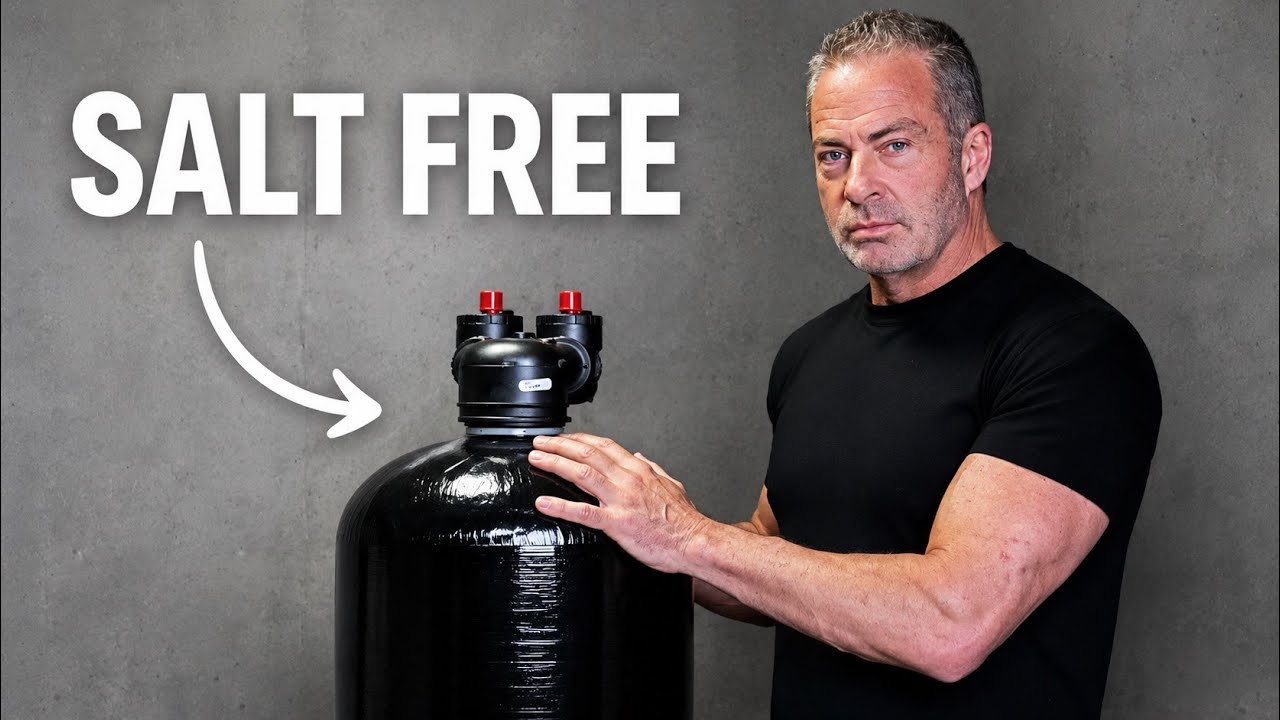
Watch the 3-minute honest answer
After 32 years of expert experience, with over 10,000 customers served since we started Mid Atlantic Water in 1997, here is the truth most salt-free pages won't print: a salt-free conditioner does not soften water. It prevents scale, and it does that well, but the hardness stays in the water and a test strip will still say so. We sell these systems AND salt-based softeners, so when you tell us you want the slick soft-water feel, we'll point you at the softener and lose the bigger sale. Salt-free is the right call when a softener physically can't go in: no drain, no outlet, septic, or a brine ban.
0 products match your filters.
No products match those filters. Try adjusting your water conditions or .
Salt-Free Water Conditioner
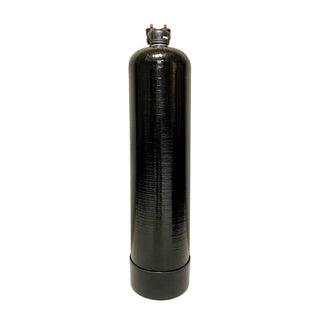
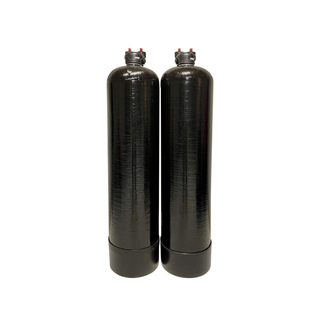
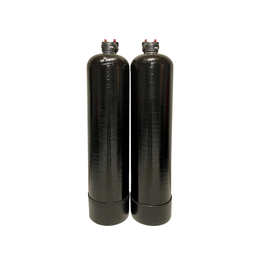
The flagship: 14 liters of genuine Watch Water Filtersorb SP3 TAC media in a 13" x 54" Vortech tank with a non-electric Clack C1190 upflow valve. 12 to 15 GPM continuous service flow for 2 to 4 bathroom homes. It conditions scale; it does not remove hardness, and we say so on every surface. No salt, no drain, no electricity, no wastewater.
Two-Stage Combo Systems (Pre-Treatment + Conditioner)
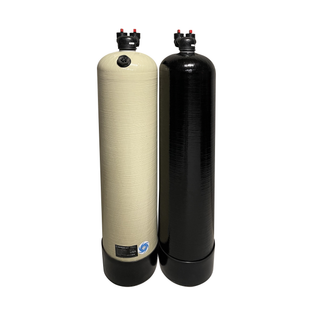
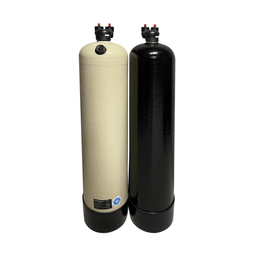
Filtersorb SP3 has water-chemistry limits, and these combos handle them in one matched train. Acidic well below pH 6.5? The calcite acid neutralizer stage corrects pH before the conditioner. City water with chlorine? The Centaur catalytic carbon stage strips chlorine, taste, and odor first. Both stages are non-electric, non-backwashing Clack valves: still no salt, no drain, no outlet.
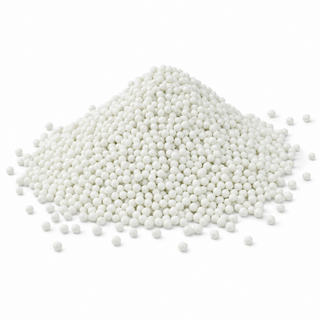
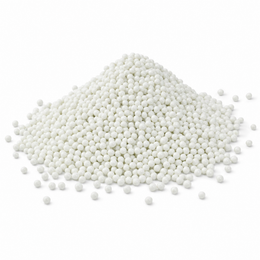
Genuine Watch Water Filtersorb SP3, sold by the liter to match 8x44, 9x48, 10x54, and 13x54 tanks. TAC media is not consumed by salt regeneration because there is none; plan to replace it roughly every 5 to 7 years to keep scale conditioning reliable. NSF/ANSI 61 and 372 certified for potable water contact.
Photo, PDF, or just type the numbers, whatever’s easiest. Don’t have a test yet? Describe what you’re seeing.
2
Aidan reads it personally
Real co-owner. Not a chatbot, not a script, not a sales rep on quota. He’s sized thousands of systems.
3
Get a direct link to what you need
Aidan texts you the exact product page that fits your water. Buy it, bookmark it, or take the answer elsewhere. No pressure either way.
We never send spam. We never sell your number. Aidan answers personally, 7 days a week, 8a–5p ET.
Salt-Free Conditioner Comparison
Mid Atlantic vs. SpringWell, Aquasana & NuvoH2O
Honest head-to-head: how our Filtersorb SP3 conditioner compares to the salt-free systems most shoppers also look at. Framing is taken from each company's own published product pages and the live Google AI Overview (June 2026); where a spec is not published we say so instead of guessing.
MAW Conditioner
SpringWell FutureSoft
Aquasana
NuvoH2O
Says up front it does NOT soften or remove hardness
Yes, on every surface: TAC conditions scale, minerals stay
Yes: 'simply crystalizes them' on the product page
The technologies are not interchangeable. TAC (Template Assisted Crystallization, the chemistry in Filtersorb SP3 and FutureSoft) crystallizes hardness so it cannot stick. Chelation (NuvoH2O's citrus approach) binds hardness with citric acid from a cartridge that needs regular replacement. Aquasana's SCM is its own proprietary scale-control media. None of them remove hardness, and any brand that lets you believe otherwise is selling you the wrong expectation. We ship the only NSF/ANSI 61 listed TAC media in North America and publish its limits.
We tell you the chemistry limits before you buy, not after: iron above 0.3 ppm or manganese above 0.05 ppm coats and poisons TAC media (iron filter goes first), wells below pH 6.5 need an acid neutralizer ahead of the conditioner, and city water above 3 ppm free chlorine needs carbon first. Our two-stage combos exist for exactly those cases. And when what you actually want is soft water, the honest answer is a salt-based softener; we sell those too and will tell you so.
Step 1: Find Your Problem
What are the signs of Hard water scale in pipes, water heaters, and fixtures, where salt, a drain, or an outlet is not an option?
Scale problems announce themselves: crusty showerheads, spotted glass, a water heater that runs longer every year. The question is not whether you have hard water, it's which fix matches which symptom. A conditioner stops scale from forming. It does not change how the water feels or tests. Find your symptom below and we'll tell you straight whether salt-free fixes it, helps it, or is the wrong tool entirely.
White crusty scale on showerheads, faucets, and glass
Calcium and magnesium come out of solution wherever hard water sits or heats, and the crust you scrape off fixtures is the same scale building inside your pipes. This is exactly what TAC conditioning prevents: Filtersorb SP3 converts the dissolved minerals into microscopic crystals that flow through instead of sticking.
→YESConditioner stops new scale
Water heater losing efficiency, elements crusted with scale
Scale is an insulator. A layer of it on a heating element or tank wall makes the heater burn more energy for the same hot water and shortens its life. Protecting the water heater is the single strongest dollars-and-cents case for scale treatment, salt-free or salt-based.
→YESTAC protects the heater
Cloudy white spots on dishes and glassware
Honest answer: a conditioner helps but does not eliminate spotting. The minerals are still in the water, so when droplets dry they can still leave a deposit; conditioned crystals just rinse away more easily. If spot-free dishes and glass are the goal, that is removal territory, and removal means a salt-based softener.
→PARTLYMinerals stay in the water
You want rich soap lather, the slick soft-water feel, or a zero-hardness test
A salt-free conditioner will not deliver any of these, and we will not pretend otherwise. The hardness minerals stay in the water, so soap chemistry does not change, your skin will not feel the soft-water slickness, and a hardness test strip still reads hard. That outcome needs ion exchange: a salt-based water softener.
Most scale calls we take fit one of these patterns. Find your situation and you'll see exactly which system to start with, including the one pattern where we steer you away from salt-free entirely.
Hard water scaleCrusty fixtures, scaled heaterScale buildup is the problem TAC conditioning actually solves
+
No drain or outletSeptic, off-grid, finished spaceNon-backwashing upflow design needs no drain, no brine, no electricity
Scale problem and no drain or outlet? The 2.5 cu ft Filtersorb SP3 conditioner at $2,895 is the pick for most homes. Acidic well? The AN combo is $3,895. Chlorinated city water? The carbon combo is $3,995. Want true soft water? The Fleck 5600SXT softener is $1,995 and actually removes hardness. Keep scrolling for sizing.
Sizing salt-free is simpler than sizing a softener because there is no regeneration capacity to calculate. The flagship's 12 to 15 GPM continuous service flow covers a 3 to 6 person household with 2 to 4 bathrooms, which is most homes. What you actually size is the water chemistry: hardness below 75 grains per gallon (strongest below 25), iron under 0.3 ppm, manganese under 0.05 ppm, pH 6.5 or higher, chlorine under 3 ppm. Outside any limit, the right answer is a combo with pre-treatment or a different technology, and the table says which.
Salt-Free Conditioner (2.5 cu ft, 14 L SP3)
Most Popular
Acid Neutralizer + Conditioner (two-stage)
Carbon Tank + Conditioner (two-stage)
Filtersorb SP3 Refill Media (by the liter)
Tank size
13" x 54" Vortech tank, ~58" clearance with valve
Two 13" x 58" tanks (incl. valves), in series
Two 13" x ~58" tanks (incl. valves), in series
Fits 8x44, 9x48, 10x54, and 13x54 tanks
Household
3-6 people
3-6 people
3-6 people
Any existing conditioner
Bathrooms
2-4
2-4
2-4
Any
Capacity
Conditions scale at every tap (minerals remain)
Raises pH below 6.5, then conditions scale
Removes chlorine, taste & odor, then conditions scale
Conditioning vs softening (what TAC actually does)
Template Assisted Crystallization (TAC, also called NAC by Watch Water) does not remove calcium or magnesium. The Filtersorb SP3 bead surface templates the dissolved minerals into microscopic crystals that stay suspended and flow through the house without sticking to pipes, heaters, or fixtures. The minerals remain in your water: a hardness test still reads hard, soap lathers the same, and there is no slick soft-water feel. If those are the outcomes you want, you want ion exchange, which is a salt-based softener. We sell both and will tell you straight which one your situation calls for.
The 25 / 75 grains per gallon window
Filtersorb SP3 conditions scale most effectively below 25 grains per gallon of hardness. Between 25 and 75 gpg it still works, but conversion degrades meaningfully as hardness climbs. 75 gpg is the hard ceiling; above it, a salt-based softener is the only honest recommendation. A certified lab test (or your municipal water report) gives you the number; most homes are well inside the window, but you should know yours before spending system money.
Iron, pH, and chlorine pre-treatment limits
TAC media has chemistry limits we publish instead of burying. Iron above 0.3 ppm or manganese above 0.05 ppm coats and poisons the Filtersorb bed, so an iron filter goes first (the manufacturer's absolute max is 0.5 ppm iron; our copy holds the safer line). Wells below pH 6.5 need an acid neutralizer ahead of the conditioner (media is rated pH 6.5 to 9.5), and city water above 3 ppm free chlorine needs a carbon stage first. Our two-stage combos exist for exactly these cases, and the conditioner stage is protected in both.
A salt-free conditioner is not a filter and not a softener; it is a catalyst bed. Water flows up through 14 liters of Filtersorb SP3, where the bead surfaces act as templates (Template Assisted Crystallization) that convert dissolved calcium and magnesium into microscopic, stable crystals. Those crystals stay suspended in the water and rinse through the house without bonding to pipes, heating elements, or fixture surfaces. Nothing is removed, nothing is added, and nothing regenerates: no salt, no brine, no backwash, no drain, no electricity.
01
Hard water flows up through the Filtersorb SP3 bed
Water enters the non-electric Clack C1190 valve and travels up through 14 liters of Watch Water Filtersorb SP3, modified ceramic beads certified to NSF/ANSI 61 and 372. Upflow keeps the bed fluidized so every gallon contacts the bead surfaces at the system's 12 to 15 GPM service flow.
02
Bead surfaces template hardness into harmless crystals
This is Template Assisted Crystallization: the bead surface gives dissolved calcium and magnesium a nucleation site where they form microscopic, stable crystals. The crystals detach and stay suspended in the water, so they flow through pipes, water heaters, and fixtures without plating on as scale. The minerals are still in your water; they just can't stick. A hardness test will still read hard, and that's the honest physics of it.
03
Nothing regenerates, nothing discharges, nothing plugs in
Filtersorb SP3 is a catalyst, not an exchange resin: it is not consumed by a brine cycle because there is none. No salt bags, no backwash, no drain line, no wastewater, no electricity. The single maintenance item is replacing the media roughly every 5 to 7 years ($595 to $995 by tank size), and the tank and Clack valve keep going.
Installation
We ship it. Your plumber installs it.
Every utility room is different, so we recommend hiring a licensed plumber, but this is the simplest install in whole-house water treatment: one inlet, one outlet, and nothing else. No drain line, no brine line, no power cord. Aidan is a phone call away if your plumber has questions.
0
Drain lines required. Non-backwashing upflow design: no brine, no backwash, zero wastewater discharge.
0V
No outlet needed. The Clack C1190 upflow valve is completely non-electric. Basements, crawlspaces, well houses, off-grid: all fine.
100%
Phone support included. Aidan walks your plumber through anything unusual about your specific setup.
What to have ready
1" plumbing with shut-offsInlet and outlet at the main line. The Clack C1190 valve ships with an integrated bypass, so the system can be isolated without shutting the house down.
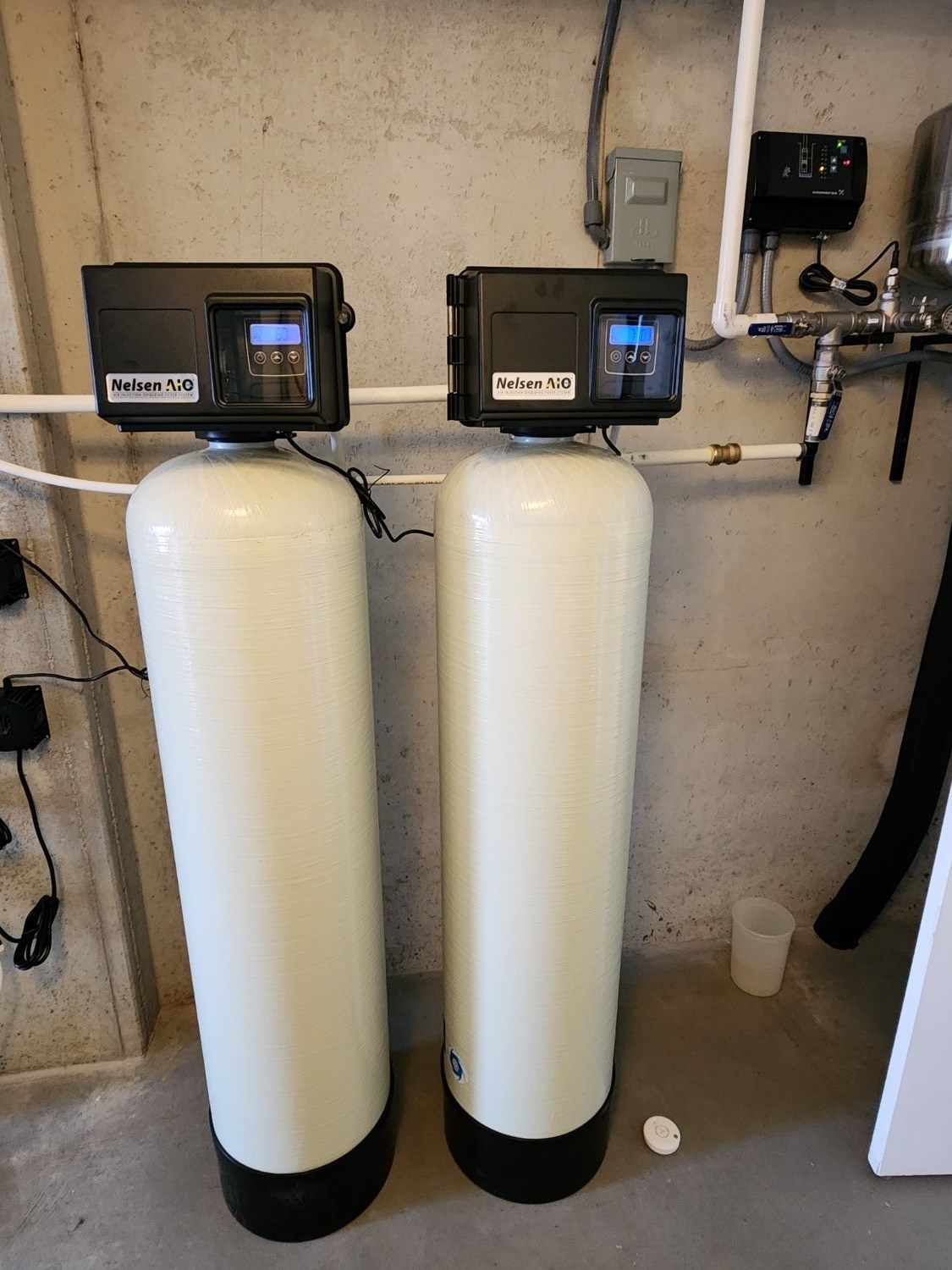
Floor space and clearanceThe tank is 13" in diameter and 54" tall; allow about 58" of overall clearance with the valve head. The two-stage combos place two such tanks side by side, plumbed in series.
No drain, no outletNothing else to rough in. There is no drain line, no brine line, and no power cord, which is why this system fits finished basements, crawlspaces, garages, well houses, and outbuildings.
Water inside the media's limitsIron below 0.3 ppm and manganese below 0.05 ppm (iron filter first if above), pH 6.5 or higher (acid neutralizer first if below; the AN combo covers it), and free chlorine under 3 ppm on city water (the carbon combo covers it).
Correct upflow orientationThe C1190 is an upflow in/out head: water must enter the correct port so it travels up through the Filtersorb bed. Your plumber confirms flow direction at the valve before soldering anything.
What your plumber will do
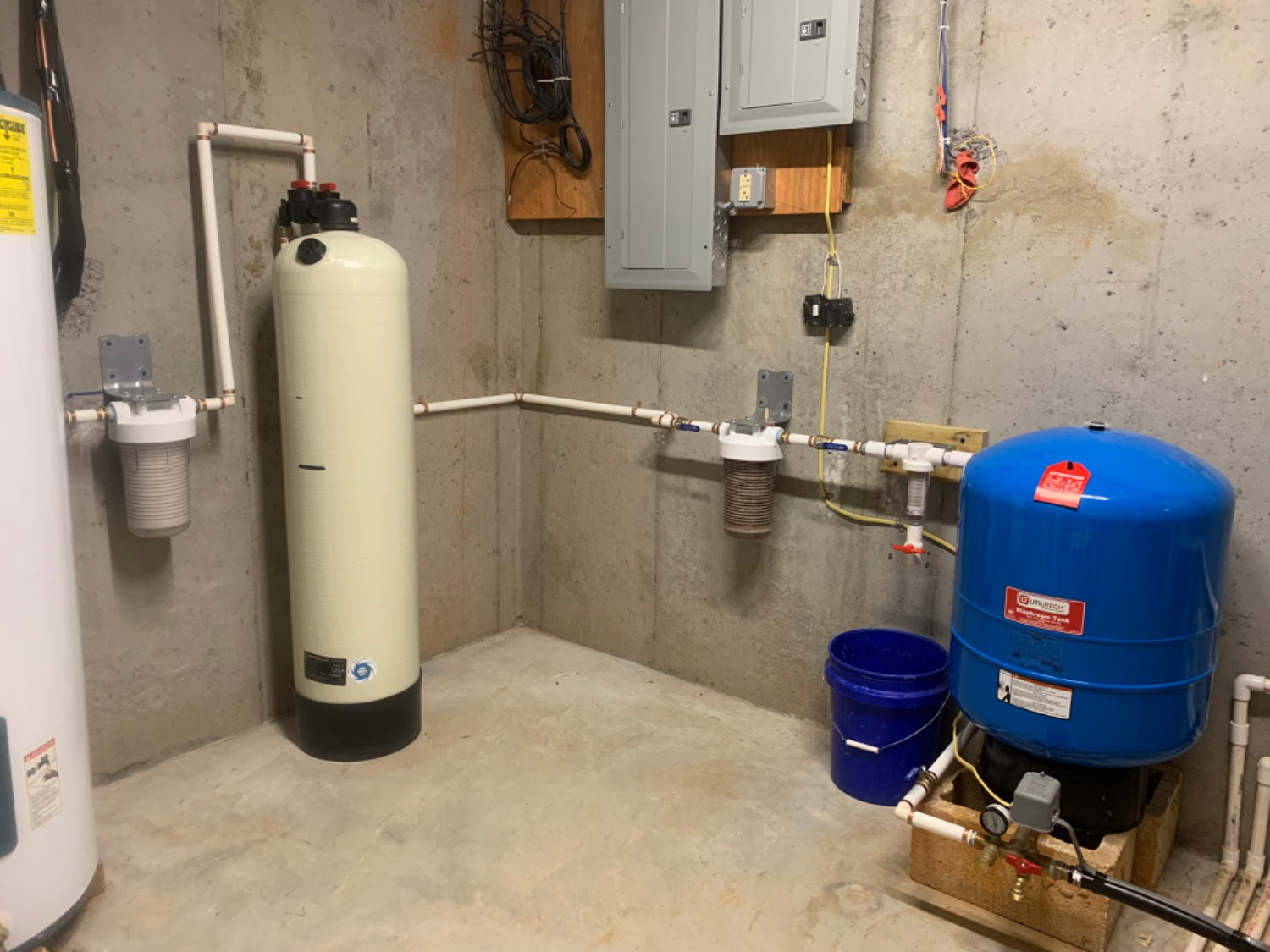
Position the conditioner after the pressure tank and any sediment filter. On wells with iron, it goes after the iron filter; on the two-stage combos, the acid neutralizer or carbon tank is plumbed first and the conditioner second.
Stand the tank on a level patch of floor. No brine tank, no drain run, and no outlet hunt: placement is wherever the 1" line passes.
Attach the integrated bypass to the Clack C1190 valve so the system can be isolated for service.
Plumb the 1" inlet and outlet, confirming the upflow direction at the valve head. CPVC with solvent cement or PEX with SharkBite fittings both work.
Open the water valve slowly, 1/4 turn at a time. A sudden rush can channel the media bed, and consistent contact with the bead surfaces is what drives the crystallization.
Flush the system until the water runs clear; fresh media ships with a harmless mineral dust that rinses out in the first minutes of flow.
Write the install date on the tank. There is no regeneration to program and no salt to schedule; the one maintenance item is replacing the Filtersorb SP3 media in roughly 5 to 7 years.
Show your plumber exactly what's going in. The system builder generates a plumbing schematic for your specific setup. Send it to your plumber before install day.
TAC conditioning vs everything else sold for hard water
Hard water has one true removal fix and several scale-management alternatives, and they are not interchangeable. Ion exchange softening removes the hardness with salt regeneration. TAC conditioning crystallizes it so it can't stick, with zero infrastructure. Citrus chelation binds it from a replaceable cartridge. Magnetic descalers claim a field does the work; independent testing has never reliably backed that up.
The table is the honest map: what each technology removes, what it prevents, what it costs to own, and what we actually sell. We carry TAC and salt-based because each is the right tool for a different home.
Feature
TAC Conditioner (Ours)
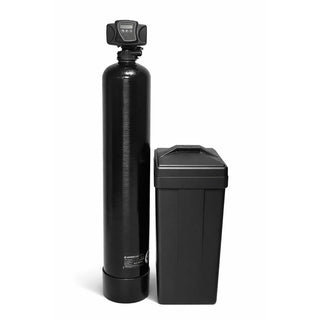
Salt-Based Softener (We Sell These Too)
Citrus Chelation
Magnetic / Electronic Descaler
No Treatment
Removes hardness
No (honest answer)
Yes, completely
No
No
No
Stops scale buildup
Yes: crystallizes minerals so they can't stick
Yes: removes the minerals entirely
Partial: binds minerals while cartridge is fresh
Unproven in independent testing
No
Soap lather / slick soft feel
No change
Yes
No change
No change
No
Salt / drain / electricity
None of the three
Salt + drain + outlet required
None, cartridge only
Outlet (electronic models)
None
Septic / brine-ban friendly
Yes: zero discharge
Discharges brine each regeneration
Yes
Yes (does nothing to discharge)
Yes
Media / consumables
Filtersorb SP3 every 5-7 years ($595-$995)
Salt monthly; resin lasts 10-15+ years
Cartridges on a recurring schedule
None (nothing measurable happening)
None
Certified media
NSF/ANSI 61 & 372 (WQA + IAPMO)
NSF-certified resins available
Varies by brand
No certified treatment media
n/a
Price
$2,895 (system)
From $1,995
Varies
$50 - $500 (we don't sell them)
$0 now, scale damage later
Real customers, real water
What owners say about the non-electric Clack platform our conditioner runs on
Reviews are collected by Stamped.io, a third-party review service that emails customers after their order. Stamped does not let us edit a review’s words or star rating.
★★★★★
Conditioner
Great service and would like to thank Aiden for his assistance on this purchase and my previous purchase of a neutralizer. ALL'S GOOD
LS
Lester S., United States
Verified Buyer
Clack 1.5 cu ft Salt Free Water Conditioning System (Filtersorb media) · May 2020
★★★★★
Clack 2.5 Cubic Foot Non Backwashing Acid Neutralizer
I received the tank and chemicals last week. It was installed two days ago and the installation was simple. I appreciate the simple design with no settings, dials or electronics. There were no issues. The neutralizer is a high quality product.
Clack 2.5 Cubic Foot Vortech Non Backwashing System
Outstanding! Arrived undamaged and very nicely shipped on a pallet. Phone support was amazing. Very pleased with everything. Highly recommend Mid Atlantic Water to anyone needing a superior product at a great price.
HW
Hugh White, United States
Verified Buyer
Clack 2.5 Non-Backwashing Neutralizer (same Vortech tank platform) · March 2023
FAQ
Frequently asked questions
Yes, for the job they actually do: preventing scale. TAC media (Watch Water Filtersorb SP3 in our systems) converts dissolved calcium and magnesium into microscopic crystals that flow through your plumbing instead of sticking to pipes, water heaters, and fixtures. What they do NOT do is soften: the minerals stay in the water, a hardness test still reads hard, and soap behaves the same. Brands that blur that line are selling the wrong expectation; we put it on every surface of this page.
The honest list is real. Hardness stays in the water, so no soap lather improvement, no slick soft-water feel, and spotting can persist on dishes and glass. The media has chemistry limits: iron above 0.3 ppm or manganese above 0.05 ppm poisons it, pH below 6.5 is out of range, and chlorine above 3 ppm degrades it. The replacement media is genuinely expensive ($595 to $995 by tank size every 5 to 7 years). And there is no easy way to measure that it is working, because the water still tests hard. The trade you get back: no salt bags, no drain, no electricity, no wastewater.
For most homes, salt-based wins, and we say that while selling both. A salt softener removes hardness completely: real lather, the slick feel, zero-gpg test strips, full spot prevention, and resin that lasts 10 to 15+ years. A salt-free conditioner only prevents scale. Choose salt-free when a softener physically cannot go in: no drain or outlet at the install spot, septic concerns, brine-discharge restrictions (California, Arizona, parts of Texas), or a salt-restricted household. That placement freedom is the entire case for salt-free, and it is a good one when it applies.
Plan on 5 to 7 years per media bed. Filtersorb SP3 is not consumed by regeneration because there is none; the bead surface simply wears out of templating capacity over time. Replace the media roughly every 5 to 7 years under typical residential conditions ($595 to $995 depending on tank size) and the tank and non-electric Clack valve keep going. Iron, manganese, low pH, and chlorine all shorten media life, which is why we publish those limits and sell pre-treatment combos.
A scale-prevention system, not a softener. Inside the tank, Template Assisted Crystallization media (TAC, also called NAC by the manufacturer, Watch Water GmbH) provides nucleation sites where dissolved calcium and magnesium form microscopic, stable crystals. Those crystals stay suspended and wash through the house instead of plating onto hot surfaces. No salt, no brine tank, no backwash, no drain, no electricity. Ours runs 14 liters of Filtersorb SP3, the only NSF/ANSI 61 listed TAC media in North America, on a non-electric Clack C1190 upflow valve.
Because the hardness is still there, and that is by design. TAC conditioning converts dissolved calcium and magnesium into microscopic crystals that can't stick to your plumbing, but it removes nothing from the water. A test strip or a plumber's hardness kit measures total mineral content, so it reads the same before and after the conditioner.
The proof a conditioner is working is what stops happening: no new crust on showerheads, no scale ring building in the water heater, fixtures that wipe clean. If you want the number on the test strip to drop to zero, that is removal, and removal means a salt-based ion exchange softener.
A salt-free conditioner adds nothing: no sodium, no chemicals, no media residue. Filtersorb SP3 is a catalyst surface, certified to NSF/ANSI 61 and 372 for potable water contact, and the crystallization reaction only rearranges minerals already in your water.
The salt softener question rests on a misconception we correct on the phone weekly: the salt in a softener's brine tank regenerates the resin bed, it does not pour into your drinking water. Softened water picks up a small amount of sodium in exchange for the hardness (roughly proportional to how hard your water was), but it does not taste salty, and the salt-restricted-diet case for salt-free is about avoiding even that exchange plus the brine discharge, not about salty water.
Only with iron treated first. Iron and manganese coat the Filtersorb bead surfaces and shut the crystallization down; a fouled TAC bed does not recover. Our line is iron below 0.3 ppm and manganese below 0.05 ppm, deliberately more conservative than the manufacturer's 0.5 ppm absolute max, because the media is too expensive to gamble with.
Above those numbers, an iron filter goes ahead of the conditioner, and we will tell you that before you buy, not after the bed dies. We have taken calls from homeowners whose conditioner-plus-neutralizer setups were still staining because nobody addressed the iron first; the sequencing is not optional. Send us your water test and we'll order the train correctly.
Up front: $2,895 for the 2.5 cu ft flagship, $3,895 to $3,995 for the two-stage combos. Ongoing: zero salt, zero electricity, zero water sent to a drain. The one real cost is the media itself, and we'll be straight with you: Filtersorb SP3 is expensive. Replacement runs $595 to $995 by tank size, roughly every 5 to 7 years.
Compare honestly against a salt softener: the Fleck 5600SXT is $1,995 up front, uses a few bags of salt a month, and its resin lasts 10 to 15+ years. Per year of ownership the softener is usually cheaper AND it actually removes hardness. Salt-free wins on placement freedom (no drain, no outlet, septic-safe, brine-ban compliant), not on lifetime cost, and we'd rather you buy it for the right reason.
A salt softener regenerates by flushing brine to a drain, and that discharge is the issue. On septic, the salt load goes into your tank and drain field. In jurisdictions that restrict or ban brine discharge (parts of California and Arizona, some Texas municipalities), a conventional softener is regulated or off the table entirely; the Reddit threads about Los Angeles softener bans rank on page one of this very search.
A salt-free conditioner discharges nothing because there is no regeneration: no brine, no backwash, no wastewater at all. That makes it the clean choice for septic households, brine-restricted areas, and any install where running a drain line is impractical. It also means there is nothing to plumb except the inlet and outlet.
No, and we won't sell them. Magnetic and electronic descalers clamp onto your pipe and claim to alter hardness with a field as the water flips past. Independent testing has never reliably reproduced their claims, there is no certified media doing measurable work, and there is nothing to inspect or replace because there is nothing happening.
TAC is different in kind, not degree: it is a physical catalyst bed with NSF/ANSI 61 listed media, a documented crystallization mechanism, and published water-chemistry limits. It is the only salt-free scale technology we put our name behind, and even then we tell you exactly what it won't do: soften your water.
You would not want both on the same line: a softener removes the calcium and magnesium entirely, which leaves the TAC stage nothing to crystallize. They are alternative answers to hard water, not teammates. Pick by outcome: scale prevention with zero infrastructure (salt-free) or true soft water (salt-based).
What DOES pair with a conditioner is pre-treatment that protects it: an iron filter on wells above 0.3 ppm iron, an acid neutralizer below pH 6.5, or a carbon tank on chlorinated city water. Those are exactly the two-stage combos on this page, and both keep the entire train saltless, drainless, and non-electric.
Want Aidan to tell you if salt-free is even right for you?
Paste your water details below. Aidan replies with the honest answer: the conditioner, one of the two-stage combos, or a salt-based softener if that is what your goals actually call for. He sells both, so the advice has no thumb on the scale. Same-day during business hours, next morning otherwise.
✓
Your message is queued for Aidan
Your email client just opened with the message ready to send. Hit send and Aidan will reply same day during business hours.
Aidan
Co-owner. Real person. Not a bot. 7 Days/Week, 8AM-5PM EST