


Best Whole House Iron Filter for Your Well Water | 🇺🇸 2026
Iron Water Filtration for Well Water
Best Whole House Iron Filter for Your Well Water (What Actually Works) | 🇺🇸 2026
If you’re looking for a filter for iron in well water, here are the practical details people ask about most: no chemicals, low ongoing upkeep, how long the media lasts, and what backwashing looks like day to day.
Want to understand iron types, why most solutions fail, and how to size a system before buying? Start with our Complete Guide to Iron Filters for Well Water. Not sure if a filter is even the right approach? Compare all 5 iron removal methods: How to Remove Iron from Well Water.
We've tested various iron filters for 15 years and found what works the best for well water:
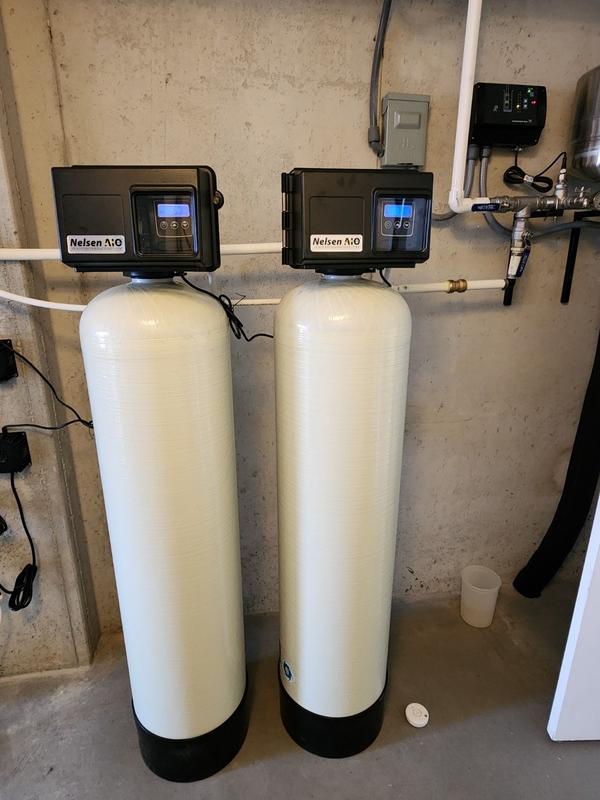
Fleck 2.5 Cubic Foot 2510AIO Advanced Iron Filter (Katalox-Light™) (AIO™ Air Injection)
- Best proven performance through 15 years of real experience: We've tried Birm, green sand, and carbon filters, and found the 2510 AIO with Katalox Light to work best.
- Strong removal ratings: Designed to remove up to 30 ppm iron, plus up to 10 ppm sulfur (rotten egg odor) and 15 ppm manganese. If you have both iron and manganese, read our dedicated guide: Iron and Manganese in Well Water.
- Better backwash cleaning: Uses a 2.5 cubic foot Vortech tank that lifts and circulates the bed during backwash to clean the media more effectively.
- Low upkeep: No chemicals and no annual maintenance. Media is typically replaced every 6 to 8 years (sometimes longer with low water usage).
- pH help: If pH is 6.0+, Katalox Light can help raise pH toward the range recommended for iron removal. If pH is around 5.5, we recommends an acid neutralizer before the iron filter.
- Chemical-free: No chemicals are involved in the iron water treatment process.
- Annual maintenance: No annual maintenance is required (beyond normal system checks).
- Katalox Light media life: Typically 6 to 8 years, and in low-usage homes sometimes 8 to 10 years.
- Septic safety: Generally safe for septic systems that are in good operating condition.
- Backwash: About 14 minutes per cycle at roughly 7 to 10 gallons per minute (varies by unit size).
Is the filter in the video right for your home?
Skip the guesswork. Answer 2 questions and we'll instantly validate if this system is an exact match.
In this guide:
Comparison: Why we use Katalox-Light vs. Others
We selected the 2510AIO with Katalox-Light because it outperforms older media types in typical well water scenarios.
| Media Type | Removes Rotten Egg Smell? | Requires Chemicals? | pH Requirement | Lifespan |
|---|---|---|---|---|
| Katalox-Light (Our Pick) | Yes (High) | No | 6.0+ | 6-10 Years |
| Greensand | Minimal | Yes (Permanganate) | 6.2 - 8.5 | 4-6 Years |
| Birm | No | No | Neutral (7.0+) | 3-5 Years |
Review from a consumer who purchased this iron filter:

"I have well water with over 20 ppm ferrous and 7 ppm of ferric iron, along with manganese and some sulfur. I was rejected by local water companies saying they could not help me... I purchased two Fleck 2510AIO Iron Filter tanks with Katalox-Light... and now the tanks reduced the iron to literally zero!"
Chemical-Free Iron Water Treatment Benefits
Many homeowners searching for iron water filtration want a solution that avoids chemical feeding. This approach is chemical-free, meaning there are no chemicals involved in the treatment process. If you're still diagnosing your water issues, our well water problems guide walks through every common symptom and the right fix for each.
Once your iron filter is in place, some homeowners also add an under-sink reverse osmosis system at the kitchen tap for the purest possible drinking water. An iron filter handles the whole house; RO handles the drinking water as a final polishing step.
Another common concern is ongoing upkeep. There is no annual maintenance required. In fact, iron filters are one of the lowest-maintenance systems in a well water setup. For a full maintenance schedule covering all your equipment, see our well water system maintenance guide. In practice, most owners still do basic system checks and keep an eye on performance, but there isn’t a yearly chemical or media replacement schedule baked into the design.
How Long Does Katalox Light Media Last?
Media life depends on your water usage. As a general expectation, you’ll get about six to eight years out of Katalox Light media.
If your home uses very little water, some customers have reported eight to ten years of media life. That range is still driven by real-world usage, so it’s best treated as a “typical vs. low-usage” expectation.
| Scenario | Expected media life | What drives it |
|---|---|---|
| Typical household usage | 6 to 8 years | Higher daily water use generally shortens media life. |
| Minimal household usage | 8 to 10 years (reported) | Lower water use can extend media life. |
Tip: If you’re comparing a well water filtration system for iron, media life and how it’s affected by usage is a key long-term cost lever.
Septic Safety and Backwash Water Usage
Is an iron filter safe for septic systems?
The system is typically safe for your septic system as long as your septic system is in good operating condition. If your septic system is already struggling, any additional water discharge can be an issue, so it’s worth ensuring the septic side is healthy.
How much water does backwashing use?
Backwash duration is about 14 minutes. Flow rate is typically 7 to 10 gallons per minute, depending on the size of the unit installed in your home.
That means a single backwash cycle uses roughly 98 to 140 gallons (14 minutes × 7–10 GPM).
| Backwash detail | Typical value |
|---|---|
| Cycle length | About 14 minutes |
| Flow rate | About 7 to 10 GPM (depends on unit size) |
| Estimated water used per cycle | ~98 to 140 gallons |
Keep Reading
- How to Install a Whole House Iron Filter
- The Correct Order for Well Water Treatment Systems: where your iron filter goes in the full treatment sequence
- Iron Curtain vs Katalox Light: what Hellenbrand's two-tank Iron Curtain is, what dealers charge, and how it differs from our one-tank air injection filter
- How to Install a Well Water Filtration System (Complete Guide): covers iron filters and every other system type
- Best Sediment Filter for Well Water: a sediment pre-filter protects your iron filter from sand and grit damage
- Well Water Treatment System Cost Guide: full pricing breakdown for iron filters and complete multi-tank setups
Drinking Water on Well Water
After your iron filter is handling the whole house, many homeowners add a reverse osmosis system under the kitchen sink for the purest possible drinking water. Read more: Reverse Osmosis for Well Water: When You Need It
FAQ: Iron Removal from Well Water
What’s the best filter for iron in well water?
The Fleck 2510AIO 2.5 Cubic Foot Advanced Iron Filter is widely considered the best overall, chemical free system for removing high levels of iron, manganese, and sulfur. It handles up to 30ppm of iron and uses a Vortech tank. But "best” depends on your iron type and levels.
How do I know if I need iron water filtration?
Start with an iron in water test (or “testing well water for iron”). See our guide to testing your well water. Once you know your iron level and any other issues (like hardness, manganese, sulfur, or bacteria), you can match the right treatment approach. Not sure what your numbers mean? Our How to Read Your Well Water Test Results guide breaks down every parameter.
Can a water softener remove iron?
A water softener can sometimes help with small amounts of certain iron, but many homes with noticeable iron issues use an iron filter (or iron treatment stage) and then add a softener if hardness is also a problem.
Is a whole house iron filter worth it?
If iron affects multiple fixtures, laundry, appliances, or taste and odor, a whole house iron filter for well water can be worth it because it treats all water entering the home and reduces downstream damage and staining. See our complete whole house water filter guide.
About the Expert: Aidan Walsh
With over 30 years of hands-on experience in water treatment, Aidan serves as the lead technical expert at Mid Atlantic Water. He specializes in diagnosing and designing whole-home water filtration solutions for residential wells, with deep expertise across iron, sulfur, hardness, acidity, and overall water quality issues.