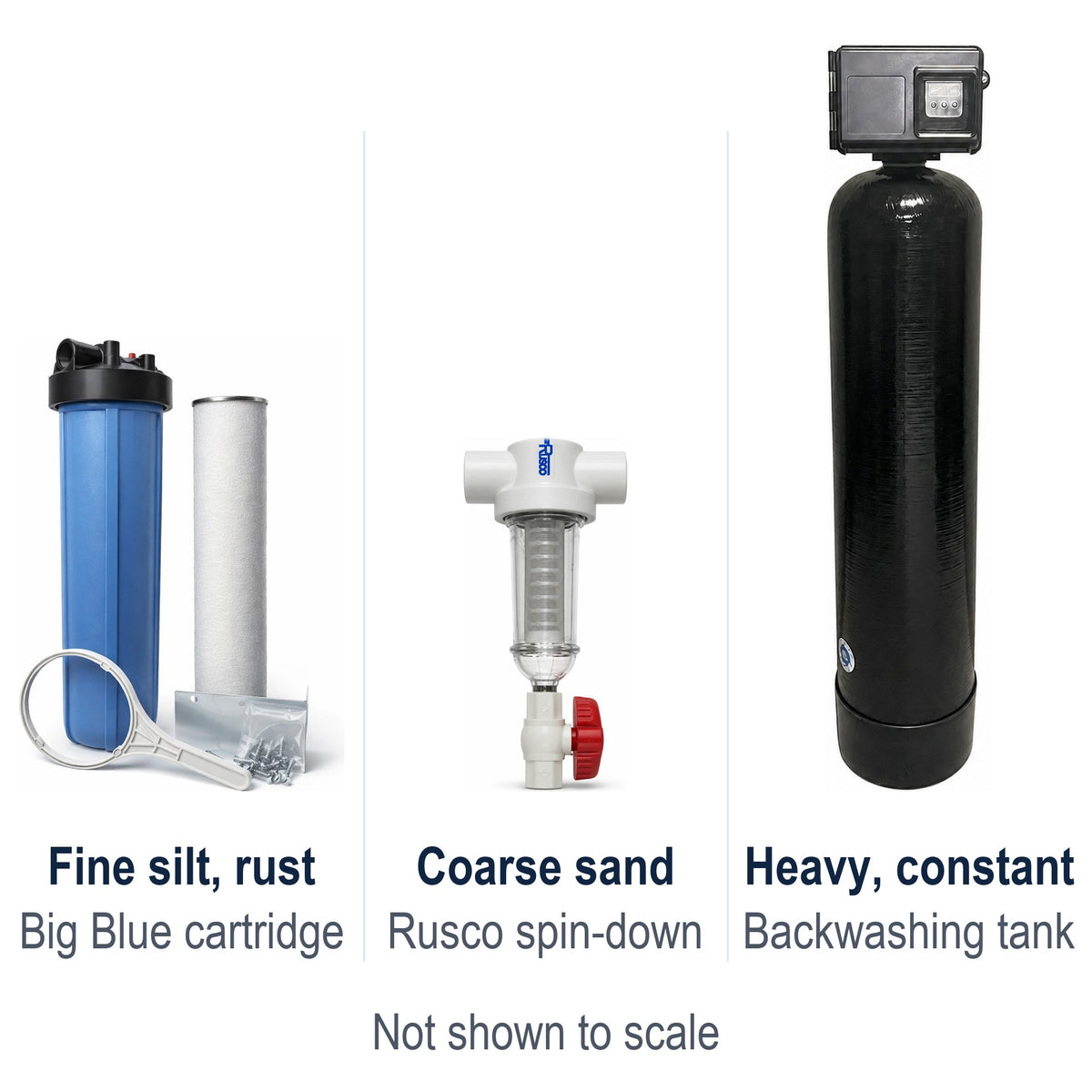
This page sells sediment filters for private wells and helps you choose one. Sediment is particles: sand, silt, grit and rust flakes. Match the filter to the particles. Fine silt and rust: a 5 micron Big Blue cartridge kit, the 20 inch ($195, for 3 or more people, the one most buyers choose) or the 10 inch ($165, for 1 or 2 people); each kit includes a Pentek housing, one 5 micron cartridge, a wall bracket with screws and a wrench, and replacement cartridges are $55 and $45, about every 4 to 6 months on a typical well. Coarse sand you can see: a Rusco spin-down with a 60 mesh screen (about 250 micron) that you flush in about 2 seconds, the 1 inch ($145, 1 to 25 GPM) or the 2 inch ($249, 18 to 100 GPM). Heavy, constant sediment that clogs a cartridge within weeks: the backwashing tank ($1,895), a 13 x 54 inch tank of Turbidex media with a Fleck 2510 valve that rinses itself to a drain; it needs a drain, an outlet and about 14 to 18 gallons a minute from the well pump. The Big Blue goes right after the pressure tank, ahead of every treatment tank; a spin-down added for treatment tanks goes last; nothing goes between the pump and the pressure tank. A sediment filter does not remove dissolved iron, manganese, hardness, low pH, a sulfur smell or bacteria. Tanks ship empty with the media in separate bags; no drain line is included. We recommend a plumber: a Big Blue or Rusco is an inlet and an outlet, about an hour or two of a plumber's time, and the backwashing tank about 2 to 3 hours. Aidan supports your plumber by phone, and if you'd rather do it yourself you can text him with questions. Free shipping to the lower 48 states. Co-owner Aidan (32 years in this business) sizes the filter free. Call 800-460-5810 or text Aidan at 443-277-2204.
By Aidan· 32-year water expert, Mid Atlantic Water ·
Sediment comes out of well water mechanically: the water pushes through, the particles stay behind. The whole game is matching the filter to your particles. Fine silt and rust want a 5 micron Big Blue depth cartridge (the industry-standard rating). Visible coarse sand wants a Rusco spin-down screen you flush clean in seconds, with zero cartridge cost. Continuous heavy sediment wants the self-cleaning backwashing Turbidex tank.
Prices: the 20 inch Big Blue kit is $195 and is the one most buyers choose; for one or two people, the 10 inch is $165. The 1 inch Rusco is $145 and the 2 inch $249. The backwashing tank is $1,895. The Big Blue goes first, right after the pressure tank. A sediment filter only catches particles: dissolved iron, a smell or hard water pass straight through, and Aidan tells you what goes after it. He compares all three in a 4-minute video.
Stops sand, silt & rust to 5 micron
No electricity, no drain (cartridge & spin-down)
Protects the treatment tanks after it
Replacement cartridges $45 to $55
Free shipping to the lower 48 states
Free sizing with Aidan
Lift the toilet tank lid first. A layer of sand or silt on the bottom means your well is sending sediment, and a filter on this page catches it. Orange stains, a rotten egg smell or white spots are different: they come from iron, sulfur or hardness dissolved in the water. No sediment filter removes those, so send Aidan your water test first.
0 products match your filters.
No products match those filters. Try adjusting your water conditions or .
Big Blue Cartridge Sediment Filter Kits
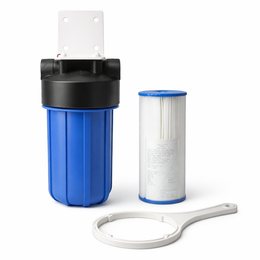
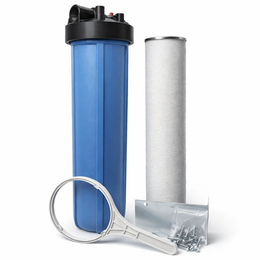
The whole-house default. A pressure-rated Pentair Pentek Big Blue housing with a 5 micron polyspun depth cartridge, the industry-standard rating for catching fine sand, silt, and rust without choking your flow. No electricity, no drain: water pushes through, particles stay in the cartridge. One or two people: the 10 inch. Three or more: the 20 inch, whose cartridge is twice the length and holds more dirt between changes. Each kit includes the housing, one 5 micron cartridge, a wall bracket with screws and a wrench.
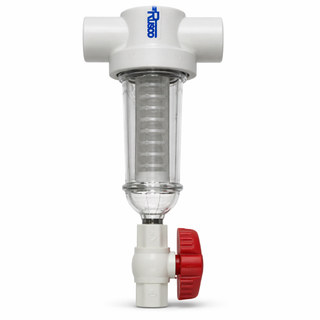
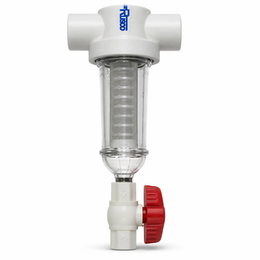
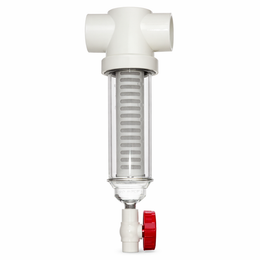
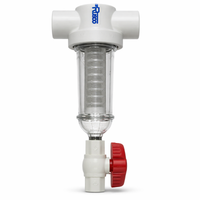
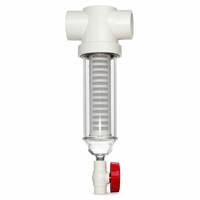
Reusable-screen filters for coarse sand and grit. Water spins inside the clear bowl, the heavy grit drops to the bottom, and opening the valve under it flushes the grit out in about 2 seconds, with no cartridge to buy. Both come with a 60 mesh screen (about 250 micron): it stops sand, not fine silt. The 1 inch handles 1 to 25 GPM; the 2 inch covers 18 to 100 GPM for high-flow homes and irrigation. On a line with treatment tanks, the spin-down goes last, after them.
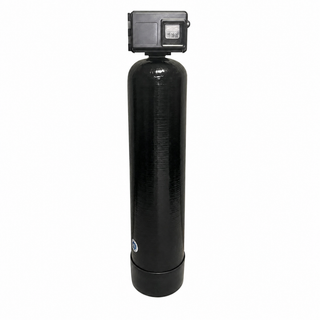
For wells with heavy sediment all the time, where a cartridge clogs within weeks. A 13 x 54 inch Vortech tank of Turbidex media. On a schedule, its Fleck 2510 valve runs the water backward and rinses the trapped sediment down a drain. No cartridges to change. It needs a drain, a power outlet, and about 14 to 18 gallons a minute from your well pump while it backwashes. Send Aidan your water test or a photo of the sediment before you order it.
Carbon Cartridges for Big Blue Housings (Taste and Odor)
Carbon cartridges that fit the same Big Blue housings. They are not sediment filters: carbon reduces chlorine taste and odor. A two-housing setup runs the 5 micron sediment cartridge first and the carbon cartridge second. For a sulfur smell or heavier chlorine, see the whole-house carbon tanks.
Replacement 5 micron cartridges for the 10 inch ($45) and the 20 inch ($55) Big Blue. On a typical well, you change one about every 4 to 6 months. Also Rusco replacement screens, from 60 to 1000 mesh, for both spin-down sizes. A finer screen catches smaller grit but fills faster.
Photo, PDF, or just type the numbers, whatever’s easiest. Don’t have a test yet? Describe what you’re seeing.
2
Aidan reads it personally
He is the co-owner and the one in our videos.
3
Get a direct link to what you need
Aidan texts you the exact product page that fits your water. Buy it, bookmark it, or take the answer elsewhere. No pressure either way.
We never send spam. We never sell your number. Aidan answers personally, 7 days a week, 8a–5p ET.
Side by side
Three filter types compared
What each type catches, what it misses, and what it costs to own. Your sediment decides, not the brand on the housing.
Best for
Weak spot
Upkeep
Price
Big Blue cartridge
Fine silt, sand and rust, to 5 micron
Clogs fast on heavy coarse sand
New cartridge about every 4 to 6 months: $45 or $55
$165 (10 inch) or $195 (20 inch)
Rusco spin-down
Coarse sand and grit you can see
Fine silt and rust pass its 60 mesh screen
Open the valve to flush it, about 2 seconds
$145 (1 inch) or $249 (2 inch)
Backwashing tank
Heavy sediment all the time
Needs a drain, an outlet and 14 to 18 GPM to backwash
Rinses itself to the drain
$1,895
The detail that matters most is matching the technology to your sediment, not the brand on the housing. Fine silt and rust need a 5 micron cartridge. Coarse sand needs a spin-down screen you flush, so you are not using up cartridges on grit. A well that clogs a cartridge within weeks needs the self-cleaning backwashing tank. We sell all three, so the one Aidan recommends is the one that fits your water.
A sediment filter only strains out particles. It does not remove dissolved iron, hardness, low pH, a sulfur smell or bacteria. If your water has those problems too, the sediment filter is the first stage, and Aidan tells you what goes after it from your water test. Prices checked against our store on October 8, 2026.
Step 1: Find Your Problem
What are the signs of sand, silt, grit, and rust particles in well water?
Sediment is a well problem you can often see: grit in a glass, a layer in the toilet tank, clogged aerators, cloudy water after rain. But orange stains, smells and white spots are different: they come from what is dissolved in the water, and no sediment filter touches them. Check the signs below.
Sand or grit settles in a glass of water
Fill a clear glass and let it sit. Particles that sink to the bottom are sediment: sand, silt, grit or rust flakes your well pump is pulling in. That is what a sediment filter catches. Fine particles that settle slowly need a 5 micron cartridge. Coarse sand you can see needs a Rusco spin-down.
→YESSediment filter fixes this
The toilet tank test: a layer of sediment in the cistern
Lift the toilet tank lid. The tank refills on every flush and the sediment settles there, so a layer of sand or tan sludge on the bottom means your well is sending sediment, even when a glass of water looks clear. It takes a quick look and costs nothing.
→YESThe free check
Clogged faucet aerators, screens, and dripping fixtures
Unscrew a faucet aerator. Grit packed in its little screen is sediment that already went through your pump, pressure tank and plumbing. A filter right after the pressure tank stops it there.
→YESStop it at the first stage
Water turns cloudy after heavy rain
Cloudy water that follows the weather can mean surface water is reaching your well. Fill a glass. If the cloudiness settles to the bottom, it is sediment, and a filter catches it. If it stays milky, it could be bacteria or fine clay, and only a lab test tells them apart. Test before you treat.
Size a Big Blue by the people in the house and a Rusco by flow. One or two people: the 10 inch Big Blue. Three or more: the 20 inch. Size a Rusco by gallons a minute (GPM): the 1 inch handles up to 25 GPM, and the 2 inch handles 18 to 100 GPM (it needs at least 18 to spin). The backwashing tank is sized to your well's output; Aidan checks it before you order.
A micron rating is the particle size a filter catches. Both Big Blue kits ship with a 5 micron cartridge, and Aidan uses 5 micron in every Big Blue: it catches fine silt and rust without choking your flow. Finer cartridges clog very quickly on well sediment. The Rusco's 60 mesh screen is much coarser, about 250 micron: it stops sand and grit, not silt.
Where it goes
Right after the well pressure tank, before any treatment tank, so the iron filter, neutralizer, softener and UV never see the sediment. A spin-down goes last, after the treatment tanks, to catch grit and any media a tank lets through. Nothing goes between the pump and the pressure tank.
We recommend having a plumber install it; Aidan supports your plumber by phone at 800-460-5810. If you'd rather do it yourself, text Aidan at 443-277-2204 with any questions. A Big Blue or a Rusco is the smallest job: just an inlet and an outlet, with no drain line and no electricity, about an hour or two of a plumber's time. The backwashing tank is one tank with a drain. The drain line, with an air gap, is the part that takes planning, and the valve needs an outlet. A plumber typically charges about $800 for 2 to 3 hours.
1 to 2 hrs
Plumber time for a Big Blue or a Rusco. The backwashing tank takes about 2 to 3 hours.
None
No electricity, no drain for the cartridge and spin-down filters. Only the backwashing tank needs an outlet and a drain.
Free
Phone support. Aidan answers your plumber's questions by phone.
What to have ready
Access to the main line after the pressure tankA Big Blue goes on the main line right after the well pressure tank, before every treatment tank, so all the water in the house passes through it. A spin-down added for treatment tanks goes last, after them.
1 inch plumbing with shut-offsBig Blue housings have 1 inch female threaded ports. The adapters, shut-off valves and thread tape are not in the kit. Both Ruscos come bare, with glue-on (slip) PVC ports and no fittings. On copper, PEX or CPVC your plumber adds the matching adapter. Valves on both sides let you shut the filter off for a cartridge change.
Room around the housingThe 20 inch Big Blue housing is about 23 inches tall and 7.5 inches across. Leave at least an inch and a half under it, so the bowl can come off with the wrench at a cartridge change. Keep it on the cold line, where it cannot freeze.
A bucket for spin-down flushingA Rusco cleans by opening the valve under the bowl for about 2 seconds at household pressure. Put a bucket under it, or run a short hose to a drain: the burst is strong.
Drain and outlet (backwashing tank only)The backwashing tank needs a floor drain, utility sink or standpipe, an outlet that is always on, and about 14 to 18 gallons a minute from your well pump while it backwashes. What ships: the empty tank, the Fleck 2510 valve with its bypass valve, the fill funnel, and the Turbidex in separate bags, poured into the tank at install. No drain line ships: your plumber sizes it and ends it above the drain with an air gap.
What your plumber does
Shut off the well pump, close the valve after the pressure tank, and open a faucet to let the pressure off.
Pick the spot on the main line right after the pressure tank, ahead of any treatment tank. A spin-down added for treatment tanks goes at the end of the line, after them.
Mount the Big Blue on its wall bracket so the pipe doesn't carry its weight. A 1 inch Rusco hangs in the pipe, bowl down.
Plumb the inlet and outlet the way the arrows point. Big Blue ports are threaded and take thread tape on the adapters. Rusco ports are glued PVC: let the joints cure before the water goes back on.
Put shut-off valves on both sides, so the filter can be serviced without shutting off the house.
Big Blue: set the cartridge in the bowl, wipe the O-ring and coat it with clean silicone grease, then hand-tighten the bowl. Do not over-tighten it.
Turn the water on slowly, press the red button on the Big Blue's cap to let the air out, run a faucet for 5 minutes and check every joint for leaks.
Backwashing tank: pour the Turbidex in through the fill funnel, run the drain line to the drain with an air gap, and plug in the valve. Call or text Aidan before changing any setting.
Show your plumber what's going in. The system builder draws your systems in installation order, from the well to the house. Send it to your plumber before install day.
Reviews are collected by Stamped.io, a third-party review service that emails customers after their order. Stamped does not let us edit a review’s words or star rating.
★★★★★
Would def use again!
Products came as ordered and on time. But even more than that was the help from this company prior to purchasing. Answered all my questions. Saved me a lot of money by actually caring and recommending the right thing vs what other companies were telling me.
KB
Kyler B., United States
Verified Buyer
20" Big Blue Sediment Filter Kit · January 2024
★★★★★
Very Happy
Great price, free shipping and sold in kit format which isn’t always the case.
PR
Pat R., United States
Verified Buyer
20" Big Blue Sediment Filter Kit · March 2023
★★★★★
Great Unit & Great Customer Support
Good unit, working as expected!!
MS
Mario S., United States
Verified Buyer
Fleck 2510SXT 2.5 Cubic Foot Sediment Removal System · March 2020
FAQ
Frequently asked questions
If your well sends any sediment, yes, and it goes first. Sand and silt get into everything after the pressure tank: an acid neutralizer's media, the control valves on your treatment tanks, faucet aerators and appliance inlets. A $145 to $195 filter right after the pressure tank catches it first. The free check: lift your toilet tank lid. A layer of sediment on the bottom means your well needs one.
For most wells, a 20 inch Big Blue housing with a 5 micron cartridge. It holds more dirt than a 10 inch, flows 15 GPM, and 5 micron is the industry-standard rating that catches fine sand, silt, and rust without choking flow. The exceptions: visible coarse sand wants a Rusco spin-down screen (reusable, zero cartridge cost), and continuous heavy sediment that clogs cartridges in weeks wants the self-cleaning backwashing Turbidex tank. Wells with treatment tanks run the Big Blue first and a Rusco spin-down after the tanks. One or two people can use the 10 inch.
Immediately after the well pressure tank, before everything else. The order: the pressure tank, then the sediment filter, then the treatment tanks. Aidan sets the order of an iron filter and an acid neutralizer from your test. A softener comes after them, and UV goes last. A spin-down screen, if you add one for the tanks, goes at the very end. Never install it before the pressure tank. If a filter there clogs, the pressure switch cannot tell, and the pump keeps running.
Not reliably, and you should not ask them to. Cryptosporidium cysts are about 4 to 5 micron (CDC), and many bacteria are smaller. A 5 micron sediment cartridge does not disinfect water. If your well turns cloudy after rain, test it first. For confirmed coliform, the fix is shock chlorinating the well plus a UV light, with a 5 micron sediment filter ahead of the UV. We read your results free.
Whenever you see sand in the clear bowl. Put a bucket under it and open the valve at the bottom: household pressure blows the sand out in about 2 seconds, with no tools and no cartridge. One of our verified Rusco reviewers put it well: 'simply open the ball valve to flush out the collected sediment,' though expect surprising pressure when you open it. The screen can come out to be rinsed, and a new 1 inch screen is $65 if you ever need one.
5 micron, which is what both Big Blue kits ship with and what Aidan uses in every Big Blue. It catches fine sand, silt and rust while the housing still flows 15 GPM. Going finer sounds like an upgrade, but a finer cartridge loads up faster and clogs very quickly on well sediment. The Rusco's 60 mesh screen (about 250 micron) does not go before the Big Blue. With treatment tanks, it goes at the end of the line, after them. To stop cysts, a 1 micron cartridge must be rated absolute or certified for cysts. The 5 micron cartridges in these kits are neither.
About every 4 to 6 months on a typical well; up to 12 months on a clean well, every other month on a dirty one. Change it sooner if the water pressure at your taps drops. The 20 inch cartridge is twice the length of the 10 inch, so it holds more dirt between changes. Replacement cost: the 20 inch 5 micron cartridge is $55 and the 10 inch (Pentek WP5BB97P) is $45. If you are changing cartridges more than every other month, call Aidan: a backwashing sediment tank may fit better.
Only the iron you can already see. Rust flakes are solid, so a 5 micron cartridge catches some of them. Dissolved iron, the clear-water iron that turns orange after it hits the air, passes straight through every cartridge, screen and media bed on this page. If your water stains orange or a lab test shows iron, an iron filter is the fix, and the sediment filter goes ahead of it to keep sand out of it. Send us your test and we'll map the order.
After. The 5 micron Big Blue goes first, right after the pressure tank, so the acid neutralizer, iron filter or softener behind it never sees fine sediment. The Rusco spin-down goes at the end of the line, after those tanks, where it catches coarse grit and any media a tank lets through, and you flush it clean in about 2 seconds. Nothing goes between the pump and the pressure tank. The cartridge handles the fine silt a 60 mesh screen cannot stop, and the screen catches what the tanks shed.
When sediment is heavy and constant enough that a cartridge clogs within weeks. The backwashing tank is a 13 x 54 inch Vortech tank of Turbidex media. On a schedule, its Fleck 2510 valve runs the water backward and rinses the trapped sediment down a drain, so there is no cartridge to buy. The trade-offs: it costs $1,895. It needs a drain, an outlet, and about 14 to 18 gallons a minute from your well pump while it backwashes. It is a bigger install, about 2 to 3 hours for a plumber. Send Aidan your water test or a photo of what clogs your cartridges before you order it.
A correctly sized one barely registers. Pentek rates the empty Big Blue housing at a 1 psi drop at 15 GPM. The cartridge adds a little more, and more as it fills with sediment. Rusco spin-downs flow 1 to 25 GPM (1 inch) and 18 to 100 GPM (2 inch). Pressure loss shows up when a cartridge is overdue for a change or the filter is too fine for the load. If your pressure sags within weeks of each new cartridge, talk to Aidan about the backwashing tank.
Taste and odor, not sediment. The carbon cartridges fit the same Big Blue housings, so a two-housing setup can run the 5 micron sediment cartridge first and a carbon cartridge second: particles stop first, then the carbon reduces chlorine taste and odor. A carbon cartridge is not meant to catch sand, and a sediment cartridge will not fix taste. For a sulfur smell or heavy chlorine, a whole-house carbon tank is usually the better fit.
Personalized recommendation
Want Aidan to size it for you?
Describe your sediment below. Aidan replies with the right filter (the 10 or 20 inch Big Blue, a Rusco spin-down, the backwashing tank, or the Big Blue with a spin-down after your treatment tanks) and where it goes in your treatment train.
✓
Your email to Aidan is ready to send
Your email app just opened with the message ready to send. Hit send and Aidan will reply.
Aidan
Co-owner. Real person. Not a bot. 7 Days/Week, 8AM-5PM EST