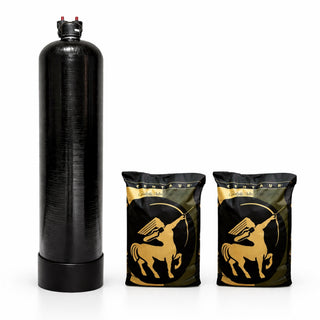
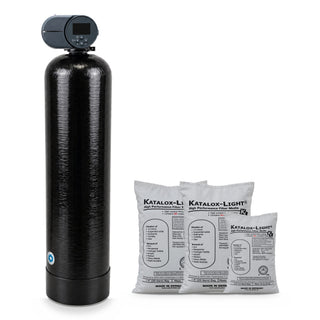
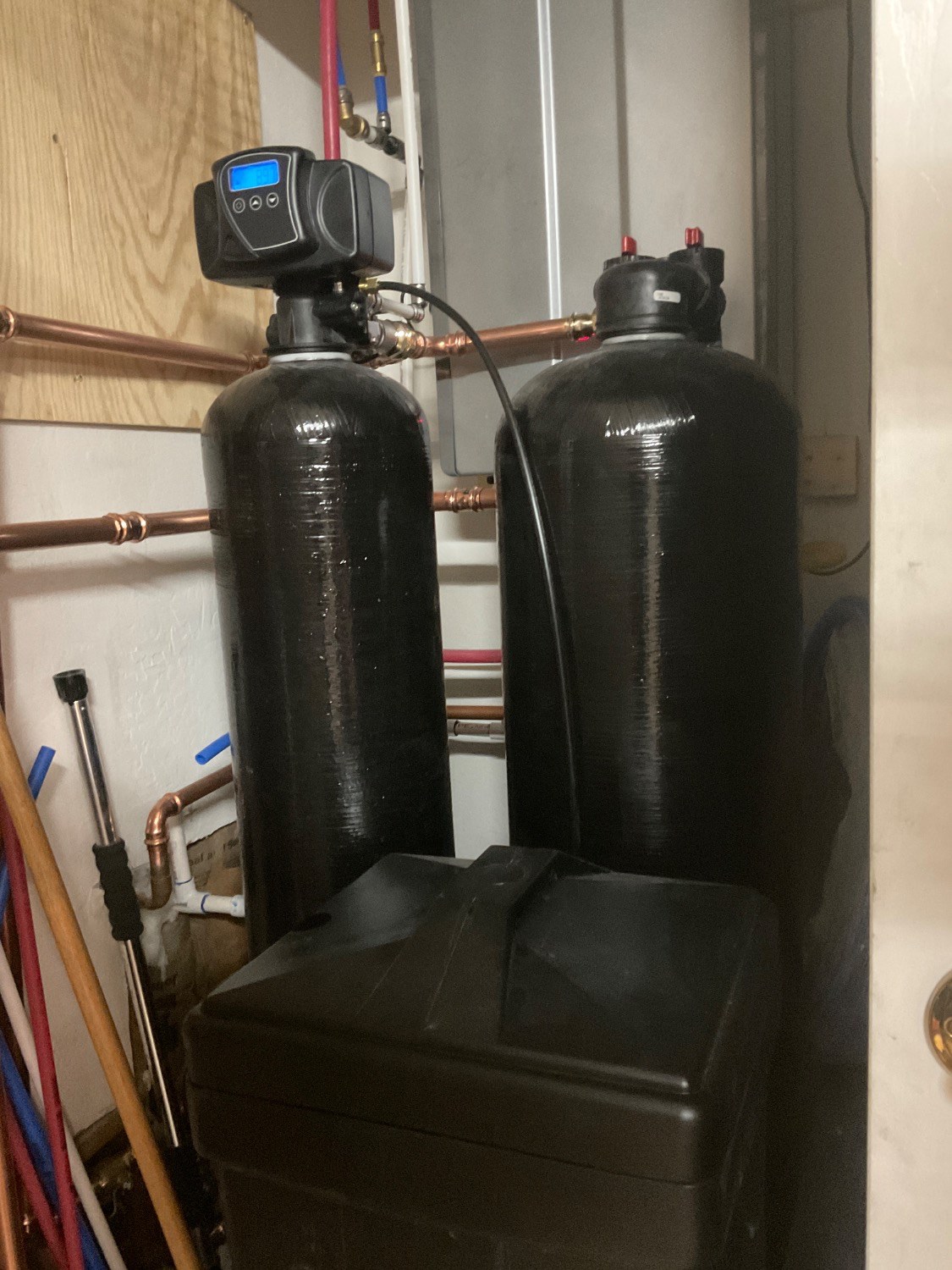
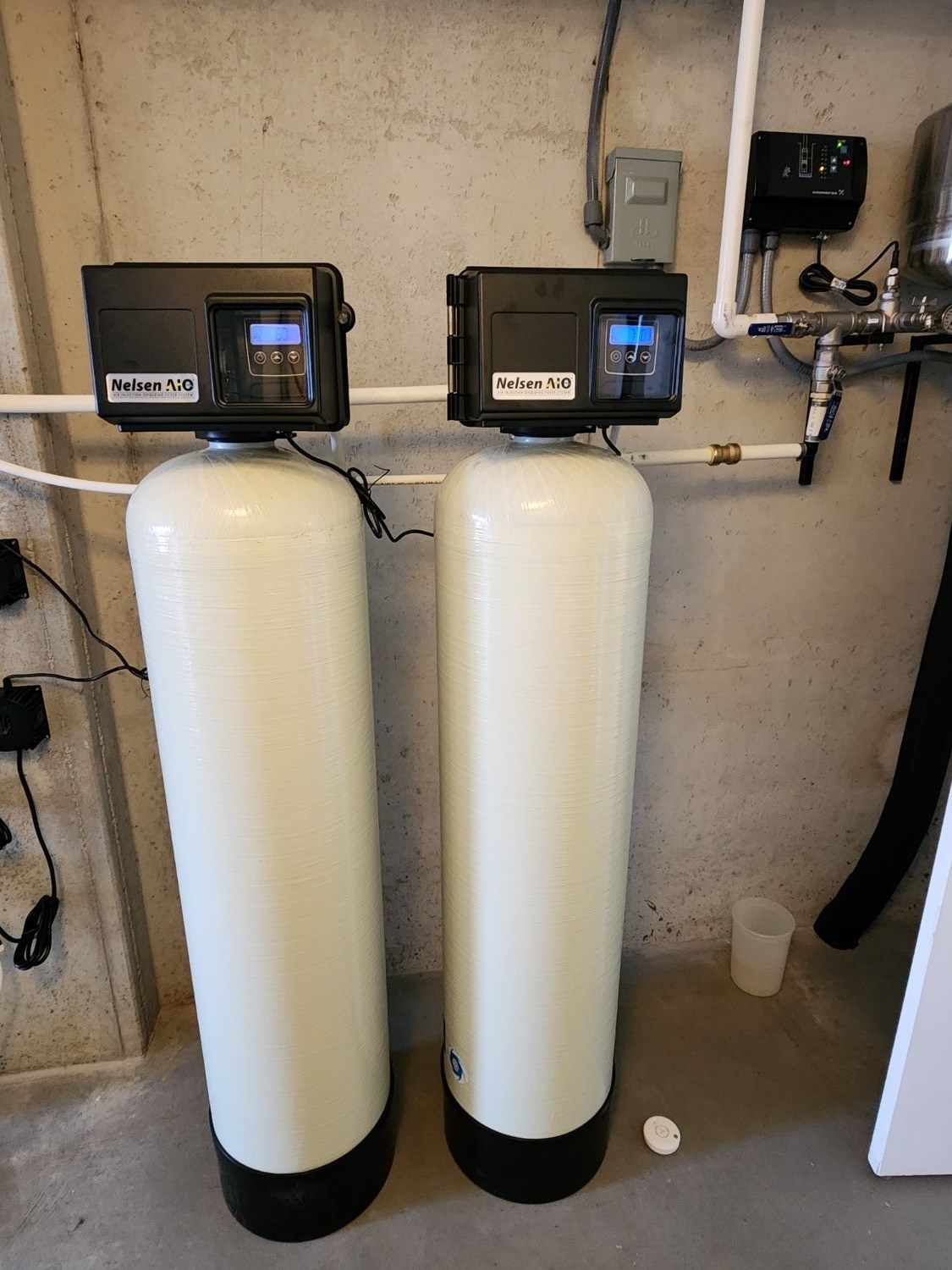
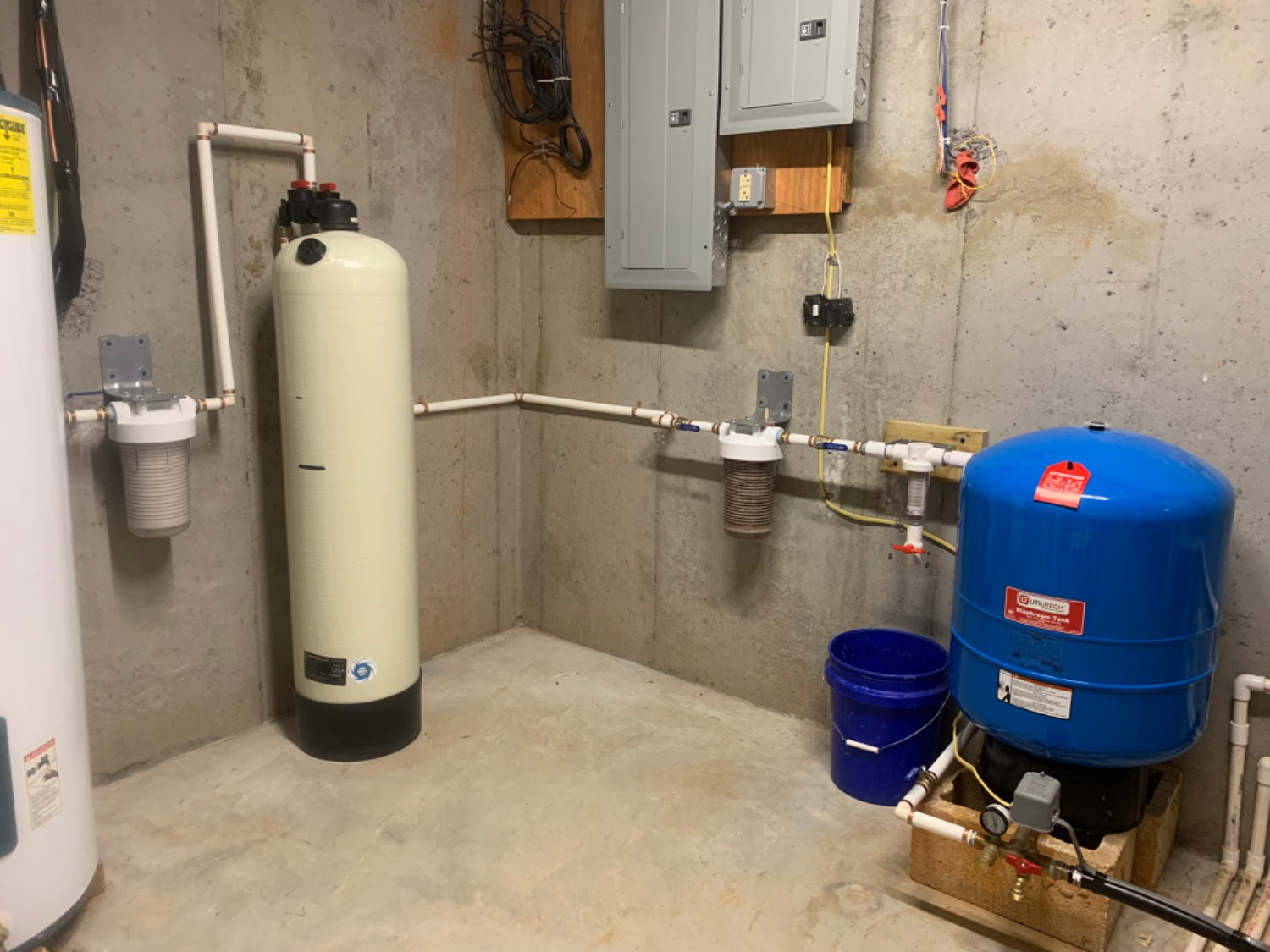
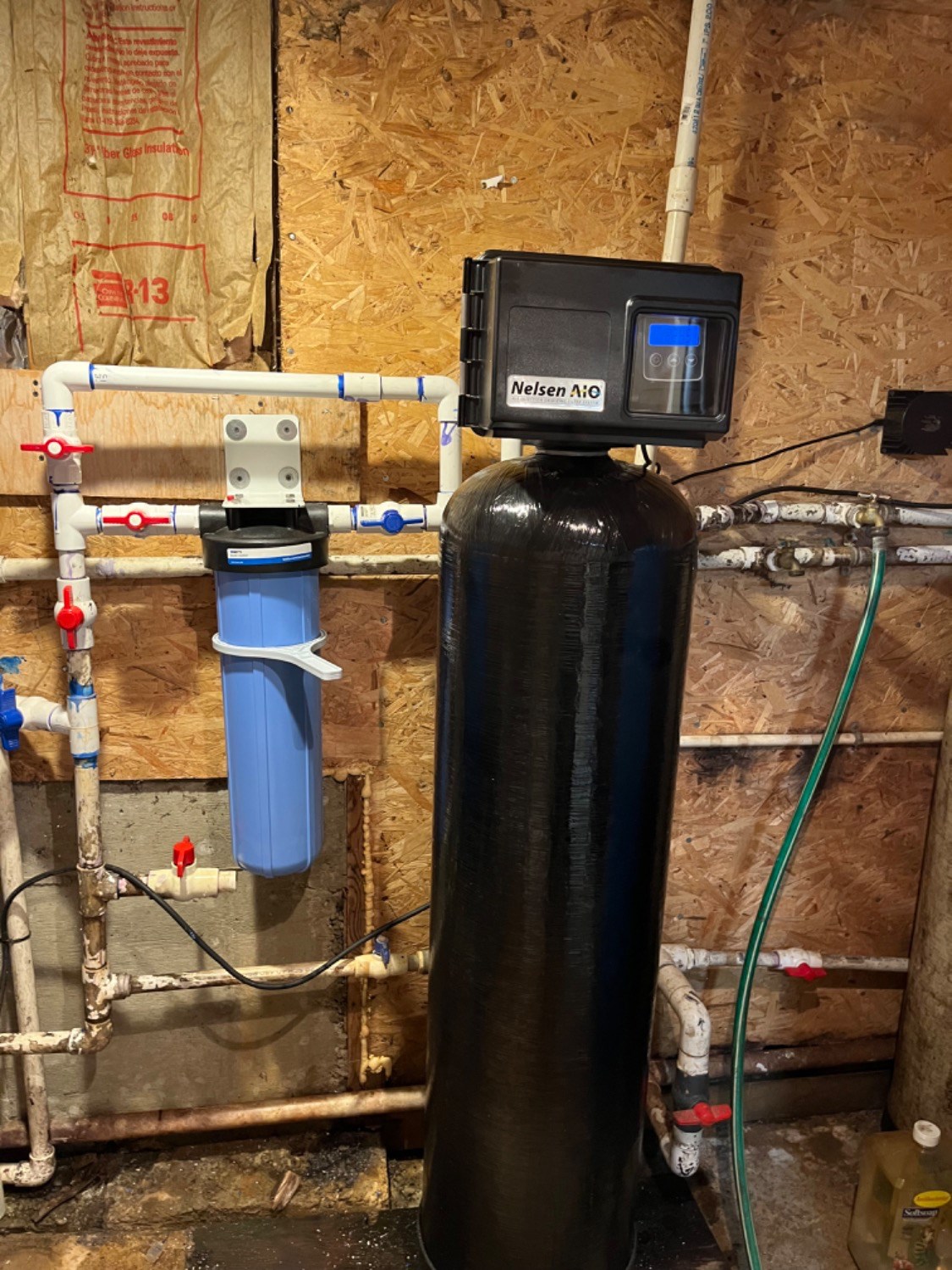
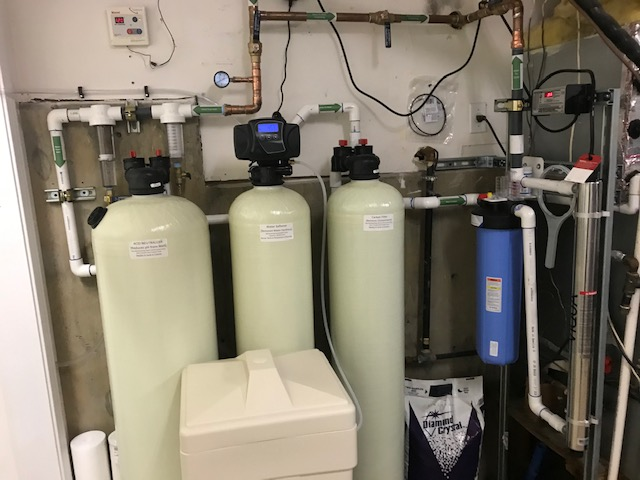
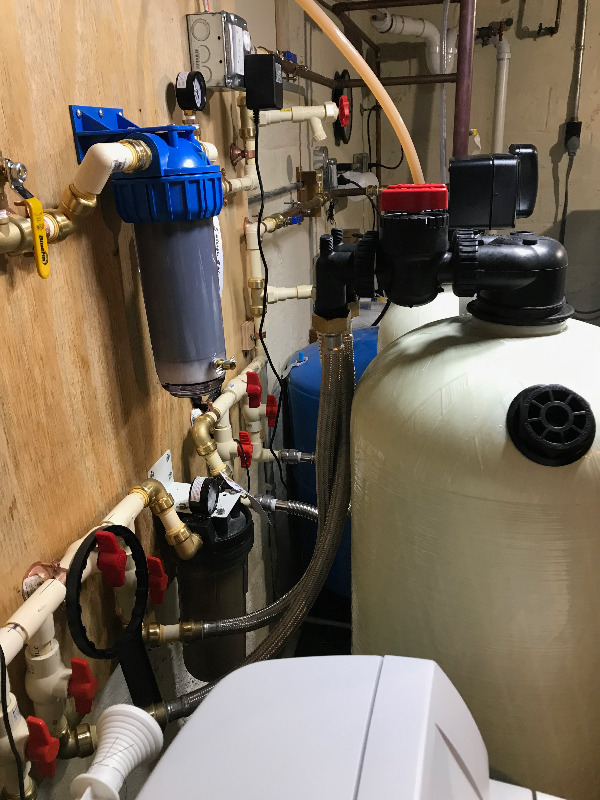
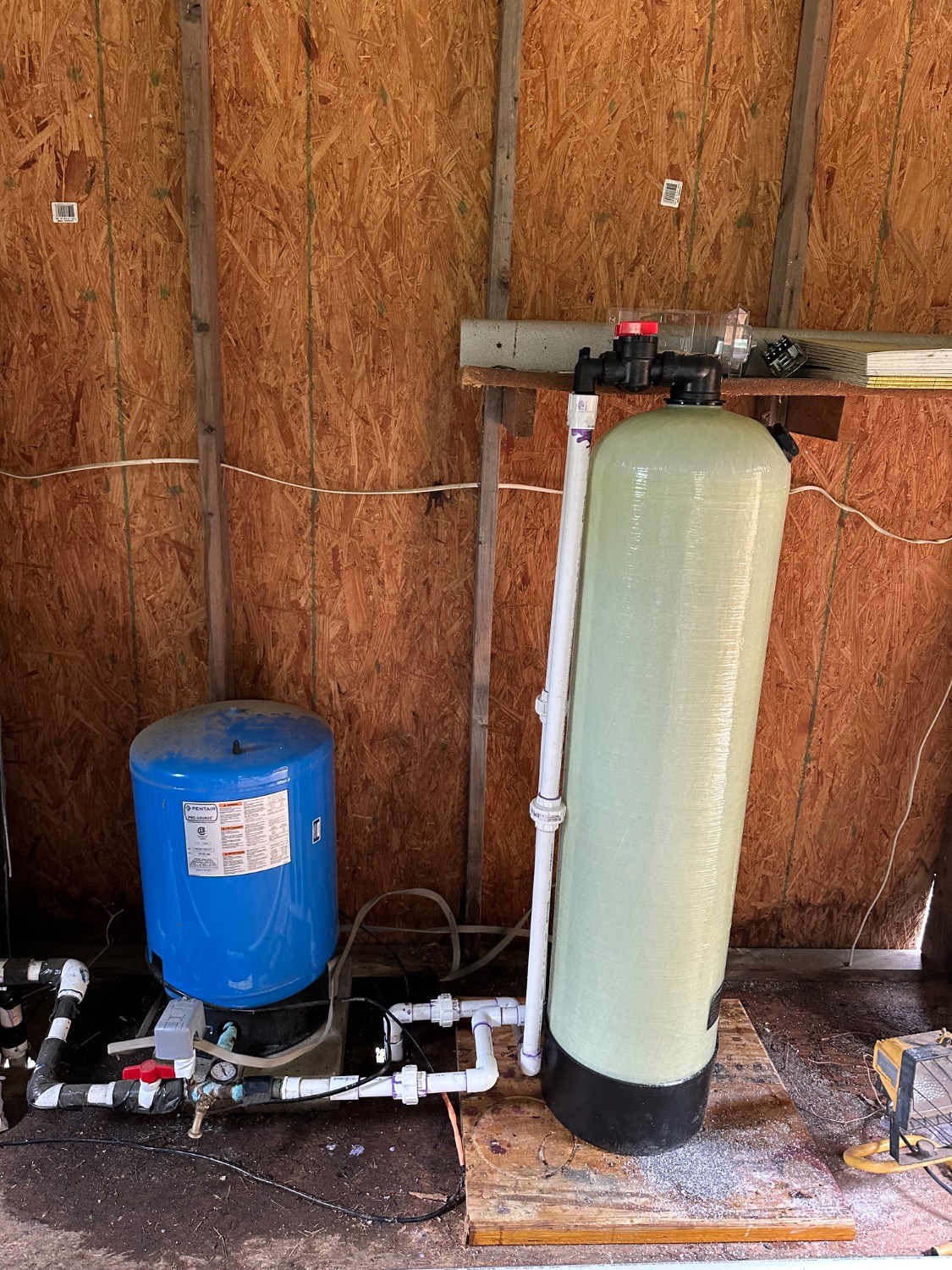
This page lists the whole house carbon filters Mid Atlantic Water sells and helps you choose one. A carbon tank removes chlorine and chloramine taste and smell at every tap and in the shower, takes out a light rotten egg (hydrogen sulfide) smell on well water, and reduces some chlorine byproducts, many VOCs, some pesticides and PFAS (reduces, not removes; no tank is certified for PFAS). It does not remove iron, hardness, bacteria, nitrate or dissolved minerals. Clack 2.5 non-backwashing carbon filter ($1,695): 2 cubic feet of Centaur catalytic carbon (Calgon Carbon) in a 2.5 cubic foot Vortech tank, Clack non-electric head, no drain, no electricity, up to about 17 gallons a minute, homes of 2 to 10 people. Clack 1.5 non-backwashing ($1,495): 1.5 cubic feet of Centaur, up to about 10 gallons a minute, smaller homes. Fleck 2510SXT backwashing carbon filters ($1,895 for 1.5, $2,495 for 2.5): the same carbon under a valve that backwashes sediment to a drain, for a well with sediment when carbon is the only filter; needs a drain, a 120V outlet and about 6 to 7 or 10 gallons a minute of backwash flow; backwashing does not make the carbon last longer. 20 inch Big Blue carbon kit ($259): Pentair Pentek housing and a standard GAC cartridge rated for about 25,000 gallons, for chlorine taste only, not chloramine. Carbon is replaced about every 5 years (Centaur refill $295 a cubic foot). A strong rotten egg smell needs a Katalox Light iron and sulfur filter. On a well, a sediment filter goes first and the carbon goes after the iron filter and softener. Every tank ships empty with the carbon in separate boxes, poured in at install; fittings and drain tubing are not included. A licensed plumber is recommended; Aidan supports your plumber by phone. Free shipping to the lower 48 states. Co-owner Aidan (32 years in water treatment) sizes systems free from your city water report or well test. Call 800-460-5810 or text Aidan at 443-277-2204.
By Aidan· 32-year water expert, Mid Atlantic Water ·
If your city water tastes or smells like chlorine, at the tap or in the shower, a whole house carbon filter takes it out of every faucet. It removes chloramine too, if that is what your city uses, and on a well it takes out a light rotten egg smell. It also reduces chemicals such as VOCs, pesticides and PFAS.
Most homes need one tank: the Clack 2.5 non-backwashing carbon filter ($1,695), with 2 cubic feet of Centaur catalytic carbon, no drain and no electricity. Aidan puts it in homes of 2 to 10 people; the Clack 1.5 ($1,495) suits smaller homes. The backwashing Fleck tanks are for a well with sediment. The 20 inch Big Blue kit ($259) is a cartridge for chlorine taste only.
Centaur catalytic carbon in every tank
Clack tanks: no drain or power
Free shipping, lower 48
Free sizing with Aidan
Watch the 4-minute overview
Carbon is the last step, not the only one. It does not remove iron, hardness, bacteria or nitrate. On a well, the carbon goes after the iron filter and the softener. On city water, every tank we sell handles chlorine and chloramine.
Send Aidan your city water report or your well test and he will tell you which tank fits, free.
0 products match your filters.
No products match those filters. Try adjusting your water conditions or .
Non-Backwashing Whole House Carbon Filters
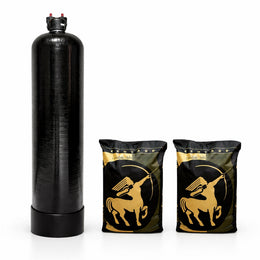
Aidan's pick for city water and for most wells. A Clack non-electric head on a Vortech tank of Centaur catalytic carbon: no drain, no electricity, nothing to program. It removes chlorine and chloramine, and a light rotten egg smell on a well. The 2.5 ($1,695) ships 2 cubic feet of carbon and fits most homes; the 1.5 ($1,495) suits smaller ones. The carbon ships in boxes and is poured in at install, and is replaced about every 5 years.
For a well with heavy sediment or some iron when the carbon is the only filter. The same Centaur catalytic carbon under a Fleck 2510SXT valve that backwashes the sediment out to a drain. It needs a drain, a 120V outlet and a well that can supply about 6 to 7 gallons a minute (1.5) or about 10 (2.5) to backwash. Backwashing does not make the carbon last longer, and city water does not need it.
The lowest-cost way to take the chlorine taste out of city water: a Pentair Pentek 20 inch Big Blue housing with a standard granular carbon cartridge, rated for about 25,000 gallons. It needs no drain or power. It is not for chloramine, iron, sediment or a rotten egg smell.
Photo, PDF, or just type the numbers, whatever’s easiest. Don’t have a test yet? Describe what you’re seeing.
2
Aidan reads it personally
He is the co-owner and the one in our videos.
3
Get a direct link to what you need
Aidan texts you the exact product page that fits your water. Buy it, bookmark it, or take the answer elsewhere. No pressure either way.
We never send spam. We never sell your number. Aidan answers personally, 7 days a week, 8a–5p ET.
Other brands
Our tank next to SpringWell and Aquasana
How our tank compares with SpringWell's and Aquasana's whole house systems, each described from that company's own product pages on October 2, 2026. We have not tested theirs. The right one is the one that fits your water.
Ours: Clack 2.5
SpringWell CF
Aquasana Rhino
Price
$1,695 (2.5 tank); $1,495 (1.5)
$1,160 to $2,142 on sale, by size
$999 on sale ($1,998 list)
What filters it
Centaur catalytic carbon (Calgon Carbon), loose in the tank
KDF (copper-zinc media), catalytic carbon and a sediment filter
Carbon and copper-zinc (KDF) media
Gallons a minute
Up to about 17 (2.5); about 10 (1.5)
9, 12 or 20, by size
7 (up to 2.5 bathrooms)
Media replaced
New carbon about every 5 years; the tank stays
1 million gallons; its page says 10 years, its warranty 6
1,000,000 gallons or 10 years
Prices as listed on October 2, 2026; flow is each maker's rating. Our carbon life is Aidan's number for our tanks; theirs is what each company publishes. Prices change, so check their pages.
Our carbon tanks are not certified as systems for chlorine or chloramine reduction; Calgon Carbon sells the Centaur in them for chloramine. We found no NSF or WQA listing for SpringWell; Aquasana's page says the Rhino is tested to NSF/ANSI 42 for chlorine.
Do you need one?
When a carbon filter is the fix
Here is when a carbon tank fixes what you taste and smell, and when something else has to go in first.
Chlorine taste or smell at the tap or in the shower
City water treated with chlorine or chloramine. Every tank we sell holds Centaur catalytic carbon, which takes out both.
→YESA carbon tank fixes this
A light rotten egg smell on well water
A light hydrogen sulfide smell, under about 1 ppm: the 2.5 non-backwashing tank takes it out, though the carbon may need replacing sooner. A strong smell needs a Katalox Light iron and sulfur filter instead.
→YESA light smell
Orange stains, hard water or a strong sulfur smell
Carbon does not remove iron or hardness, and a strong smell uses it up fast. Those need an iron and sulfur filter or a softener ahead of the carbon.
Chlorine taste only, on a budget or renting? The 20 inch Big Blue carbon kit ($259) takes the chlorine taste out with a standard carbon cartridge; it is not for chloramine. Smaller home? The Clack 1.5 ($1,495) does the same job with less carbon. Sediment on a smaller home's well? The Fleck 1.5 is $1,895.
Size by household, not bathrooms. Aidan puts the 2.5 non-backwashing tank in most homes, from 2 people up to 10; the 1.5 is for smaller homes. The bigger tank passes more water and its carbon lasts longer. The backwashing tanks come in the same two sizes: sediment on a well decides whether you need one, and Aidan picks the size from your household and flow.
Whichever your city uses, it does not change which tank you buy: every carbon tank we sell holds Centaur catalytic carbon, which takes out both. The Big Blue cartridge kit uses standard carbon and is for chlorine taste only.
Gallons a minute
How much water a tank passes before you notice the pressure drop: up to about 17 for the 2.5 non-backwashing tank and about 10 for the 1.5. The backwashing tanks pass about 12 to 15 (2.5) and 9 to 10 (1.5). A non-backwashing tank needs no backwash flow from your well.
Backwash flow
Backwashing tanks only. To rinse sediment out, the Fleck valve sends about 6 to 7 gallons a minute (1.5) or about 10 (2.5) to a drain, and your well has to keep up. Aidan sets it to backwash every 3 days on sediment. Not sure your well can supply it? Tell Aidan your pump's output before you order.
When the carbon is replaced
About every 5 years, sooner on well water with a sulfur smell. The tank stays: the old carbon is dumped out and new carbon poured in. Centaur refill carbon is $295 a cubic foot; the 2.5 takes two, $590.
Call 800-460-5810 during the install and Aidan supports your plumber by phone. We recommend a licensed plumber. What ships: the tank, the control valve with a bypass valve, the carbon in separate boxes and a fill funnel. The tank ships empty and the carbon is poured in at install. Plumbing fittings and drain tubing are not included.
1 to 2 hrs
Plumber time for a non-backwashing tank on its own, in Aidan's estimate. A backwashing tank also needs its drain and outlet.
1 in
Male thread inlet and outlet. PVC, PEX, CPVC or copper all work; your plumber supplies the fittings.
Free
Phone support. Aidan talks your plumber through the setup.
What to have ready
120V outlet (backwashing tanks only)Within 6 feet of the Fleck valve. The non-backwashing tanks need no power.
A drain (backwashing tanks only)A floor drain, standpipe or utility sink for the backwash, reached with 1/2 inch tubing your plumber supplies. The non-backwashing tanks need no drain.
Shut-off valvesA valve before and after the tank so it can be isolated. The bypass valve lets water run around the tank.
Floor space near the main lineThe tanks are 10 x 54 inches (1.5) or 13 x 54 inches (2.5).
What your plumber does
Sets the tank where the water comes into the house. On a well it goes after the sediment filter, the iron filter and the softener.
Pours the carbon into the empty tank through the fill funnel, then fits the control valve.
Plumbs the inlet and outlet to the 1 inch connections, with a shut-off valve on each side.
On a backwashing tank, runs 1/2 inch drain tubing from the valve to the drain and plugs the valve into the outlet.
Opens the water slowly, then runs a tap for 10 to 15 minutes until it runs clear. The first water is dark with carbon dust; that is normal.
On a non-backwashing tank there is nothing to set or program. On a backwashing tank, sets the clock and the backwash schedule.
Show your plumber exactly what's going in. The system builder generates a plumbing schematic for your specific setup. Send it to your plumber before install day.
Reviews are collected by Stamped.io, a third-party review service that emails customers after their order. Stamped does not let us edit a review’s words or star rating.
★★★★★
Great product and quick service
Mid Atlantic was helpful in.identifying the right system for my home. The products came well packaged, the price was right and service fantastic. I will use them again on our next nome.
KT
Kevin T., United States
Verified Buyer
Clack 2.5 Carbon Filter & Fleck 64,000 Grain Water Softener · January 2025
FAQ
Frequently asked questions
Yes, if chlorine, chloramine or a light rotten egg smell is your problem. A carbon tank takes it out at every tap and in the shower, and reduces chemicals such as VOCs, pesticides and PFAS, for about 5 years before a refill. It is not worth buying for iron, hardness, bacteria or nitrate: carbon does not treat them.
$259 to $2,495 for the equipment. The 20 inch Big Blue cartridge kit is $259. The non-backwashing tanks are $1,495 (1.5) and $1,695 (2.5); the backwashing tanks are $1,895 (1.5) and $2,495 (2.5). Most homes need the $1,695 tank. New carbon is $295 a cubic foot about every 5 years ($590 for the 2.5). For the plumber, Aidan tells callers about an hour or two for a non-backwashing tank on its own, and $800 to $1,000 with a softener.
Chlorine, chloramine, taste and odor, and a light rotten egg smell. It also reduces some chlorine byproducts, many VOCs, some pesticides and herbicides, and PFAS. We say reduces, not removes, for PFAS: no tank we sell is certified for PFAS, so test the water after it is in. It does not remove iron, hardness, bacteria, nitrate, fluoride or dissolved minerals.
Yes, with catalytic carbon. Chloramine breaks down more slowly than chlorine, so it needs catalytic carbon and enough of it. Every carbon tank we sell, non-backwashing and backwashing, holds Centaur catalytic carbon from Calgon Carbon, which is made for chloramine. The non-backwashing tank is all you need for it: no drain and no power. The Big Blue cartridge kit uses standard carbon and is not for chloramine.
Carbon is a polish, not an all-in-one filter. It does not remove iron, manganese, hardness, bacteria, nitrate or most dissolved minerals. A tank takes floor space (10 or 13 inches wide, 54 tall), the backwashing tanks need a drain and an outlet, and the carbon is used up and replaced about every 5 years. A spent bed can let through what it used to hold, so replace it on time.
Non-backwashing, for city water and most wells. Backwashing is only for a well with heavy sediment or some iron when the carbon is the only filter, and it does not make the carbon last longer. Backwashing vs non-backwashing carbon filters goes through it.
About every 5 years in most homes, sooner on well water with a sulfur smell. The tank stays: the old carbon is dumped into trash bags and new carbon poured in through the funnel, a job for your plumber. Centaur refill carbon is $295 a cubic foot; the 2.5 takes two. A change in taste or smell is the sign it is time. The Big Blue kit's cartridge is rated for about 25,000 gallons.
Not if the tank is sized for your house. The 2.5 non-backwashing tank passes up to about 17 gallons a minute and the 1.5 about 10; the backwashing tanks about 12 to 15 and 9 to 10. The Big Blue cartridge kit is meant for smaller homes. If your pressure is already low, tell Aidan before you order.
It reduces them; we do not claim it removes them. EPA says carbon reduces longer-chain PFAS such as PFOA and PFOS better than shorter-chain kinds, and how well it works depends on the carbon and the flow. No carbon tank we sell is certified for PFAS. If PFAS is your main concern, test the water after the carbon is in, and see our PFAS systems.
Only if you have both problems. A softener removes hardness (scale and spots); carbon removes chlorine, chloramine, taste and odor. A city home with chlorine and hard water may need both, and on a well the carbon goes after the softener. See the carbon and softener packages, or send Aidan your report and he will tell you whether you need one or both.
No. Carbon removes chemicals, not germs: bacteria and viruses pass through, and a carbon bed can even grow bacteria on what it holds. If a well test shows bacteria, the answer is a UV light, which goes after the carbon. Tell Aidan what your test shows.
Yes. Activated carbon is also called activated charcoal. What differs between filters is the grade of carbon and how much of it the water passes through. Charcoal water filters explains the difference.
Paste your city water report or well test below. Aidan replies with the right carbon tank and size, what goes ahead of it on a well, and what your plumber needs to know.
✓
Your message is queued for Aidan
Your email app just opened with the message ready to send. Hit send and Aidan will reply.
Aidan
Co-owner. Real person. Not a bot. 7 Days/Week, 8AM-5PM EST