Your Cart

Aidan Questions? Call Aidan 800-460-5810

Your cart is empty

This page is a complete buying guide for whole-house ultraviolet (UV) water disinfection systems for well water. It covers: which UV system to buy by household size and lab test result, NSF/ANSI 55 Class A vs Class B in plain English (Class A, a validated 40 mJ/cm2 dose, is the system for confirmed coliform or E. coli; Class B is supplemental protection for water already deemed acceptable), the VIQUA ladder from the VH200 (9 GPM at 30 mJ/cm2, Class B, $895) through the flagship Class A VH410 (14 GPM at the certified 40 mJ/cm2 dose, $995), the Water Sanitizer combo, the sensor-monitored F4 Plus, and the Class A PRO20 and PRO30 for estates and light commercial; a brand comparison against SpringWell, Aquasana, and iSpring; how UV-C light at 254 nm inactivates bacteria, viruses, Giardia, and Cryptosporidium; pre-treatment requirements (iron under 0.3 ppm, hardness under 7 gpg, turbidity under 1 NTU, 5-micron sediment prefilter, UV transmittance above 75%); installation steps; symptom diagnosis for positive coliform tests, recurring stomach bugs, shocked wells, surface-influenced wells, and post-flood wells; verified customer reviews; and expert sizing help. UV is disinfection, not filtration: it removes nothing except live microorganisms and always installs last in the treatment train. All systems ship free to all 50 US states. Residential systems run $895 to $2,495; commercial PRO systems to $5,895. Mid Atlantic Water has specialized in water treatment since 1997, with a team carrying 32 years of expertise.

Whole-house UV disinfection
★★★★★ 5.0 from 18 verified reviews

Ultraviolet (UV) Water Disinfection Systems

Viqua UV systems disinfect well water by inactivating 99.99% of bacteria, viruses, and cysts (E. coli, coliform, Giardia, Cryptosporidium) with UV-C light at 254 nm. No chemicals are added, nothing changes the taste, and there is no salt or backwash. UV is the last stage in your treatment train, the final barrier after iron, hardness, and sediment are removed upstream.

Choose by your water test and your home: the NSF/ANSI 55 Class A VH410 is the system for a confirmed coliform or E. coli result in a 3 to 5 bathroom home, while the Class B VH200 is supplemental protection for smaller homes with water already deemed acceptable. Larger homes and commercial sites step up to the PRO20, PRO30, or sensor-monitored F4 Plus. Not sure? Send Aidan your coliform and E. coli test and he will spec the exact pre-treatment plus UV class in minutes.

Kills 99.99% of bacteria & viruses
NSF/ANSI 55 Class A flagship
Genuine VIQUA systems & lamps
No chemicals, nothing added
Free shipping on every system
30-day return policy
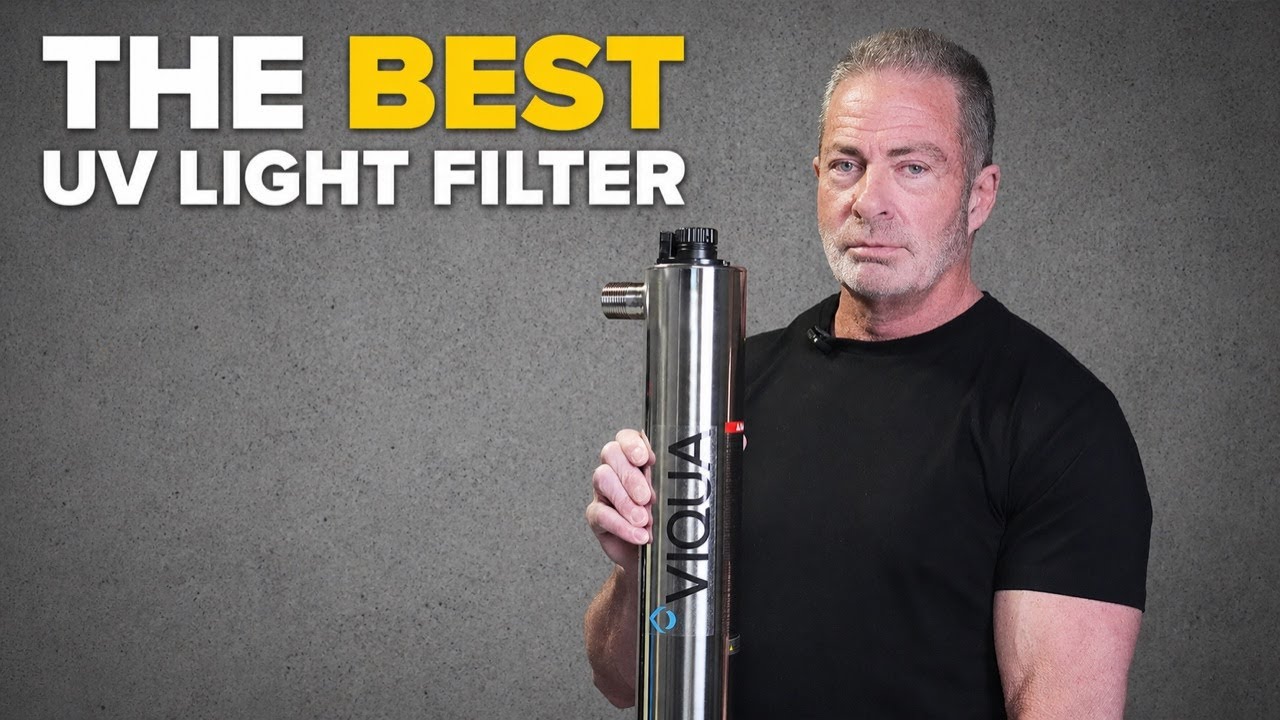
Best UV Light for Well Water: Viqua VH410 Review (32 Years Experience)
Watch the 3-minute overview

After 32 years of expert experience, with over 10,000 customers served since we started Mid Atlantic Water in 1997, the UV system we reach for first is the Viqua VH410, NSF/ANSI 55 Class A. Class A means a validated 40 mJ/cm2 dose, the certification for treating KNOWN contamination, which is exactly what a positive coliform or E. coli test calls for. Every flow figure on this page is dose-qualified, because a GPM number with no dose behind it tells you nothing. UV kills 99.99% of bacteria, viruses, and cysts with no chemicals and nothing added to your water.

Replacement Lamps, Sleeves & Controllers

Genuine VIQUA and Sterilight replacement parts. UV lamps lose germicidal output as they age: replace the lamp every 12 months, clean the quartz sleeve when you change it, and replace the sleeve every 2 to 3 years so the rated dose keeps reaching the water.

Free expert sizing

Text me your water test. I’ll send you a product link.

I read every water test personally and text back a recommendation. Same day. No chatbot, no upsell pressure, no charge.

  1. Send your test

    Photo, PDF, or just type the numbers, whatever’s easiest. Don’t have a test yet? Describe what you’re seeing.

  2. Aidan reads it personally

    Real co-owner. Not a chatbot, not a script, not a sales rep on quota. He’s sized thousands of systems.

  3. Get a direct link to what you need

    Aidan texts you the exact product page that fits your water. Buy it, bookmark it, or take the answer elsewhere. No pressure either way.

We never send spam. We never sell your number. Aidan answers personally, 7 days a week, 8a–5p ET.

UV System Comparison

Mid Atlantic vs. SpringWell, Aquasana & iSpring

Honest head-to-head: how our Viqua UV systems compare to the UV options most shoppers also look at. Framing and prices are taken from each company's own published product pages (checked June 2026); sale prices change, so treat competitor pricing as approximate.

Mid Atlantic Water Viqua VH410 NSF Class A UV disinfection system SpringWell Blackcomb UV water purification systemAquasana Rhino well water whole house filter with UViSpring UVF55FS 55W whole house UV water filter
  MAW Viqua VH410SpringWellAquasanaiSpring
NSF/ANSI 55 Class A certified Yes (VH410, 40 mJ/cm2)No NSF 55 claimNo (UV stage is Class B)No NSF 55 claim
Dose-qualified flow rating 14 GPM at 40 mJ/cm2 (18 GPM peak)15 GPM at 30 mJ/cm27 GPM rated bundle flow12 GPM (dose not published)
Standalone UV (add to existing treatment) YesYesNo (bundled whole-house filter)Yes
UV intensity sensor option Yes (F4 Plus monitored)Optional add-on moduleNoFlow sensor only (not UV intensity)
Lamps & parts availability Genuine VIQUA lamps & sleeves in stockProprietary lamp, $194Proprietary annual lampiSpring lamp
Chamber material 304 stainless steelStainless steelStainless steel UV stage304 stainless steel
Phone consult included Yes, with AidanLimitedLimitedLimited
Price $895 - $2,495 (residential)$1,089 (sale, $1,251 list)$1,749 (sale, $3,498 list, bundle)Approx $240 - $340

The distinction that matters most in UV is the certification class and the dose behind the flow number. NSF/ANSI 55 Class A (a validated 40 mJ/cm2 dose) is the standard for treating water with KNOWN contamination, which is exactly the buyer with a positive coliform or E. coli test. Our flagship VH410 carries that certification; SpringWell and iSpring publish kill rates without an NSF 55 class, and Aquasana's own spec sheet lists its UV stage as Class B, supplemental treatment for water already deemed acceptable. A GPM number with no dose attached tells you nothing, which is why every flow figure on this page carries its mJ/cm2 dose.

Aquasana's Rhino Well + UV is a whole-house filter bundle rather than a standalone UV chamber, so compare it against a filter-plus-UV package like our Water Sanitizer rather than a bare lamp. The iSpring UVF55FS is a genuinely inexpensive unit; the trade-offs are the missing NSF 55 validation and a flow-sensor switch that cycles the lamp on and off with demand, where VIQUA chambers run the lamp continuously so the dose is always there when water moves. We size by your peak demand at the dose your test result requires, on the phone, free.

Step 1: Find Your Problem

What are the signs of bacteria, viruses, and cysts in well water?

The tell-tale signs you want a UV system are: a well test that came back positive for coliform or E. coli; stomach bugs that keep cycling through the household; bacteria that returns after every well shock; a spring-fed or surface-influenced well; and any flood, repair, or new construction that opened the well. If you recognize any of these, a properly sized UV system inactivates 99.99% of the bacteria, viruses, and cysts behind them, permanently and without chemicals.

Well water lab test result showing a positive coliform bacteria reading

Positive coliform or E. coli test

Your well test came back positive for total coliform or E. coli. This is the clearest UV buy signal there is.

YES Class A UV fixes this
Slightly murky glass of untreated well water on a farmhouse kitchen counter

Recurring stomach bugs no one can explain

GI upsets that keep cycling through the household with no clear cause. Test the well first; if bacteria shows up, a Class A UV system is the fix.

TEST FIRST Confirm bacteria with a lab test
Residential well cap at the wellhead where shock chlorination is poured

You shocked the well, bacteria came back

Shock chlorination is temporary by design. When the source keeps re-seeding bacteria, a permanently installed UV system beats chlorinating the well again every few months.

YES UV ends the shock cycle
Farmland well in open country where surface water can influence a shallow well

Spring-fed, shallow, or surface-influenced well

Surface water carries bacteria and cysts year-round, and every heavy rain re-seeds it. A Class A UV system with a 5-micron sediment prefilter is the standard answer.

YES Class A UV + prefilter
Residential well cap surrounded by muddy standing floodwater after heavy rain

After a flood, new well, or well work

Floodwater over the casing, a new bore, or an opened well can all introduce bacteria. Retest the water, then install UV as permanent insurance against the next event.

YES Retest, then UV
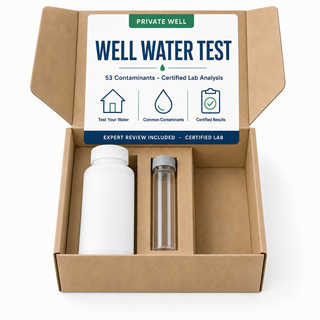
Mid Atlantic Water well water test kit box

Test your well before you buy

A certified lab test for total coliform and E. coli is the only way to know whether your well has a bacteria problem, and the result decides the system: a confirmed positive calls for NSF 55 Class A (40 mJ/cm2); clean results make a Class B system acceptable as supplemental protection. Send us your numbers and we size your UV system free.

TEST IT Free sizing help
Step 2: Match Your System

Match your problem to the right system

Most UV calls we take fit one of these patterns. Find what your water is doing and you'll see exactly which system to start with.

Iron bacteria or a heavily fouling well? UV alone is not the fix. Slime and staining coat the quartz sleeve and shadow the lamp, so treat the iron and sulfur upstream first. For severe fouling wells, continuous chlorination injection is the better play: it disinfects and carries a residual through the pipes. Call us and we will spec the order of operations for your water.

Not sure? Call Aidan at 800-460-5810 →
Step 3: Pick a size

What size UV system do I need?

Size based on your lab result and your peak flow at the dose that result requires. Most well homes with a confirmed test land on the Viqua VH410, NSF 55 Class A (14 GPM at the certified 40 mJ/cm2 dose, 18 GPM peak, 3-5 bathrooms), Aidan's default for confirmed coliform or E. coli. The VH200 (9 GPM at 30 mJ/cm2) is Class B: supplemental protection for smaller homes with water already deemed acceptable, not the answer to a positive test. The sensor-monitored F4 Plus covers high-flow homes (36 GPM at 30 mJ/cm2), and the Class A PRO20/PRO30 hold 20 and 30 GPM at 40 mJ/cm2 for estates and light commercial. UV is the LAST stage in the treatment train and needs pre-treated, clear water ahead of it.

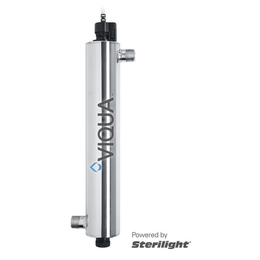
  Viqua VH200 Viqua VH410
Most Popular
Viqua F4 Plus Viqua PRO20 Viqua PRO30
Viqua VH200 9 GPM UV Water Filter Viqua F4 Plus Monitored UV System Viqua PRO20 UV System Viqua PRO30 UV System
Tank size15 x 3.5 in chamber44.25 in x 4 in chamber31 in x 4 in chamber41 in x 4 in chamber
Household2-4 People5-8 People6+ People / light commercialEstates / commercial
Bathrooms1-34-6 (high flow)5-77+
CapacityNSF/ANSI 55 Class B. Supplemental protection of water already deemed acceptableSensor-monitored UV intensity (not NSF certified). High-flow homes wanting live dose monitoringNSF/ANSI 55 Class A at full flow. Large homes and light commercialNSF/ANSI 55 Class A at full flow. Estates and commercial sites
Flow rate requirementNone (no backwash)None (no backwash)None (no backwash)None (no backwash)
Max flow before pressure drop9 GPM at 30 mJ/cm236 GPM at 30 mJ/cm220 GPM at 40 mJ/cm230 GPM at 40 mJ/cm2
Backwash requiredNone. Annual lamp swap onlyNone. Annual lamp swap onlyNone. Amalgam lamp lasts up to 2 yearsNone. Amalgam lamp lasts up to 2 years
Price$895$2,495$4,395$5,895
Shop now Shop now Shop now Shop now
NSF/ANSI 55: Class A vs Class B

Class A (a validated 40 mJ/cm2 dose) is the certification for treating water with KNOWN contamination: it is the class to buy after a positive coliform or E. coli test. Our VH410, PRO20, and PRO30 are Class A. Class B (certified at 16 mJ/cm2) is supplemental treatment for water already deemed acceptable, not for confirmed contamination; the VH200 is Class B. The F4 Plus is not NSF certified: it is a sensor-monitored system rated 36 GPM at 30 mJ/cm2.

Dose-qualified flow (why GPM ratings move)

UV dose equals lamp intensity times contact time, so the same chamber delivers a lower dose as water moves faster. A GPM number means nothing without the dose behind it: the VH410 delivers 14 GPM at the certified 40 mJ/cm2 Class A dose and 18 GPM at 30 mJ/cm2; the VH200 delivers 9 GPM at 30 mJ/cm2 and 16 GPM at its certified 16 mJ/cm2 Class B dose. Size to your peak simultaneous demand at the dose your test result requires, and never buy off a headline GPM with no dose attached.

Pre-treatment and UV transmittance (UVT)

UV only works on clear water the light can pass through. Ahead of the chamber your water needs: iron under 0.3 ppm, manganese under 0.05 ppm, hardness under 7 gpg, turbidity under 1 NTU, UV transmittance above 75%, and a 5-micron sediment prefilter. Above any of these, install the matching iron filter, softener, or sediment filter UPSTREAM first or the UV fails silently: no alarm, but no kill. The PRO20 and PRO30 hold their certified dose down to 70% UVT; the F4 Plus figures are rated at 95% UVT.

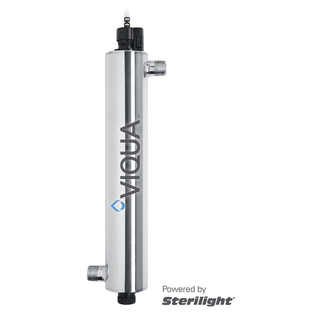
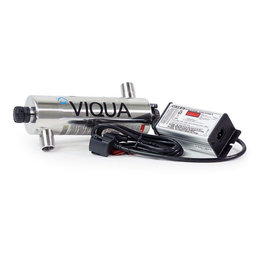
Viqua VH200 9 GPM UV Water Filter

Viqua VH200

$895
Household
2-4 People
Bathrooms
1-3
Capacity
NSF/ANSI 55 Class B. Supplemental protection of water already deemed acceptable
Tank size
15 x 3.5 in chamber
Flow rate requirement
None (no backwash)
Max flow before pressure drop
9 GPM at 30 mJ/cm2
Backwash required
None. Annual lamp swap only
Shop Viqua VH200
Viqua F4 Plus Monitored UV System

Viqua F4 Plus

$2,495
Household
5-8 People
Bathrooms
4-6 (high flow)
Capacity
Sensor-monitored UV intensity (not NSF certified). High-flow homes wanting live dose monitoring
Tank size
44.25 in x 4 in chamber
Flow rate requirement
None (no backwash)
Max flow before pressure drop
36 GPM at 30 mJ/cm2
Backwash required
None. Annual lamp swap only
Shop Viqua F4 Plus
Viqua PRO20 UV System

Viqua PRO20

$4,395
Household
6+ People / light commercial
Bathrooms
5-7
Capacity
NSF/ANSI 55 Class A at full flow. Large homes and light commercial
Tank size
31 in x 4 in chamber
Flow rate requirement
None (no backwash)
Max flow before pressure drop
20 GPM at 40 mJ/cm2
Backwash required
None. Amalgam lamp lasts up to 2 years
Shop Viqua PRO20
Viqua PRO30 UV System

Viqua PRO30

$5,895
Household
Estates / commercial
Bathrooms
7+
Capacity
NSF/ANSI 55 Class A at full flow. Estates and commercial sites
Tank size
41 in x 4 in chamber
Flow rate requirement
None (no backwash)
Max flow before pressure drop
30 GPM at 40 mJ/cm2
Backwash required
None. Amalgam lamp lasts up to 2 years
Shop Viqua PRO30
Under the hood

How a UV water disinfection system works

A UV system passes your pre-treated water through a 304 stainless chamber around a quartz-sleeved UV lamp emitting germicidal UV-C light at 254 nm. The light penetrates each microbe's cell wall and scrambles its DNA (thymine dimers) so it cannot reproduce: 99.99% (4-log) inactivation of E. coli, coliform, Giardia, Cryptosporidium, and viruses. Dose equals intensity times contact time, which is why every GPM rating is dose-qualified: the same chamber delivers a lower dose as water moves faster. Nothing is added, nothing is removed, and the taste does not change. The lamp ages with hours powered, so it is replaced every 12 months (PRO amalgam lamps run up to 2 years), and the sleeve gets cleaned periodically so fouling never shadows the lamp.

01

Pre-treated water enters the stainless chamber

Clear, pre-treated water flows into the 304 stainless steel chamber and around the quartz-sleeved UV lamp. UV is always the LAST stage in the treatment train, after any iron filter, softener, and sediment prefilter, because the light has to reach the microbes. Iron, hardness, turbidity, or color will shadow the lamp and let bugs slip through, so those are removed upstream first.

02

UV-C light at 254 nm scrambles microbial DNA

The lamp emits germicidal UV-C light at 254 nm. It penetrates the cell wall of every bacterium, virus, and cyst and creates thymine dimers in their DNA, so the organism can no longer reproduce. This delivers 99.99% (4-log) inactivation of E. coli, total and fecal coliform, Giardia, Cryptosporidium, and viruses. Nothing is added to the water and nothing is filtered out: there is no taste change.

03

Dose equals intensity times contact time

The kill depends on UV dose, which is lamp intensity multiplied by how long the water is exposed. That is why every flow rating is dose-qualified: push more gallons per minute through and the contact time drops, so the dose drops. NSF/ANSI 55 Class A is validated at 40 mJ/cm2 (the dose for confirmed contamination); Class B is certified at 16 mJ/cm2 for supplemental protection of water already deemed acceptable.

04

Annual lamp swap, periodic sleeve cleaning

The lamp slowly loses output and is replaced about every 12 months (PRO amalgam lamps last up to 2 years). The quartz sleeve needs periodic cleaning so scale or film does not shadow the lamp. The controller counts down lamp life and sounds an alarm before the lamp needs changing, so you are never disinfecting with a dead bulb.

Installation

We ship it. Your plumber installs it.

Every utility room is different, so we recommend hiring a licensed plumber. A UV chamber is one of the simplest jobs in water treatment, no drain and no programming, and Aidan is a phone call away if your plumber has questions.

2-3 hrs

Typical install time for a licensed plumber. A UV chamber is one of the simplest installs in water treatment: no drain, no media, no programming.

3/4-1"

Plumbing connections on the VIQUA chambers (combo 3/4 in FNPT / 1 in MNPT ports). Use copper for the short runs at the chamber; PEX is fine everywhere else.

100%

Phone support included. Aidan walks your plumber through anything unusual about your specific setup.

What to have ready

  • 120V outlet (always on)The lamp runs 24/7 and ages by hours powered, not gallons treated. Never switch the UV off while the house is on the water.
  • Last position in the treatment trainUV installs AFTER the sediment filter, iron filter, softener, and carbon, as the final stage on the line feeding the house.
  • Copper stubs at the chamberUV light degrades PEX and polymer pipe. Use copper for the short runs immediately at the chamber.
  • 5-micron sediment prefilter upstreamMandatory ahead of the chamber so nothing coats the quartz sleeve and shadows the lamp.

What your plumber will do

  1. Position the UV chamber LAST, after all other treatment, on the line feeding the house.
  2. Mount the stainless chamber to the wall, leaving clearance at one end to slide the lamp and sleeve out for annual service.
  3. Install the quartz sleeve and UV lamp. Handle both by the ends only; skin oil on the glass blocks UV.
  4. Plumb the inlet and outlet. Copper for the short runs at the chamber.
  5. Install the 5-micron sediment prefilter upstream if one is not already in place.
  6. Plug the controller into a 120V outlet and confirm the lamp-life countdown starts.
  7. Open the water slowly and check for leaks at the sleeve nuts. Hand-tighten plus a quarter turn; overtightening cracks the quartz sleeve.
  8. Flush the lines and note the install date. Replace the lamp every 12 months, clean the sleeve at each lamp change, and replace the sleeve every 2 to 3 years.

Show your plumber exactly what's going in. The system builder generates a plumbing schematic for your specific setup. Send it to your plumber before install day.

Open the system builder
Media comparison

Disinfection method comparison: UV vs chlorine, boiling, and nothing

UV is not the only way to disinfect water, so here is an honest comparison of the four real options. The right answer depends on what is in your water.

For a confirmed microbial problem on otherwise clear, pre-treated water, UV is the best whole-home choice: it kills everything including Cryptosporidium, adds no chemicals, and creates no disinfection byproducts. Continuous chlorine injection is the better play when the well fouls from iron bacteria or heavy organics, or when you want a chlorine residual carried through the plumbing. Boiling and doing nothing are included only to show why they are not real whole-house solutions.

FactorViqua UV (Ours)Chlorine injectionBoilingDoing nothing
Kills bacteria & virusesYes (4-log)YesYesNo
Kills Cryptosporidium & GiardiaYesWeak on CryptosporidiumYesNo
Chemicals addedNoneChlorine dosed continuouslyNoneNone
Taste changeNoneChlorine taste/odorFlat tasteNone
Disinfection byproducts (THMs)NonePossibleNoneNone
Residual protection in pipesNoYesNoNo
Works on fouling iron-bacteria wellsNo (pre-treat first)Yes (better choice)n/aNo
Whole-house, automaticYesYes (pump + contact tank)NoNo
Ongoing maintenanceAnnual lamp, sleeve cleaningRefill chlorine, calibrate pumpConstant effortNone
Real customers, real installs

What people say after the bacteria is gone

Verified by Stamped.io

Every review is independently collected and verified by Stamped.io, a third-party review platform. We cannot edit or remove reviews.

★★★★★
Excellent Kit
We found out our well water tested positive for bacteria. As soon as we found out, we knew it was imperative for our families safety that we treated our water. We purchased this water sanitizer kit. We were a little apprehensive about it at first, but we decided we would give it a shot. We're extremely happy with our results. If you have basic plumbing skills, this kit will be very easy to install. And we even called for help and got the support we needed.
Arnold W. , United States
Verified Buyer
The Water Sanitizer (Sediment + Carbon + VIQUA VH200 UV) · April 2020
★★★★★
Working Well
Had it installed by local plumber. Working awesome and our water is free of coliform and every other bacteria. Saved hundreds over Home Depot, Lowes and the local plumbing houses.
Steve C. , United States
Verified Buyer
The Water Sanitizer (Sediment + Carbon + VIQUA VH200 UV) · March 2020
★★★★★
Excellent Customer service Mid Atlantic Water
When I decided to treat my water, I wanted to make sure I solved the bacteria/chemical problem. I'm extremely pleased with their commitment to solving all my problems. I called in to ask how my well water could get treated properly, and that led me to their Water Sanitizer. It was a little more expensive than what I wanted to pay (because it's not just a UV light), but I took the leap and it did everything they promised.
Shane C. , United States
Verified Buyer
The Water Sanitizer (Sediment + Carbon + VIQUA VH200 UV) · April 2020
FAQ

Frequently asked questions

Yes. UV is the standard fix for bacteria in well water. UV-C light at 254 nm delivers 99.99% (4-log) inactivation of E. coli, total coliform, Giardia, Cryptosporidium, and viruses with no chemicals and no taste change. Two conditions: the system has to deliver the right dose at your flow rate (NSF 55 Class A, 40 mJ/cm2, for a confirmed positive test), and the water reaching the chamber has to be pre-treated clear, with iron under 0.3 ppm, hardness under 7 gpg, turbidity under 1 NTU, and a 5-micron sediment prefilter ahead of the lamp. UV is disinfection, not filtration: it removes nothing except live microorganisms.

Our residential Viqua systems run $895 to $2,495. The VH200 (9 GPM at 30 mJ/cm2, 1-3 baths, NSF 55 Class B supplemental) is $895; the flagship NSF 55 Class A VH410 (14 GPM at the certified 40 mJ/cm2 dose, 3-5 baths) is $995; the Water Sanitizer combo (sediment + carbon + UV) is $1,195; and the sensor-monitored F4 Plus (36 GPM at 30 mJ/cm2) is $2,495. Light-commercial Class A PRO20 and PRO30 systems run $4,395 and $5,895. Budget roughly $160 per year for the annual replacement lamp.

A UV disinfection system is the whole-house answer for Giardia. Giardia and Cryptosporidium cysts are chlorine-resistant, which is why chlorination alone is a weak defense against them, but both are highly susceptible to UV: a Class A system delivers 99.99% inactivation at every tap. Fine mechanical filtration rated 1 micron absolute can also physically remove cysts at a single point of use. For whole-home protection on a well, the standard setup is a 5-micron sediment prefilter followed by a UV chamber installed last in the treatment train.

Yes, when three conditions are met. First, the dose class matches the job: NSF/ANSI 55 Class A (40 mJ/cm2) for confirmed contamination, Class B only as supplemental protection on water already deemed acceptable. Second, the water is pre-treated clear so the light actually reaches the microbes (UV transmittance above 75%). Third, the lamp is replaced every 12 months, because output decays with age even though the light still looks blue. Two honest limits: UV leaves no residual in the pipes downstream, and it only disinfects while powered, so the lamp runs 24/7.

Yes. Whole-house UV systems are built exactly for private wells. A point-of-entry chamber on the main line disinfects every tap in the house. We carry the VIQUA line: the VH200 for smaller homes (9 GPM at 30 mJ/cm2, Class B supplemental), the Class A VH410 for confirmed coliform or E. coli in 3-5 bath homes, the sensor-monitored F4 Plus for high-flow homes, and the Class A PRO20/PRO30 for estates and light-commercial buildings. UV always installs last, after iron, softening, and sediment pre-treatment, and the right class depends on your lab result, which is why we ask for the test before we size anything.

NSF/ANSI 55 Class A UV is validated at a 40 mJ/cm2 dose and is the system for KNOWN contamination: if a lab has confirmed coliform or E. coli in your water, you want Class A. The Viqua VH410, PRO20, and PRO30 are Class A.

Class B UV is certified at a lower 16 mJ/cm2 dose and is meant for supplemental disinfection of water that is already considered safe, as an extra layer of protection. The Viqua VH200 is Class B. It is a fine belt-and-suspenders choice for a smaller home, but if your test came back positive for bacteria, step up to the Class A VH410.

No. UV is disinfection, not filtration. It inactivates living microorganisms and removes nothing else: no iron, no manganese, no hardness, no sulfur smell, no chlorine, no sediment. The water that comes out is microbiologically safe but otherwise chemically identical to the water that went in.

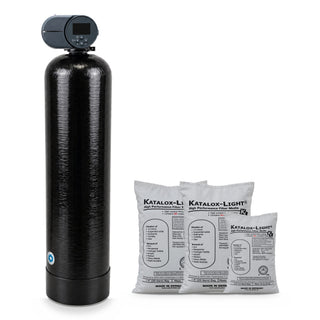
Those other problems have to be handled upstream with the right equipment: an iron filter for iron and manganese, a softener for hardness, a carbon filter for chlorine and chemicals, and a sediment filter for grit. Tell Aidan what your water test shows and he will lay out the full sequence with UV in its correct spot at the end.

Yes. A 5-micron sediment prefilter is mandatory ahead of the UV chamber. UV needs clear water: any sediment, turbidity, iron, or color in the water either blocks the light or builds up on the quartz sleeve and shadows the lamp, which lets microbes pass through untreated. The worst part is that this failure is silent, the light still glows, but the dose is no longer reaching the bugs.

Pre-treatment thresholds to hit before UV: iron under 0.3 ppm, manganese under 0.05 ppm, hardness under about 7 gpg, turbidity under 1 NTU, and UV transmittance above 75%. If your water is over any of these, install the matching filter upstream first.

Usually no. Municipal water is already disinfected and carries a chlorine or chloramine residual all the way to your tap, so a whole-house UV chamber is generally unnecessary on city water.

The honest exceptions are specific: a private well, a spring, a cistern, a boil-water-prone system, or a household with immunocompromised members who want an extra barrier. If you are on city water and considering UV, call us first. We would rather talk you out of equipment you do not need than sell it to you.


Use copper for the short pipe runs immediately at the UV chamber. Stray UV light degrades PEX and other polymer tubing over time, so copper is the durable choice right at the lamp. Customers who have installed our systems call this out specifically.

PEX is fine everywhere else in the house. Your plumber simply transitions from PEX to two short copper stubs at the chamber inlet and outlet with standard fittings, then back to PEX downstream.

When the power is out, the UV lamp is off and the water passing through is not being disinfected. After any extended outage, run the cold taps for a minute to flush the chamber once power returns, and the lamp resumes full disinfection right away.

If your well also relies on an electric pump, you usually have no water pressure during an outage anyway, so there is nothing flowing through the chamber. For households that need continuous protection through outages, a battery backup or generator on the UV circuit is the answer.

Replace the UV lamp about once a year on the VH200 and VH410 (the lamp is rated for roughly 9,000 hours, or about 12 months of continuous use). The PRO20 and PRO30 use amalgam lamps that can last up to 2 years. The controller counts down and alarms before the lamp is due, so you are never running on a spent bulb.

A genuine Viqua replacement lamp runs about $145 to $165 depending on the model, so the ongoing cost is roughly a lamp a year plus an occasional quartz sleeve. We stock the lamps, sleeves, and controllers for every system we sell.

Yes, and that is exactly the right use case. Shock chlorination is a one-time disinfection of the well itself. If the source keeps getting recontaminated (a shallow or spring-fed well, surface influence, a compromised well cap, or septic proximity), the bacteria returns within weeks and you are back to re-shocking.

A permanent Class A UV system disinfects every gallon as it is used, so you stop chasing the problem. If your well is also fouling from iron bacteria or heavy organics, UV alone is not enough: those wells need pre-treatment or continuous chlorination, and we will tell you honestly which path fits your situation.

Learn more

UV System guides & deep-dives

UV Water Filters: The Complete Guide

UV Water Filters: The Complete Guide

How UV disinfection works, what it kills, Class A vs Class B, pre-treatment requirements, and which Viqua system fits your water.

Read the guide →
Best UV Water Purifier for Well Water (2026)

Best UV Water Purifier for Well Water (2026)

Our recommendation after 32 years, with sizing by bathrooms and flow, NSF class, and when to choose the VH410 over the VH200.

Read the guide →

UV Water Filter for Well Water: Do You Need One?

When a private well needs UV, how to confirm bacteria with a coliform and E. coli test, and where UV goes in the treatment train.

Read the guide →

UV Disinfection vs Chlorination

An honest comparison: where UV wins (no chemicals, no byproducts, beats chlorine on Cryptosporidium) and where chlorination wins (residual protection, fouling wells).

Read the guide →

UV Water Treatment System Cost

What a whole-house UV system really costs to buy, install, and run year over year, including annual lamp and sleeve replacement.

Read the guide →

Viqua VH200 vs VH410: Which UV System?

The Class B VH200 vs the Class A VH410 head to head: dose, flow, home size, and which one your water test points to.

Read the guide →

How to Remove Coliform Bacteria from Well Water

What a positive coliform or E. coli result means, why shock chlorination keeps failing, and how permanent UV solves it.

Read the guide →

Commercial UV Water Treatment

Sizing UV for large homes, estates, and light-commercial sites at 20 to 30 GPM with NSF Class A validation.

Read the guide →
Water Test Kits

Water Test Kits

Confirm bacteria before you buy. Certified lab coliform and E. coli testing with expert interpretation.

Read the guide →
Iron & Sulfur Removal Filters

Iron & Sulfur Removal Filters

Iron and sulfur foul a UV chamber. Remove them upstream first with the right air-injection or catalytic filter.

Read the guide →
Sediment Filter Systems

Sediment Filter Systems

The mandatory 5-micron prefilter ahead of any UV light, so nothing shadows the lamp.

Read the guide →
Whole House Water Filtration Systems

Whole House Water Filtration Systems

Build the full treatment train: iron, softening, sediment, and carbon, with UV as the final disinfection stage.

Read the guide →
Personalized recommendation

Want Aidan to size it for you?

Paste your well test (or city water situation) below. Aidan replies with the right UV class (A or B), the exact pre-treatment your water needs ahead of the lamp, and which size fits your home's peak flow. Same-day during business hours, next morning otherwise.

Or text Aidan a photo

Goes straight to Aidan's inbox. No newsletter, no list. Just a real reply.

Aidan

Aidan

Co-owner. Real person. Not a bot.
7 Days/Week, 8AM-5PM EST

Contact Us
443-277-2204

We're here to help.

Aidan
Talk to Aidan
Real person. No bots.
Call