


This page is a complete buying guide for whole house arsenic water filters for private well water. It covers: testing first with a certified 53-contaminant lab test ($199, reports total arsenic plus the iron, manganese, and pH that size the system); a certified arsenic speciation test ($519) that splits total arsenic into arsenite (As III) and arsenate (As V); a non-backwashing arsenic-selective ion exchange system ($4,795) with 2 cubic feet of WQA Gold Seal certified resin in a 12x54 black Vortech tank with a Clack C1190 in/out head, followed by a 1.5 cubic foot carbon tank that takes out the fishy smell and taste new arsenic resin can cause, no salt, no drain, no electricity, covering most homes at up to 10 GPM; replacement media (ResinTech ASM-10-HP resin per cubic foot); a brand comparison against Crystal Quest, APEX, and US Water Systems; how arsenic removal works including the As III speciation trap and the iron-fouling rule; installation steps; and expert sizing help by phone. The EPA arsenic limit is 10 ppb; we recommend treating private wells above 5 ppb. All systems ship free to all 50 US states. Mid Atlantic Water has specialized in water treatment since 1997.
Arsenic Filters

0 products match your filters.
No products match those filters. Try adjusting your water conditions or .
Whole House Arsenic Removal Systems
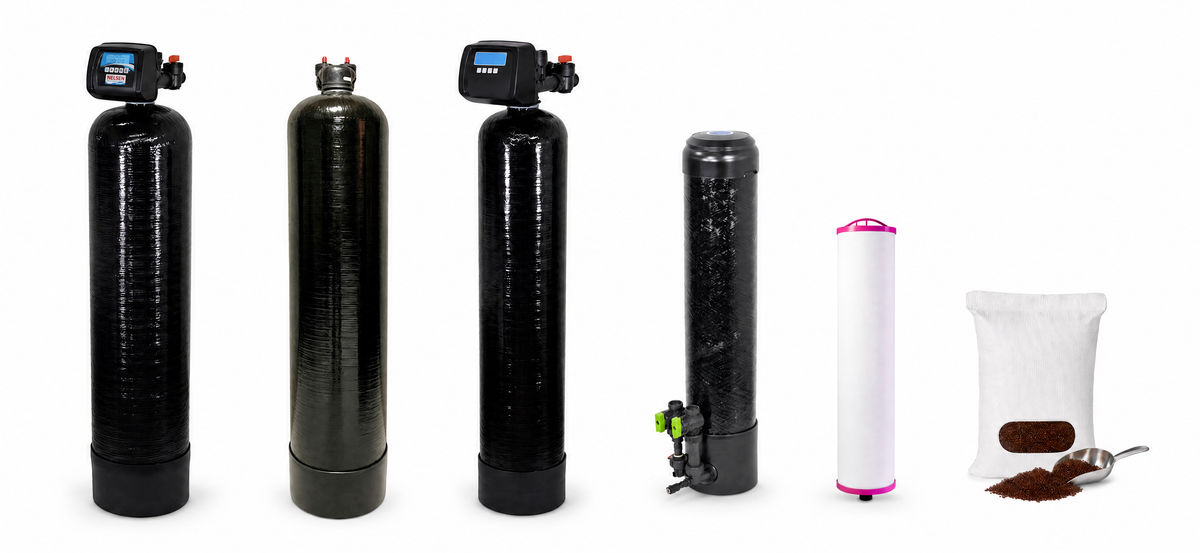
Point-of-entry treatment for every tap. Our system runs 2 cubic feet of WQA Gold Seal certified arsenic-selective ion exchange resin in a non-backwashing 12x54 black Vortech tank with a Clack C1190 in/out head, followed by a 1.5 cubic foot carbon tank that takes out the fishy smell and taste new arsenic resin can cause: no salt, no drain, no electricity, nothing to program. The resin binds arsenic permanently inside the bead, roughly 1,000,000 gallons of capacity, and an annual lab test confirms your treated water stays below the EPA 10 ppb limit.


Replacement Media & Cartridges
Keep an arsenic system at full removal. The medias here are single-use: once loaded they are replaced, never regenerated. Two 1 cu ft boxes of ResinTech ASM-10-HP rebed our current non-backwashing system (and our earlier metered resin tanks). Spent media passes TCLP and goes out with regular trash.


Text me your water test. I’ll send you a product link.
I read every water test personally and text back a recommendation. Same day. No chatbot, no upsell pressure, no charge.
-
Send your test
Photo, PDF, or just type the numbers, whatever’s easiest. Don’t have a test yet? Describe what you’re seeing.
-
Aidan reads it personally
Real co-owner. Not a chatbot, not a script, not a sales rep on quota. He’s sized thousands of systems.
-
Get a direct link to what you need
Aidan texts you the exact product page that fits your water. Buy it, bookmark it, or take the answer elsewhere. No pressure either way.
We never send spam. We never sell your number. Aidan answers personally, 7 days a week, 8a–5p ET.
Mid Atlantic vs. Crystal Quest, APEX & US Water Systems

|  |  |  | |
| Mid Atlantic | Crystal Quest | APEX | US Water Systems | |
|---|---|---|---|---|
| Arsenic technology | WQA Gold Seal arsenic-selective ion exchange resin | Iron-alumina / ion exchange media | Backwashing resin system | ResinTech ASM-10-HP resin |
| Install requirements | None: no salt, no drain, no electricity | Drain + power typical | Drain + power required | None (non-electric) |
| Honest As III vs As V guidance | Yes: speciation test kit + upstream oxidation spec'd free | Not specified | No (As III must be converted) | No (oxidize As III first) |
| Sized from a certified lab test | Yes, test-first sizing | No | No | No |
| Exhaustion safety | No dump-back: treated water never exceeds raw water | Adsorptive media can dump at exhaustion | Not specified | Same resin, same property |
| Phone consult included | Yes, with Aidan | Limited | Limited | Limited |
| Whole-house system price | $4,795 (includes a carbon tank) | From approx $2,389 | Quote-based | Approx $4,134 |
The detail that separates arsenic systems is speciation. Arsenite (As III) slips through arsenic-selective resin unless it is oxidized to arsenate (As V) first; APEX and US Water Systems say this on their own product pages, and so do we. Most US well arsenic is already As V, but 'most' is not a number: our $519 certified speciation test kit splits your total arsenic into As III and As V, and if As III shows up, Aidan specs the oxidizing stage that goes upstream of the resin, free.
Price context worth naming: US Water Systems' non-electric arsenic filter runs the same ResinTech ASM-10-HP resin and lists at about $4,134 for the arsenic tank; ours is $4,795 with the same 2 cu ft of resin plus a 1.5 cu ft carbon tank after it for the fishy taste and odor new arsenic resin can cause, and a low-cost rebed at end of media life instead of a proprietary tank swap. We size from your lab result, not a headline gallon number: total arsenic, pH, iron, and competing anions all matter, and Aidan reads your report with you for free.
What are the signs of arsenic in well water?

Your well test shows arsenic
A certified lab report lists arsenic above 10 ppb (0.010 mg/L), the EPA maximum contaminant level. We recommend treating private wells above 5 ppb, especially with young children or pregnancy in the house.

Your well is drilled in bedrock country
Most well water arsenic is natural: it leaches from fractured bedrock aquifers. New England granite, the upper Midwest, and the Southwest are the classic hot zones, and neighbors' results don't predict yours.

Old orchard or farmland nearby
Lead-arsenate pesticides were sprayed on orchards into the 1950s and the arsenic is still in the soil. Wells on or near legacy orchard and agricultural land carry a man-made arsenic risk on top of the geology.

Water looks and tastes perfectly fine
Arsenic has no taste, smell, or color at the levels found in well water. Clear, great-tasting water can test several times over the EPA limit. The only way to know is a certified lab test.

Test before you treat
Match your problem to the right system
-
 Arsenic confirmed, form unknown No speciation test Most lab reports show total arsenic only; a speciation test splits As III from As V
 Speciate First Arsenic speciation test kit (As III vs As V) From $519
 -
MOST POPULAR
 Zero-maintenance install Most well homes Non-backwashing tank with no salt, no drain, and no electricity; an annual lab test tracks media life
 Non-Backwashing Non-backwashing arsenic system From $4,795
 -
START HERE
 Haven't tested yet No lab number Arsenic is invisible. The test decides the system
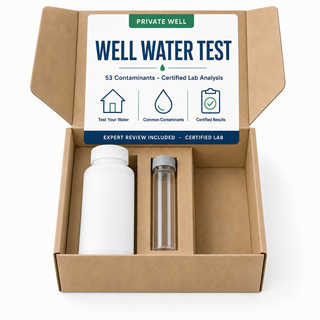 Test First Certified well water lab test From $199


What size arsenic filter do I need?
|
Non-Backwashing System
One size, most homes | |
|---|---|

| |
| Tank size | 12 x 54 in arsenic tank (2 cu ft) + 10 x 54 in carbon tank (1.5 cu ft), black Vortech |
| Household | Most homes with confirmed arsenic |
| Bathrooms | Most homes |
| Capacity | ~1,000,000 gallon resin bed, rebed every 1 to 5 years |
| Service flow | Non-backwashing, no salt, no power |
| Max flow before pressure drop | Up to 10 GPM |
| Backwash required | None: no drain, no outlet |
| Price | $4,795 |
| Shop now |

Non-Backwashing System
How arsenic removal works

A lab test finds the invisible problem
Arsenic has no taste, smell, or color, so treatment starts with a certified lab test. It reports total arsenic in parts per billion against the EPA limit of 10 ppb. Speciation (As III vs As V) decides the design: resin removes As V only, so confirmed As III needs an oxidizing stage upstream. Iron, manganese, and pH from the same report decide what else must be treated upstream.

Selective resin captures the arsenic
Arsenic-selective anion exchange resin fills the tank. As water passes, arsenate (As V) ions swap onto the resin beads and stay there, the same ion exchange principle a nitrate filter uses. Arsenite (As III) does not bind the same way, which is why confirmed As III gets an oxidizing stage upstream to convert it to As V before the resin.

The bed is replaced, never regenerated
The resin holds captured arsenic permanently inside each bead, so there is no backwash, no salt, no drain, and no valve to program. An annual treated-water lab test tracks the bed: when the number starts creeping up (typically after 1 to 5 years), the tank is rebedded with fresh arsenic-selective resin and the tank, head, and bypass stay in service. Critically, this resin never releases stored arsenic back into the water, even past capacity, so a late test is never a dumping emergency.
We ship it. Your plumber installs it.
Typical install time for a plumber on the two tanks: set each tank, plumb its inlet and outlet, load the resin and the carbon, and flush. No drain line, no outlet.
Zero utilities needed beyond the plumbing itself: the non-backwashing head has no electronics and no backwash cycle, so there is no outlet and no drain line at the install point.
Phone support included. Aidan walks your plumber through anything unusual about your specific setup.
What to have ready
- 1" plumbing with shut-offsInlet and outlet at the main line after the pressure tank, with valves upstream and downstream to isolate the system.
- Clear floor spaceTwo tanks side by side, 12" x 54" and 10" x 54". No brine tank, no salt storage.
- Iron and sediment handled upstream (required)Iron above 0.3 ppm or manganese above 0.05 ppm fouls arsenic media. Sediment, iron filter, and any pH correction go BEFORE the arsenic system.
- No outlet, no drainThe Clack C1190 in/out head has no electronics and no backwash cycle: no electrical outlet and no drain line are needed at the install point.
What your plumber will do
- Position the arsenic tank after sediment, iron filter, acid neutralizer, and softener, with the carbon tank right after it; a UV light can go before or after the carbon tank. Level each tank on its base.
- No drain line, no brine line, no outlet: the Clack C1190 in/out heads have nothing to wire or program.
- Attach the bypass valves so each tank can be isolated for future media changes.
- Plumb 1" inlet (IN) and outlet (OUT) on each tank, the arsenic tank's outlet into the carbon tank's inlet. CPVC with solvent cement or PEX with SharkBite fittings both work.
- Open the water valve slowly, 1/4 turn at a time. A sudden rush can channel the media bed and cut contact time, and contact time is what takes arsenic below the EPA limit.
- Flush to a nearby faucet before first use until the water runs clear of resin and carbon fines.
- Retest the treated water after 30 days and annually after that. Arsenic removal is verified with a number, not a guess; the annual lab test and new carbon every 4 to 5 years are the system's only routine tasks.
Adsorptive cartridge vs ion exchange vs RO for arsenic
| Feature | Arsenic-Selective Resin (Ours) | Under-Sink RO | Standard Carbon / Softener |
|---|---|---|---|
| Arsenate (As V) | Yes (no-dumping hybrid resin) | Yes (best per gallon) | No |
| Arsenite (As III) | No (oxidize to As V first) | Partial (membrane rejects As V better) | No |
| Coverage | Whole house (up to 10 GPM) | One tap | n/a |
| Certification | WQA Gold Seal resin, NSF components | Varies by unit | No arsenic claim |
| Drain / electricity | None: no drain, no outlet, no salt | Drain line to sink trap | n/a |
| Media life | 1 to 5 years (~1M gallons); rebed, tank stays | Membrane ~18 months | n/a |
| Maintenance | Annual lab test; new carbon every 4 to 5 years | Cartridges yearly | n/a |
| Price | $4,795 (with the carbon tank) | $300 - $900 typical | Does not solve arsenic |
Frequently asked questions
Arsenic Filter guides & deep-dives

Arsenic in Well Water: Health Risks, Testing, and How to Remove It
The complete guide: where well water arsenic comes from, the health research, EPA limits, and every proven removal technology compared.
Read the guide →
Best Arsenic Water Filter for Well Water (Whole House vs Point of Use)
Our test-first recommendation: which technology wins by arsenic form, level, and budget, with honest certification talk.
Read the guide →
How to Test for Arsenic in Well Water
Why a certified lab test is the only number worth acting on, what speciation means, and how to read your result in ppb.
Read the guide →
How Much Does an Arsenic Water Filter Cost?
Full 2026 price breakdown: systems, replacement media, install labor, and the operating cost per year at different arsenic levels.
Read the guide →
Arsenic in Well Water by State
Where well water arsenic is most common across the US: bedrock geology, legacy orchard land, and state testing programs.
Read the guide →Want Aidan to size it for you?
Your message is queued for Aidan
Your email client just opened with the message ready to send. Hit send and Aidan will reply same day during business hours.

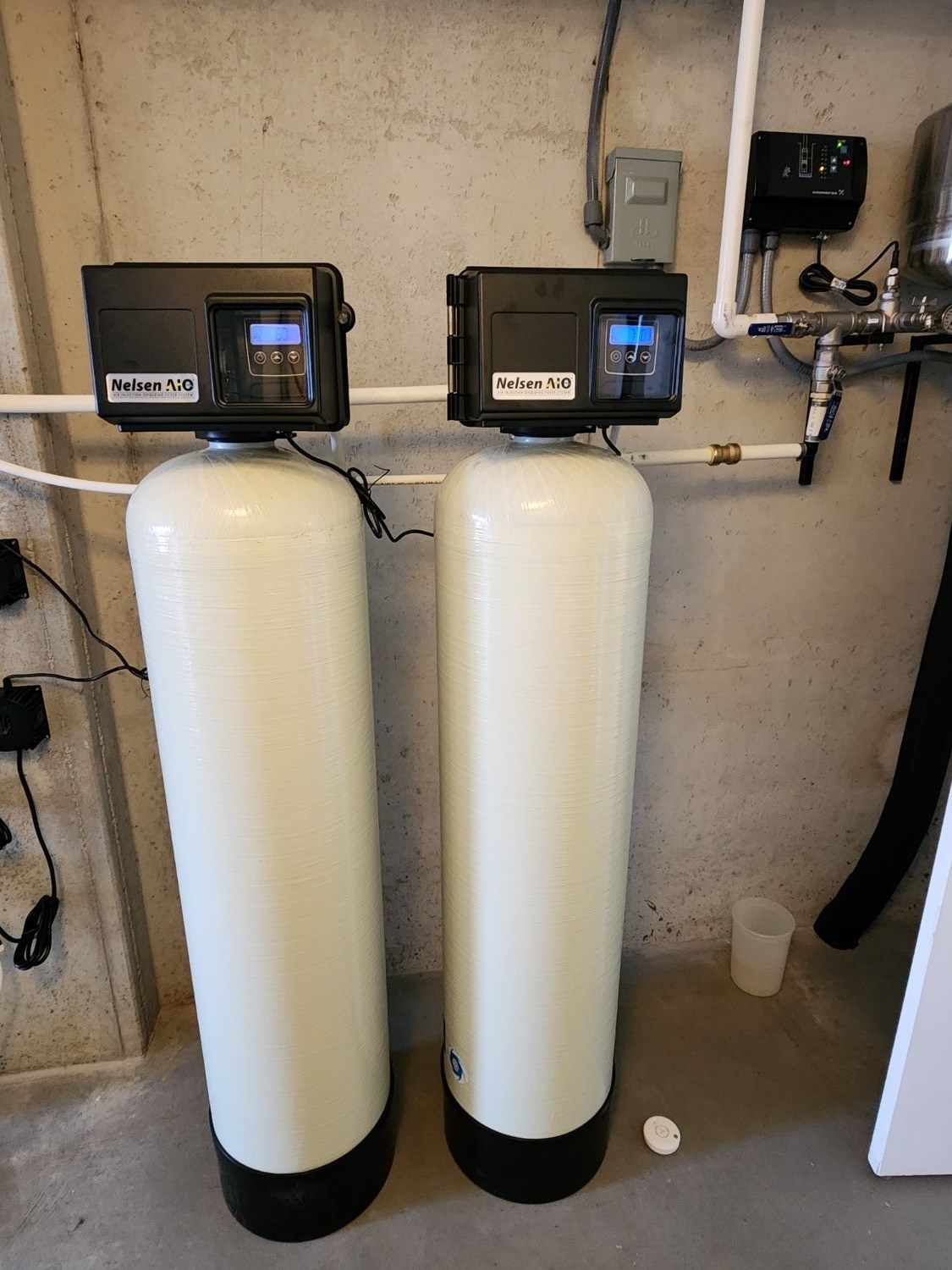
"I had well water with over 20 ppm ferrous and 7 ppm of ferric iron, plus manganese and some sulfur. Local water companies rejected me, said they couldn't help. I purchased two Fleck 2.5 cu. ft. 2510AIO iron filter tanks with Katalox-Light. Problem solved."
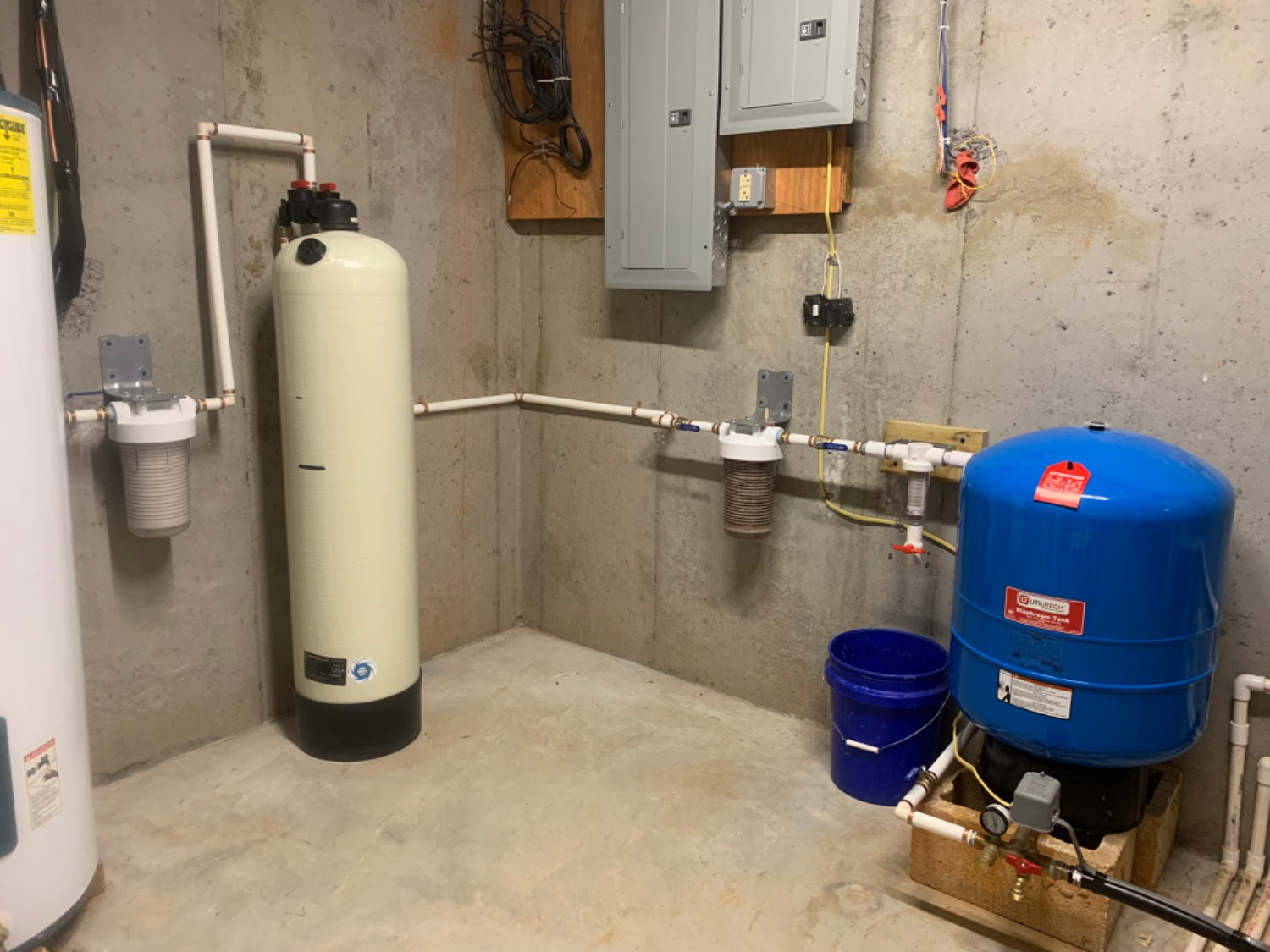
"New house, brass fittings on my Pex were all corroding. Tested the water, acidic at 5.5. Found Mid Atlantic Water YouTube videos which were very helpful, ordered the non-back washing 2.5. Easy install, water tests great now."
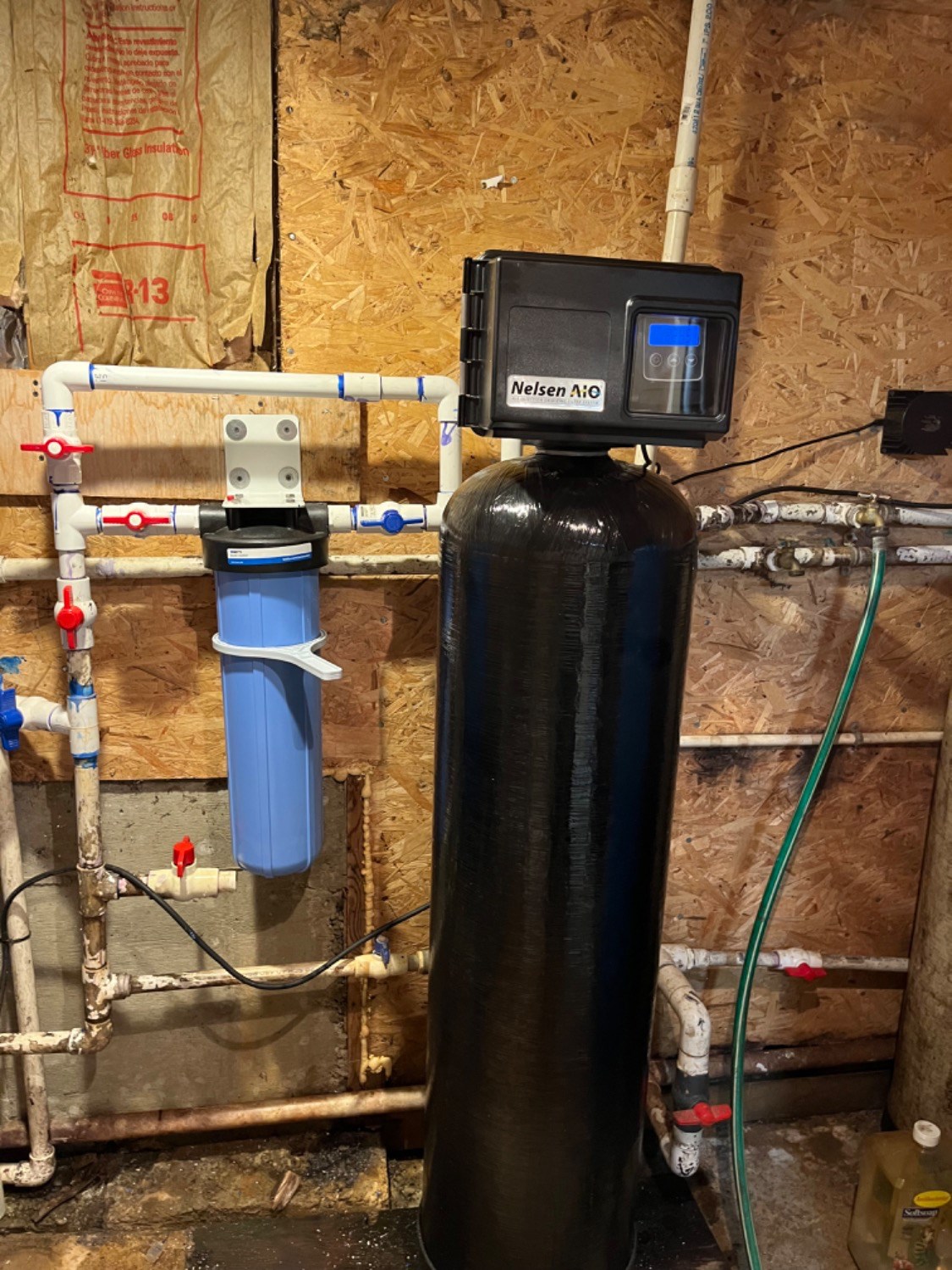
"Straight forward installation. In, out, and the drain. Ran a back wash cycle then put it online and it works GREAT. Cleaned out the iron and raised the pH to 7.5. Culligan tried to sell me something twice the price."
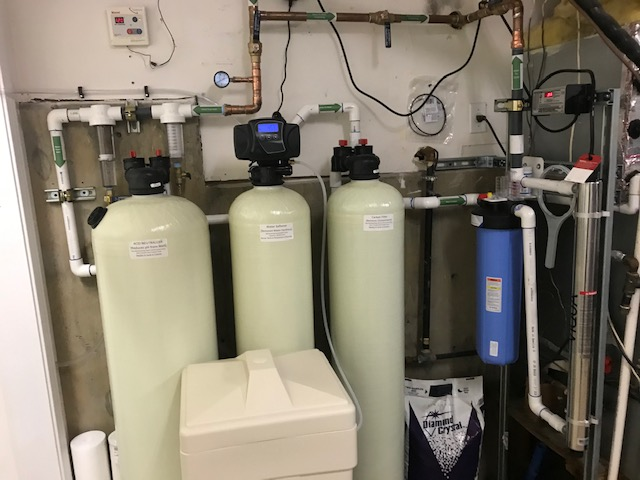
"Three contractors and two other suppliers reviewed my well report. Quotes ranged from $5,000 to $10,000. Then I found Mid Atlantic. Aidan reviewed the report and recommended a complete system. Same equipment, fraction of the cost, and the support was real."
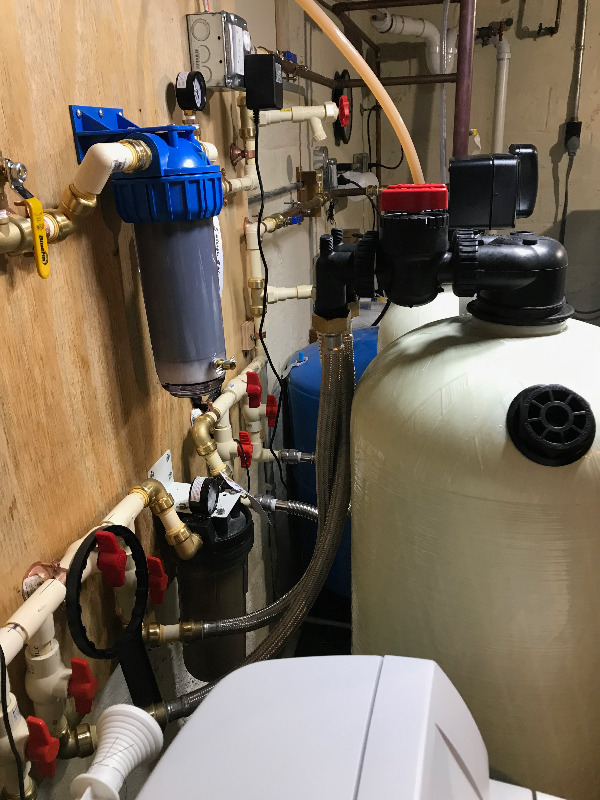
"Easy, bullet-proof installation. No moving parts. Raised my pH from 6.8 to a perfect 7.6. I had previously installed the same unit in my daughter's water system. Her pH was 5.2. Following Aidan's videos, both installs went smoothly."
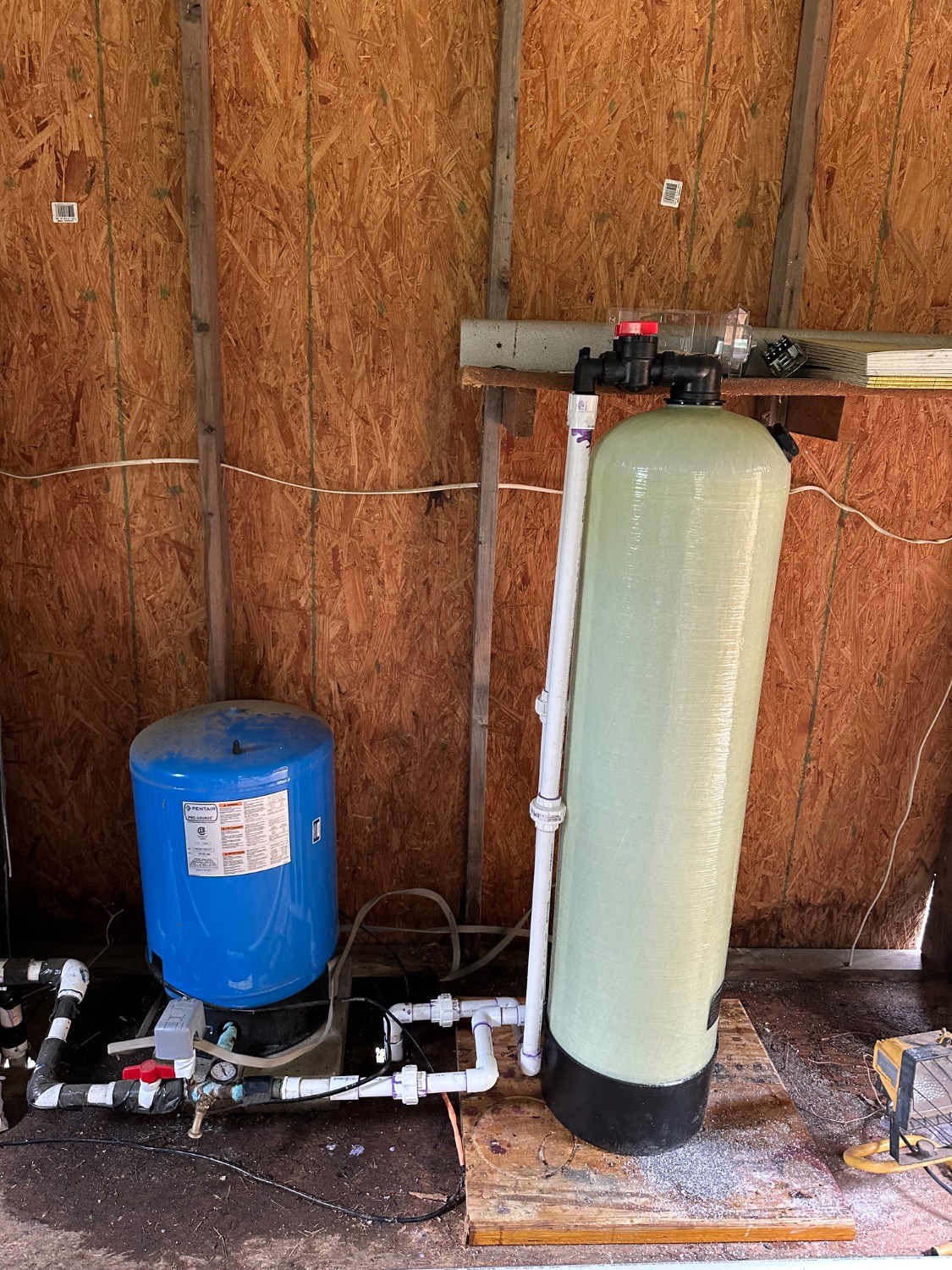
"Super easy install. Shouldn't have to service it for approximately 24-36 months based on my water usage. Tank is solid, fittings are clean, no leaks. Exactly what was advertised."
Want a real human to walk you through whether this is right for you?