

Acid Neutralizers: The Complete Guide
Well Water Treatment
Acid Neutralizers: The Complete Guide to Fixing Low pH Well Water
Everything you need to know about acid neutralizers for well water: what they are, how they work, which type and size you need, current pricing, and how to maintain them. Written by the team that's been installing these systems for 32 years.
TL;DR: Acid Neutralizers in 60 Seconds
If your well water's pH is below 7.0, it's acidic and slowly corroding your plumbing, appliances, and fixtures. An acid neutralizer is a tank filled with natural calcite (limestone) that raises the pH as water flows through it. No chemicals, no electricity, no drain connection needed.
- For most homes: A Clack 2.5 cubic foot non-backwashing acid neutralizer ($1,495) is the system we recommend after 32 years in the field.
- If your pH is below 5.5: You'll add FloMag (corosex) to your calcite for faster correction.
- If you also have iron in the water: Consider a backwashing acid neutralizer to keep the bed clean.
- Maintenance: Top off calcite every 18 to 36 months. That's it.
- Looking for a buyer's guide? See our Best Acid Neutralizer for Well Water (2026 Buyer's Guide) for product comparisons and sizing recommendations.
Browse all acid neutralizer systems | Call Aidan: 800-460-5810
Do You Need an Acid Neutralizer?
Answer 3 quick questions to find out if your water needs pH correction.
In this guide:
- What Is Acidic Water and Why Should You Care?
- Signs Your Well Water Is Acidic
- Is Acidic Water Dangerous? Health Risks and Home Damage
- What Is an Acid Neutralizer?
- How Does an Acid Neutralizer Work?
- Types of Acid Neutralizers (Non-Backwashing vs. Backwashing)
- Vortech vs. Gravel Bed Tanks
- Calcite vs. Corosex (FloMag): Which Media Do You Need?
- How to Size an Acid Neutralizer for Your Home
- Our Acid Neutralizer Systems and Current Pricing
- What to Expect After Installation
- Where Does an Acid Neutralizer Fit in Your System?
- Maintenance and Servicing
- Acid Neutralizer vs. Chemical Feed System
- Real Customer Review and Installation
- Frequently Asked Questions
What Is Acidic Water and Why Should You Care?
Water with a pH below 7.0 is considered acidic. The pH scale runs from 0 (extremely acidic) to 14 (extremely alkaline), with 7.0 being neutral. Most well water in the eastern United States falls somewhere between 5.0 and 6.5, which is acidic enough to cause real problems over time.
The pH of your well water depends on the geology in your area. Regions with granite, sandstone, or thin limestone bedrock tend to produce acidic groundwater because the rock doesn't contribute enough alkaline minerals to buffer the water's natural acidity. Carbon dioxide in the soil and atmosphere dissolves into groundwater and produces carbonic acid, lowering the pH further.
States like Maryland, Massachusetts, Connecticut, New Hampshire, Virginia, Pennsylvania, New Jersey, and the Carolinas are especially prone to acidic well water. If you're on well water in any of these areas, there's a good chance your water is below 7.0.
You can find out your water's pH with an inexpensive test kit from Amazon or your local hardware store ($10 to $15), or by sending a sample to a local water testing lab ($30 to $75 for a full well water panel).
Signs Your Well Water Is Acidic
Many homeowners don't realize they have acidic water until the damage is already underway. Here are the most common signs we see: Our signs of acidic water guide covers every symptom in detail.
- Blue-green stains on fixtures: The most recognizable symptom. If your bathtub, shower, sinks, or toilets have a blue-green or turquoise discoloration, that's dissolved copper from your plumbing. Acidic water is literally eating your copper pipes and depositing the metal on your fixtures.
- Pinhole leaks in copper pipes: Over time, acidic water eats through copper from the inside out. By the time you find the first pinhole leak, the rest of your plumbing may already be compromised. Replacing copper plumbing in a home can cost $5,000 to $15,000 or more.
- Metallic or sour taste: Low pH water often has a sharp, metallic taste from dissolved metals (copper, zinc, lead). Some people describe it as slightly sour or "off."
- Green deposits on faucet aerators: Check the screens on your faucets. Green or white crusty buildup is another sign of corrosive water dissolving metals from your plumbing.
- Premature water heater failure: Hot water heaters are especially vulnerable to acidic water. If your water heater is failing early (under 8 years), corrosive water is often the culprit. See our article on why acidic water is your hot water heater's biggest enemy.
- Stained laundry: Clothes washed in acidic water with dissolved metals can develop a dingy appearance or blue-green tint.
If you're seeing any of these, test your water pH. The fix is straightforward, and the sooner you address it, the less damage your plumbing takes.
Is Acidic Water Dangerous? Health Risks and Home Damage
Health Concerns
Acidic water itself isn't directly harmful at the pH levels typical of well water (5.0 to 6.9). The real health concern is what acidic water dissolves from your plumbing on the way to your faucet.
When low pH water flows through copper pipes and brass fittings, it leaches metals into your drinking water. The most serious of these is lead. Even homes without lead pipes can have lead-containing solder joints, brass valves, or older fixtures. The CDC's lead safety guidelines identify risks including developmental delays in children, kidney damage, high blood pressure, and nervous system problems in adults.
Other metals commonly leached by acidic water include copper, zinc, manganese, and iron. In high enough concentrations, these can cause stomach discomfort, nausea, and long-term organ damage. The EPA sets a secondary standard for copper at 1.3 mg/L and lead at 0.015 mg/L (with a goal of zero).
Home Damage
Beyond health, acidic water causes expensive home damage that compounds over time:
- Copper pipe corrosion: Pinhole leaks, pipe replacement ($5,000 to $15,000+)
- Water heater failure: Tank corrosion and premature anode rod failure. Average replacement: $1,200 to $3,000
- Fixture damage: Faucets, shower valves, dishwasher components, washing machine parts
- Appliance lifespan reduction: Anything that touches the water degrades faster
The cost of not treating acidic water almost always exceeds the cost of treatment within 2 to 3 years. A $1,495 acid neutralizer pays for itself the first time you avoid a pipe repair or premature water heater replacement.
What Is an Acid Neutralizer?
An acid neutralizer (also called a pH neutralizer, calcite filter, or pH water filter) is a whole-house water treatment system that raises the pH of your water from acidic to neutral. It's a tall fiberglass tank filled with natural calcite media (calcium carbonate, essentially crushed limestone) that slowly dissolves into your water as it flows through, raising the pH.
Think of it this way: your well water is missing the alkaline minerals it would normally pick up from limestone bedrock. An acid neutralizer puts those minerals back. The water enters acidic and exits neutral, before it reaches any of your plumbing, appliances, or fixtures.
Acid neutralizers are the most common and most cost-effective way to treat low pH well water in residential homes. They require no chemicals, no electricity (for non-backwashing models), and no drain connection. Maintenance is minimal: you add more calcite to the tank once or twice a year as the media dissolves.
If you searched for "pH water filter," this is what you need. See our pH Water Filter Guide for a detailed breakdown of types and current pricing.
How Does an Acid Neutralizer Work?
The chemistry is simple. Calcite is calcium carbonate (CaCO3). When acidic water (which contains carbonic acid from dissolved CO2) contacts the calcite, a neutralization reaction occurs:
Calcite + carbonic acid → calcium bicarbonate (dissolved, raises pH and hardness)
For a deeper explanation of the neutralization process, media types, and system design, see How Does an Acid Neutralizer Work?
As the calcite dissolves, it consumes the acid in the water and raises the pH toward neutral (7.0 to 8.0). The byproduct is calcium bicarbonate, which is a form of hardness. This is why acid neutralizers add some hardness to your water (typically 4 to 6 grains per gallon). More on that below.
The system is self-regulating: the more acidic your water, the faster the calcite dissolves. Less acidic water reacts more slowly. You can't "over-correct" with calcite alone because the reaction naturally reaches an equilibrium.
Non-Backwashing (Upflow) Systems
In an upflow system, water enters through the bottom of the tank via a distributor plate, flows upward through the calcite bed, and exits through the top. This design maximizes contact time between the water and the media, which means more complete pH correction. These systems have no moving parts, no electricity requirement, and waste no water.
Backwashing (Downflow) Systems
In a backwashing system, water enters through the top, flows down through the calcite, and exits through the bottom. Periodically (typically once per week), the control valve reverses the flow and flushes the bed to remove trapped sediment and prevent channeling. This uses approximately 70+ gallons of water per backwash cycle and requires a drain connection and electricity.
Types of Acid Neutralizers: Non-Backwashing vs. Backwashing
This is the most common question we get on calls, and the answer is simpler than most people expect.
| Feature | Non-Backwashing (Upflow) | Backwashing (Downflow) |
|---|---|---|
| Flow direction | Upflow (bottom to top) | Downflow (top to bottom) |
| Electricity required | No | Yes (control valve) |
| Drain required | No | Yes (backwash discharge) |
| Water waste | Zero | ~70+ gallons per backwash cycle |
| Moving parts | None | Motorized valve, piston/seals |
| Contact time with media | Higher (upflow design) | Lower (downflow) |
| Best for | Most residential homes | Homes with iron, heavy sediment, or commercial use |
| Maintenance | Add calcite annually | Add calcite annually + valve service |
| Starting price | $1,195 | $1,695 |
Our Recommendation
For most residential homes, the non-backwashing (upflow) acid neutralizer is the better choice. It's simpler, cheaper, wastes no water, needs no electricity or drain, and the upflow design actually gives better media contact time than backwashing systems. We installed both types for 28 years in the field, and the non-backwashing systems consistently had fewer service calls and happier customers.
The only time we recommend a backwashing acid neutralizer is when the water also contains iron (above 0.3 ppm) or heavy sediment. In those cases, the periodic backwash keeps the calcite bed from getting fouled. If you're unsure, see our detailed comparison of non-backwashing vs. backwashing acid neutralizers.
Vortech vs. Gravel Bed Tanks
Within each type (backwashing and non-backwashing), you'll find two tank designs: Vortech and gravel bed.
Vortech tanks have a distributor plate molded into the bottom of the tank, replacing the traditional gravel underbedding. This gives you better flow distribution, higher flow rates, less pressure drop, and a lighter tank. For non-backwashing upflow systems, the Vortech plate distributes water evenly in a circular upward motion, maximizing contact time with the calcite.
Gravel bed tanks use layers of support gravel beneath the calcite. They've been the industry standard for decades and are reliable. The main advantage is that gravel bed tanks are easier to fully re-bed (the distributor tube is removable), while Vortech tanks have the tube permanently mounted to the plate.
Our recommendation: We use Vortech tanks exclusively in our residential systems. The flow rate advantage and lighter weight outweigh the re-bedding convenience of gravel beds. In 32 years, the Vortech distributor tube rarely fails. When it's time to re-bed (every 5+ years), we walk customers through the process over the phone.
Calcite vs. Corosex (FloMag): Which Media Do You Need?
The filter media inside your acid neutralizer determines how aggressively it corrects your pH. Our Calcite vs. Corosex comparison guide covers this decision in depth.
Calcite (Calcium Carbonate)
Calcite is natural limestone, the standard media for acid neutralizers. It dissolves slowly, raises pH gradually, and is self-regulating. For water with a pH between 6.0 and 6.9, calcite alone handles the job. It's what we use in the vast majority of installations.
Corosex / FloMag (Magnesium Oxide)
FloMag (corosex) is magnesium oxide, a more aggressive media that dissolves faster and raises pH more rapidly than calcite alone. It's used when the pH is below 5.5 and calcite can't correct the water fast enough on its own.
FloMag is never used alone. It's always blended with calcite at a ratio of roughly 2 lbs of FloMag per 50 lb bag of calcite. Using too much FloMag can overcorrect the pH and create scaling issues. This is why we recommend calling us if your pH is below 5.5, so we can dial in the right mix for your water chemistry.
| Your pH Level | Media Recommendation | Notes |
|---|---|---|
| 6.0 to 6.9 | Calcite only | Standard setup for most homes |
| 5.5 to 5.9 | Calcite + small amount of FloMag | Ratio: ~2 lbs FloMag per 50 lb bag calcite |
| Below 5.5 | Calcite + FloMag blend (call for ratio) | Water chemistry varies; we'll help dial it in |
One customer recently asked us: "Should I do FloMag or first install the regular system and watch the output? I don't want to over-correct." Our advice: start with just calcite, test the water after a week, and add FloMag later if needed. You can always add it; you can't take it out. For more detail, see our article on using FloMag in an acid neutralizer.
How to Size an Acid Neutralizer for Your Home
Sizing is based on water usage, which correlates directly with the number of people in your home and the number of bathrooms. The tank needs to be large enough to provide adequate flow rate and sufficient contact time for the calcite to raise the pH effectively. See our acid neutralizer sizing guide for help choosing the right system for your home.
| Household Size | Recommended Size | Tank Dimensions | Flow Rate |
|---|---|---|---|
| 1 to 2 people, 1 bathroom | 1.0 cubic foot | 10" x 44" | 5 GPM |
| 1 to 3 people, 1 to 2 bathrooms | 1.5 cubic foot | 10" x 54" | 5 GPM |
| 2 to 4 people, 2 to 3 bathrooms | 2.0 cubic foot | 12" x 52" | 7 GPM |
| 3 to 8 people, 2 to 4+ bathrooms | 2.5 cubic foot | 13" x 54" | 10 GPM |
| 8+ people or large estate | 3.5 cubic foot | 16" x 65" | 15 GPM |
Our Sizing Philosophy
We generally recommend the 2.5 cubic foot system regardless of household size. Here's why: a larger tank gives you more calcite (more contact time), better flow rates, less pressure drop, and longer intervals between refills. The price difference between a 1.5 and 2.5 cubic foot system is only $200, but the 2.5 outperforms it in every measurable way.
As Aidan tells customers on the phone: "The smaller the tank you go, the more it cuts into your flow rates, the less capacity you have. A lot of retail companies want to sell a smaller tank because they make more on the installation and service calls. We sell a lot of 2.5 cubic foot systems because it's the right size for most homes."
For a detailed comparison of every size option with product links, see our Best Acid Neutralizer Buyer's Guide.
Our Acid Neutralizer Systems and Current Pricing (2026)
All systems ship from our manufacturer in Ohio. Pricing includes the tank, valve (for backwashing models), calcite media, bypass valve, and Quick Connect fittings. Free shipping to all lower 48 states. For a complete breakdown of all costs including installation, maintenance, and long-term expenses, see our acid neutralizer cost guide.
Non-Backwashing (Upflow) Systems
| System | Size | Price | |
|---|---|---|---|
| Clack 1.0 cf Vortech Non-Backwashing | 10" x 44" | $1,195 | View |
| Clack 1.5 cf Vortech Non-Backwashing | 10" x 54" | $1,295 | View |
| Clack 2.0 cf Vortech Non-Backwashing | 12" x 52" | $1,395 | View |
| Clack 2.5 cf Vortech Non-Backwashing | 13" x 54" | $1,495 | View |
Backwashing (Downflow) Systems
| System | Size | Price | |
|---|---|---|---|
| Fleck 2510SXT 1.5 cf Vortech Backwashing | 10" x 54" | $1,695 | View |
| Fleck 2510SXT 2.0 cf Vortech Backwashing | 12" x 52" | $1,795 | View |
| Fleck 2510SXT 2.5 cf Vortech Backwashing | 13" x 54" | $1,895 | View |
Acid Neutralizer + Water Softener Packages
Many homes with acidic water also benefit from a water softener. Our package deals save $200 to $400 vs. buying separately.
| Package | Price | |
|---|---|---|
| Clack 1.5 cf Upflow AN + Fleck 5600SXT 48K Softener | $2,695 | View |
| Clack 2.5 cf Upflow AN + Fleck 5600SXT 48K Softener | $2,995 | View |
| Fleck 1.5 cf BW AN + 5600SXT 48K Softener | $2,895 | View |
| Fleck 2.5 cf BW AN + 5600SXT 48K Softener | $3,295 | View |
Replacement Media
What to Expect After Installation
pH Correction
Most customers see their water reach neutral (7.0 to 8.0) within 24 hours of installation. One customer reported going from pH 6.20 to 7.99 within a day. Another went from 5.9 to 7.3. The correction is immediate because the calcite begins reacting with the water as soon as it flows through.
Hardness Increase
Because calcite dissolves calcium into the water, your hardness level will increase. On average, expect an increase of 4 to 6 grains per gallon. If your raw water is at 3 grains per gallon, it may go up to 7 or 8 after the neutralizer.
Our advice: install the acid neutralizer first, let it run for a week or two, then retest your water. If the hardness is bothersome (scale buildup on fixtures, soap not lathering well), add a water softener after the neutralizer. Many homes in acidic water areas end up with both systems. See our article on why your home may need both an acid neutralizer and water softener.
Water Pressure
You won't notice a meaningful pressure drop. Our Vortech systems deliver full household flow rates with no complaints from over 7,000 customers. The 2.5 cubic foot system handles 10 GPM, which is more than adequate for homes with multiple fixtures running simultaneously.
Copper Pipe Replacement
If you have copper plumbing between your pressure tank and the acid neutralizer, the water traveling through that section is still untreated (still acidic). We recommend replacing that short run of copper with CPVC or PEX so it doesn't corrode. From the neutralizer to the house, the water is treated and safe for copper.
Where Does an Acid Neutralizer Fit in Your System?
If you're treating multiple water issues (and most well water homes are), the order of your equipment matters. Here's the correct treatment sequence:
The acid neutralizer goes early in the sequence, right after the sediment pre-filter. This is important because many other treatment media (particularly iron filter media like Katalox Light) work best at a neutral pH. If you put the iron filter before the neutralizer, the acidic water reduces the iron filter's effectiveness.
The sediment pre-filter (a Big Blue housing with a 5-micron cartridge) goes first to keep particles out of the acid neutralizer bed. This is a $30 to $50 housing that protects your investment and keeps the calcite clean longer.
For the full breakdown of how every system connects, see our Complete Guide to Well Water Filtration Systems.
Maintenance and Servicing
Acid neutralizers are low-maintenance systems. Here's the complete maintenance schedule:
Adding Calcite (Every 18 to 36 Months)
As the calcite dissolves to raise your pH, the media level drops over time. The tank is semi-translucent, so you can hold a flashlight up to it and see the media level. Keep the calcite within 10 to 12 inches of the fill port opening.
How often you refill depends on your pH level and water usage. With a pH around 6.0 to 6.5 and a family of 3 to 4, expect to add calcite every 24 to 36 months. Lower pH (more acidic) or higher water usage means more frequent refills.
The 2.5 cubic foot system comes with 5 bags of calcite (250 lbs), which is enough for the first 2 to 3 years. Replacement bags are $145 per 50 lb bag. Multi-bag packages are discounted.
Tip from Aidan: "When you add calcite, make sure you cover the center riser tube with blue painter's tape first so media doesn't fall into it. And do NOT over-tighten the fill cap. Hand tighten, then a quarter to a half turn with channel locks. If you crack the lip, it voids the tank warranty."
Full Re-bed (Every 5+ Years)
Over time, the calcite at the bottom of the tank breaks down into fine particles. Every 5 years or so, it's worth emptying the tank and refilling with fresh calcite. Wait for warm weather, disconnect the Quick Connect fittings, take the tank outside, dump the old media, and refill.
The bypass valve stays in place while you do this, so the house still has water (just unfiltered) during the process.
For step-by-step instructions, see our guide to servicing your acid neutralizer.
Sediment Pre-filter (Every 6 to 12 Months)
Replace the 5-micron cartridge in your Big Blue sediment filter every 6 to 12 months. These are standard cartridges available at Lowe's, Home Depot, or Amazon for about $15 to $20. Some customers clean and reuse them; manufacturer recommendation is to replace.
Acid Neutralizer vs. Chemical Feed System
Chemical feed systems (like soda ash injection) are an alternative to calcite acid neutralizers. They inject a chemical solution into the water using a metering pump. For a detailed comparison, read our Soda Ash vs. Acid Neutralizer analysis. While effective, they're significantly more complex:
| Factor | Acid Neutralizer (Calcite) | Chemical Feed System |
|---|---|---|
| How it works | Natural limestone dissolves into water | Chemical solution injected by pump |
| Chemicals required | None (natural media) | Soda ash or potassium hydroxide |
| Maintenance frequency | Add calcite every 18 to 36 months | Refill solution tank monthly or bimonthly |
| Electricity | None (non-backwashing) | Required (injection pump) |
| Noise | Silent | Injection pump is audible |
| Cost (system) | $1,195 to $1,895 | $800 to $2,000+ |
| Cost (ongoing) | ~$145/year (calcite) | $300 to $600/year (chemicals + parts) |
| Installation | DIY-friendly (2 hours) | Usually professional ($500 to $1,000+) |
| Best for | Most residential homes (pH 5.5+) | Very low pH (<5.5), commercial, or multi-issue treatment |
One long-time customer, Mary Hale, switched to our Clack system after running a soda ash system for 10 years: "Over time we couldn't get the pH accurate and the servicing cost us twice as much as the original system. As soon as we installed the Clack system, our pH has been perfect."
For a deeper comparison, see our Acid Neutralizer vs. Chemical Feed System article.
Installation: DIY or Professional?
Acid neutralizers are among the easiest water treatment systems to install. Our systems come with Quick Connect fittings, a bypass valve, and written instructions. The average installation takes about 2 hours, including filling the tank with calcite.
Tips from the field:
- Fill the calcite yourself before the plumber arrives (it takes longer to pour in the calcite than to cut the unit into the plumbing)
- Cover the center riser tube with blue tape before adding calcite from the top
- Hand-tighten the fill cap, then a quarter to half turn with channel locks. Do NOT over-tighten.
- Replace any copper piping between the pressure tank and the neutralizer with CPVC or PEX
- Install the Big Blue sediment filter between the pressure tank and the acid neutralizer
- If your plumber has questions during install, call us. We're available 7 days a week.
For the full step-by-step walkthrough with video, see our Acid Neutralizer Installation Guide.
Real Customer Installation
"Found the install to be very straightforward, easy for any DIYer. Website videos were very helpful and really a must, as many install recommendations in the videos were not part of the written instructions. Recommendation to replenish calcite was when there was 2 to 3 bags remaining in the tank, which I could gauge using the flashlight method. pH went from acidic to neutral within the first day."
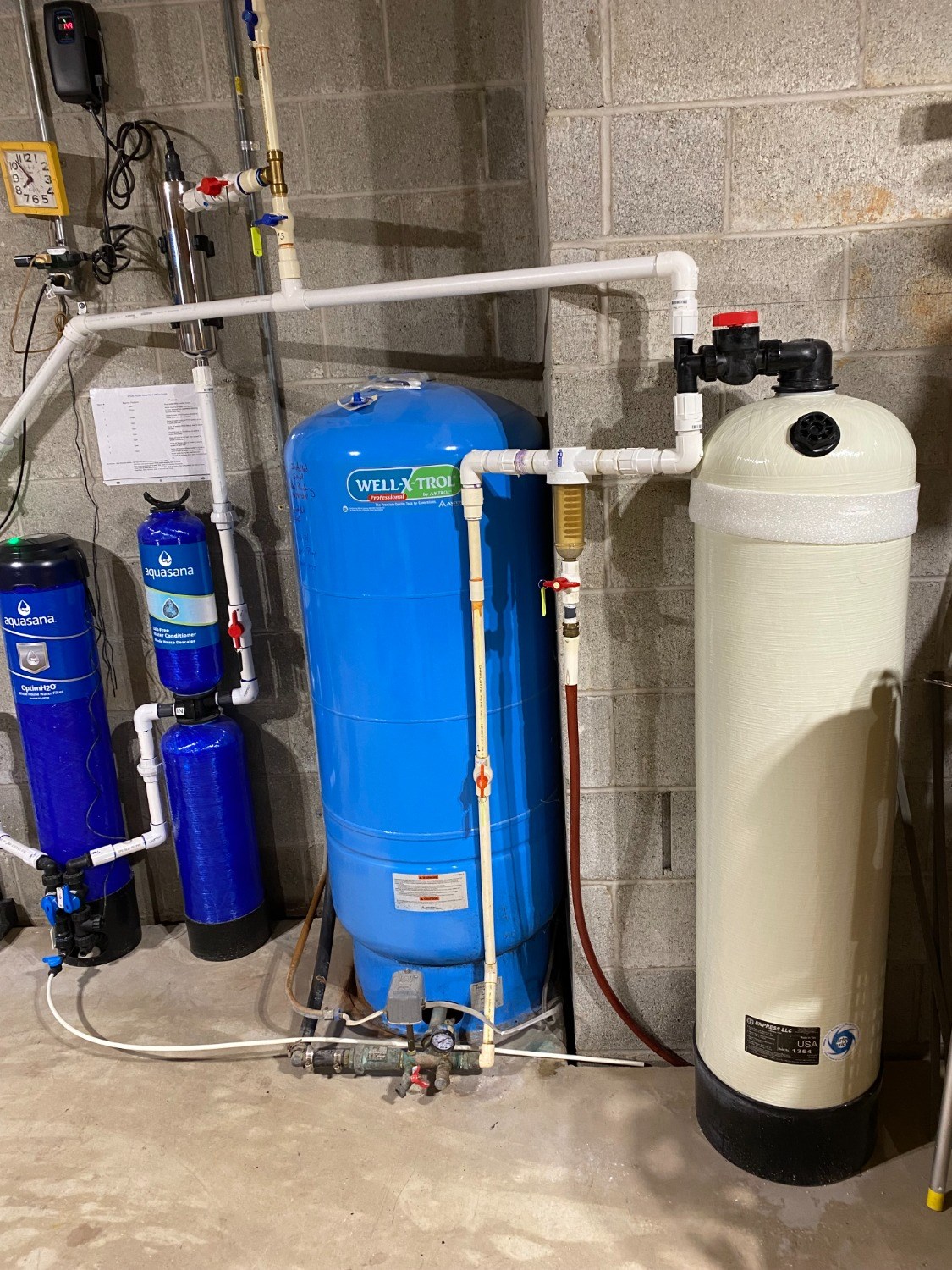
"Uncomplicated and quick installation. Customer Support (Aidan) answered our only question immediately and to the point. pH previously 5.9, now at 7.3. Wife is happy, I am happy."
"We were using the acid neutralizer that uses soda ash for 10 years. Over time we couldn't get the pH accurate and the servicing on the product cost us twice as much as the original system. As soon as we installed the Clack system our pH has been perfect. Highly recommend."
Frequently Asked Questions
How much does an acid neutralizer cost?
Our non-backwashing acid neutralizer systems range from $1,195 (1.0 cubic foot) to $1,495 (2.5 cubic foot). Backwashing models run $1,695 to $1,895. Package deals with a water softener start at $2,695. Ongoing maintenance costs approximately $145 per year for calcite refills. A professional plumber typically charges $200 to $400 for installation, or you can DIY it in about 2 hours.
Does an acid neutralizer need electricity?
Non-backwashing (upflow) acid neutralizers require zero electricity. The water flows through the calcite bed using your home's water pressure alone. Backwashing models do require electricity to power the control valve that runs the periodic backwash cycle.
How often do I need to add calcite?
For a typical household of 3 to 4 people with a 2.5 cubic foot system, expect to add calcite every 24 to 36 months. Homes with lower pH (more acidic) or higher water usage may need refills every 12 to 18 months. The tank is semi-translucent, so you can check the level with a flashlight anytime. Keep the media within 10 to 12 inches of the fill port.
Does an acid neutralizer increase water hardness?
Yes. As calcite (calcium carbonate) dissolves to raise your pH, it adds calcium to the water, which increases hardness. Typically expect an increase of 4 to 6 grains per gallon. If your raw water hardness is already moderate, you may want to add a water softener after the neutralizer. Our recommendation: install the neutralizer first, retest after 1 to 2 weeks, and decide then.
Do I need a backwashing or non-backwashing acid neutralizer?
Non-backwashing (upflow) for most homes. The only reason to choose backwashing is if your water also contains iron above 0.3 ppm or heavy sediment that could foul the calcite bed. Non-backwashing systems are simpler, cheaper, waste no water, need no drain or electricity, and provide better media contact time. Full comparison here.
What size acid neutralizer do I need?
We recommend the 2.5 cubic foot (13" x 54") for most homes. It handles up to 10 GPM flow rate, provides excellent contact time, and only needs calcite refills every 2 to 3 years. The price difference between the 1.5 and 2.5 cubic foot is only $200, but the 2.5 significantly outperforms in capacity and longevity. See the sizing section above for a detailed breakdown.
Can I install an acid neutralizer myself?
Yes. Our systems come with Quick Connect fittings, a bypass valve, and detailed instructions. The average DIY installation takes about 2 hours. Most of that time is spent pouring calcite into the tank, not plumbing. If you get stuck, call us. We've coached hundreds of homeowners through installation over the phone and are available 7 days a week. Full installation guide here.
What's the difference between calcite and FloMag (corosex)?
Calcite (calcium carbonate) is the standard media for most acid neutralizers. It dissolves slowly and is self-regulating. FloMag (magnesium oxide, also called corosex) is a more aggressive media that dissolves faster and raises pH more rapidly. FloMag is only used as a supplement to calcite when pH is below 5.5. It's never used alone. More about FloMag here.
Does an acid neutralizer affect water pressure?
No noticeable pressure drop with a properly sized system. Our Vortech tanks are designed for high flow rates. The 2.5 cubic foot system handles 10 GPM, which is more than sufficient for most residential homes. We've sold over 7,000 systems with zero complaints about pressure reduction.
How long does an acid neutralizer last?
The Clack valve and Vortech tank last 20 to 30+ years. The calcite media needs periodic replenishment (every 1 to 3 years) and a full re-bed every 5+ years, but the tank itself is essentially a lifetime investment. We have customers still running systems from our earliest installations over a decade ago.
Do I need both an acid neutralizer and a water softener?
Not necessarily. An acid neutralizer fixes low pH. A water softener fixes hardness. Since the neutralizer adds some hardness (4 to 6 GPG), many homes on acidic water benefit from both. But start with the neutralizer, retest, and see if the added hardness bothers you. In Maryland, most of what we sell is an acid neutralizer with a water softener package. Read more.
Where does the acid neutralizer go in the treatment sequence?
Right after the sediment pre-filter and before everything else: sediment filter → acid neutralizer → iron filter → carbon filter → water softener → UV light. Correcting the pH first ensures all downstream treatment media works at optimal efficiency. Full treatment sequence guide.
Why not just use a chemical injection system instead?
Chemical feed systems (soda ash, potassium hydroxide) require monthly chemical refills, an injection pump (electricity, noise), and typically professional installation. They cost $300 to $600 per year in ongoing maintenance vs. about $145 per year for calcite. We removed hundreds of chemical feed systems during our 28 years of field service because homeowners were tired of the maintenance. Calcite neutralizers are simpler, quieter, and cheaper long-term for most residential situations. Full comparison here.