This page is a complete buying guide for manganese filters for well water. It covers: diagnosing black and dark brown staining by color (orange-red staining is iron, flagged by the EPA at 0.3 mg/L; grayish-black staining is manganese, flagged at 0.05 mg/L; slimy black film is manganese or iron bacteria and needs chlorination first) and a $199 certified 53-parameter lab test; whole-house air-injection oxidation systems running Katalox Light catalytic media by Watch Water of Germany, manganese dioxide coated, rated for up to 15 ppm manganese, 30 ppm iron, and 10 ppm hydrogen sulfide across pH 5.8 to 10.5, NSF/ANSI 61 certified components (Fleck 2510AIO 1.5 cu ft, $2,095, 10 GPM service for 2-3 people; 2.0 cu ft, $2,295, 13-14 GPM for 3-5 people; 2.5 cu ft, $2,495, 17 GPM for 3-5 bathrooms, most popular); an ozone-boosted 2.5 cu ft Clack AIO option for the heaviest wells ($2,695); and a no-backwash Pioneer ATOMUS MD1 cartridge system for manganese up to 2 ppm with no drain or electricity (from $1,695); a brand comparison against SpringWell, US Water Systems, and IronPro; why Birm (pH 8.0 to 9.0 for manganese) and greensand (potassium permanganate regeneration) struggle at normal well pH while catalytic MnO2 media does not; why a water softener fails on heavy manganese and belongs after this filter; treatment order; installation steps; and free expert sizing by phone. All systems ship free to all 50 US states. Mid Atlantic Water has specialized in water treatment since 1997.
By Aidan· 32 Year Water Expert, Mid Atlantic Water ·
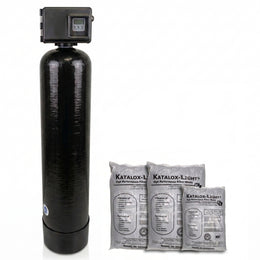
Manganese comes out of well water one proven way: oxidize it, then filter it. Every backwashing system here pairs air-injection oxidation with Katalox Light, a catalytic media carrying more than 10 percent manganese dioxide (made by Watch Water of Germany, NSF/ANSI 61 certified components), rated for up to 15 ppm manganese, 30 ppm iron, and 10 ppm hydrogen sulfide in one tank. No chemicals, no salt, and a media bed that lasts 8 to 10 years.
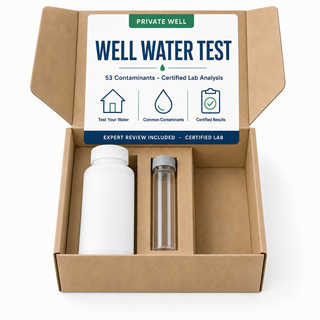
Treatment starts with a diagnosis: orange-red stains are iron, grayish-black stains are manganese, and a slimy black film is bacteria that needs chlorination first. The $199 certified lab test reads your exact levels, and Aidan reads the result free, including telling you when the cheaper tank, or no tank at all, is the honest answer.
Manganese, iron & sulfur in one tank
Catalytic MnO2 media by Watch Water
No chemicals, no salt
NSF/ANSI 61 certified components
Free shipping, all 50 states
30-day return policy
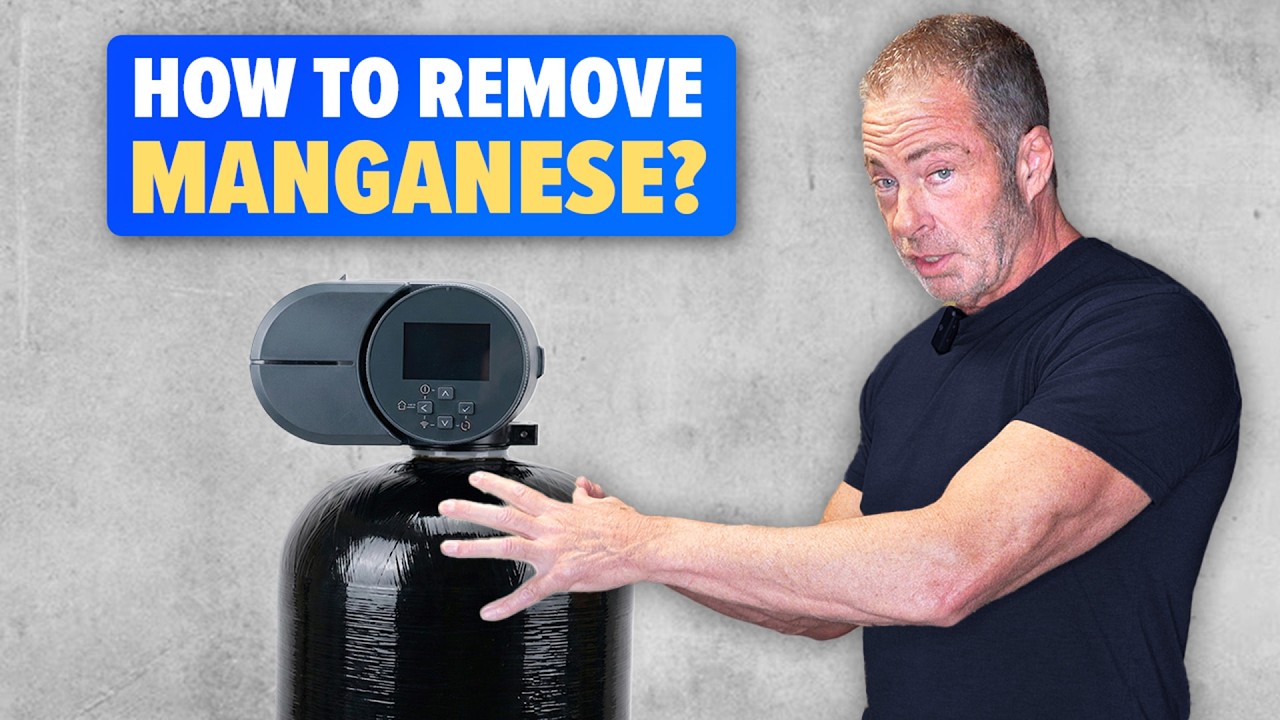
Watch the 8-minute guide
After 32 years of expert experience, with over 10,000 customers served since we started Mid Atlantic Water in 1997, here is the manganese call we make most often: the stain color is the diagnosis. Orange-red is iron. Grayish-black is manganese. Slimy black is bacteria. The EPA flags manganese at just 0.05 mg/L because that is all it takes to stain, and customers regularly tell us they thought manganese was harder to remove than iron. It is not, with the right media: the catalytic MnO2 surface on Katalox Light plus an air pocket takes out up to 15 ppm in the same tank that handles the iron, no chemicals, at normal well pH where Birm and greensand need 8.0 or higher.
0 products match your filters.
No products match those filters. Try adjusting your water conditions or .
Air Injection Manganese & Iron Filters
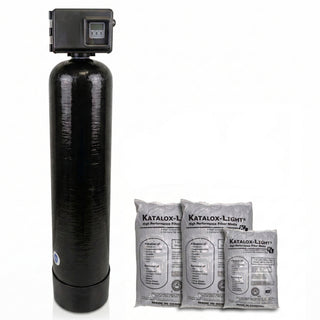
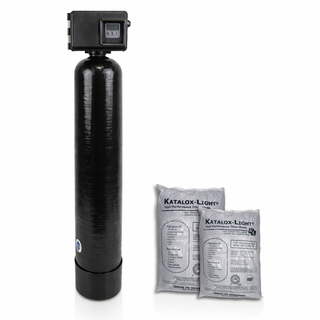
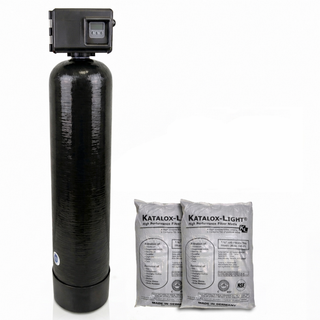
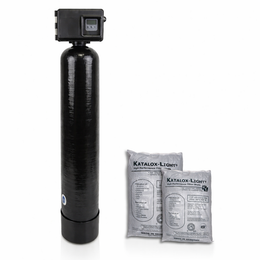
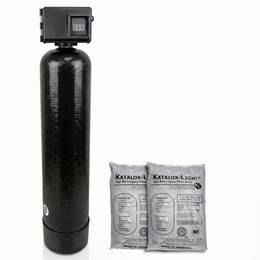
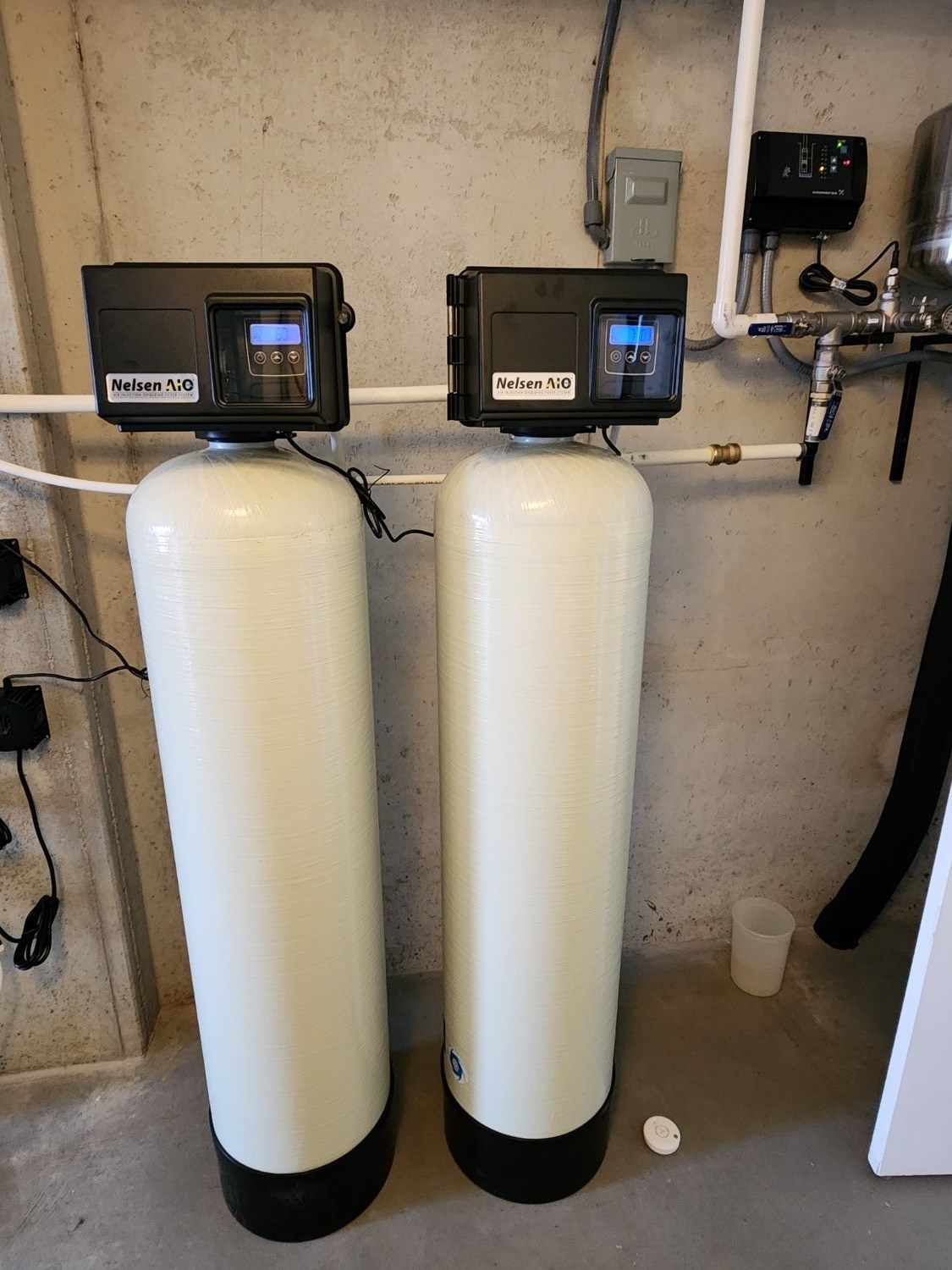
One tank that removes up to 15 ppm manganese, 30 ppm iron, and 10 ppm hydrogen sulfide: a Fleck 2510AIO digital valve draws in a compressed air pocket that oxidizes the dissolved metals, and Katalox Light catalytic media (manganese dioxide coated, by Watch Water of Germany) traps them down to 3 microns. No chemicals, no salt, no cartridges. Sized 1.5 to 2.5 cu ft by bathrooms and well pump output.
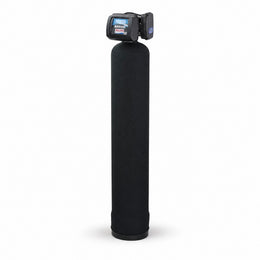
For the heaviest manganese, iron, and sulfur wells: a Clack AIO valve with a built-in ozone generator layers advanced oxidation on top of the air-injection cycle, feeding the same Katalox Light media bed in a 13x54 Vortech tank. Same 30 / 15 / 10 ppm ratings with extra oxidation headroom for stubborn staining and odor.
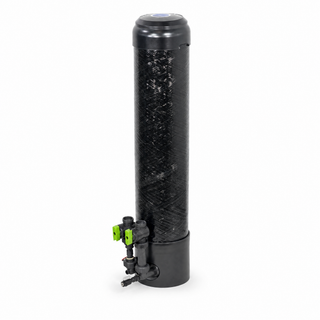
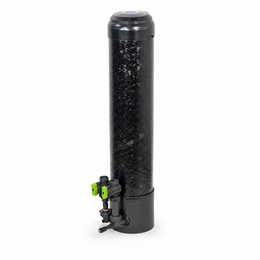
Low-level manganese (up to 2 ppm) with no drain, no outlet, and no backwash: the Pioneer system runs an ATOMUS MD1 solid-state oxidation cartridge in an Enpress PIONEER 8x40 tank. It also handles up to 3 ppm ferrous iron and 10 ppm hydrogen sulfide, flows up to 15 GPM at peak, and swaps cartridges with a snap ring instead of rebedding media.
Photo, PDF, or just type the numbers, whatever’s easiest. Don’t have a test yet? Describe what you’re seeing.
2
Aidan reads it personally
Real co-owner. Not a chatbot, not a script, not a sales rep on quota. He’s sized thousands of systems.
3
Get a direct link to what you need
Aidan texts you the exact product page that fits your water. Buy it, bookmark it, or take the answer elsewhere. No pressure either way.
We never send spam. We never sell your number. Aidan answers personally, 7 days a week, 8a–5p ET.
Manganese Filter Comparison
Mid Atlantic vs. SpringWell, US Water Systems & IronPro
Honest head-to-head: how our manganese filters compare to the whole-house systems most shoppers also look at. Figures are taken from each company's own published product pages; where a spec is not published we say so instead of guessing.
MAW 2510AIO
SpringWell WS1
US Water Oxi-Gen
IronPro 2
Manganese removal capacity
Up to 15 ppm (Katalox Light, MnO2-coated)
1 ppm
Not specified
Low levels only (softener resin)
Iron + sulfur in the same tank
Yes: 30 ppm iron, 10 ppm hydrogen sulfide
Yes (7 ppm iron, 8 ppm H2S)
Yes
Iron only, 6 ppm ferrous
Filtration media, named
Katalox Light by Watch Water (>10% MnO2)
GreensandPlus
Not named
Fine mesh softener resin
Rated pH range for manganese
5.8 - 10.5 (catalytic oxidation)
Not specified
Not specified
Not specified
Chemical-free operation
Yes: air injection only, no salt
Yes
Yes (aeration)
Salt + resin cleaner
Media life
8 - 10 years
4 - 5 years
Not specified
5 - 10 years (resin)
Sized from your lab result, free
Yes, phone or email with Aidan
No
Test-first guidance online
No
Phone consult included
Yes, with Aidan, 7 days a week
Limited
Limited
None
Price range
$1,695 - $2,695
~$2,200
~$2,695
~$939
The number that matters most on this page is the manganese rating, and it is where the spread is widest. Conventional catalytic media struggle at normal well pH: Clack's own Birm datasheet calls for pH 8.0 to 9.0 for manganese removal, and greensand needs a similar pH plus potassium permanganate to regenerate. Katalox Light takes a different route: a ZEOSORB core carrying more than 10 percent manganese dioxide, the catalytic surface that lets the air injection cycle oxidize and trap manganese across a rated pH of 5.8 to 10.5, up to 15 ppm. That is why one tank handles wells other systems quote two stages for.
One honest warning about the softener route: a water softener can exchange away trace manganese, but on a stained-fixture well the metals foul the resin and the softener fails over time. Softeners are for hardness. Put the manganese filter first, then the softener if your water is also hard. Send us your well test and we will map the order for free, including telling you when black staining is actually manganese bacteria that needs chlorination before any filter.
Step 1: Find Your Problem
What are the signs of Black and dark brown staining from manganese in well water?
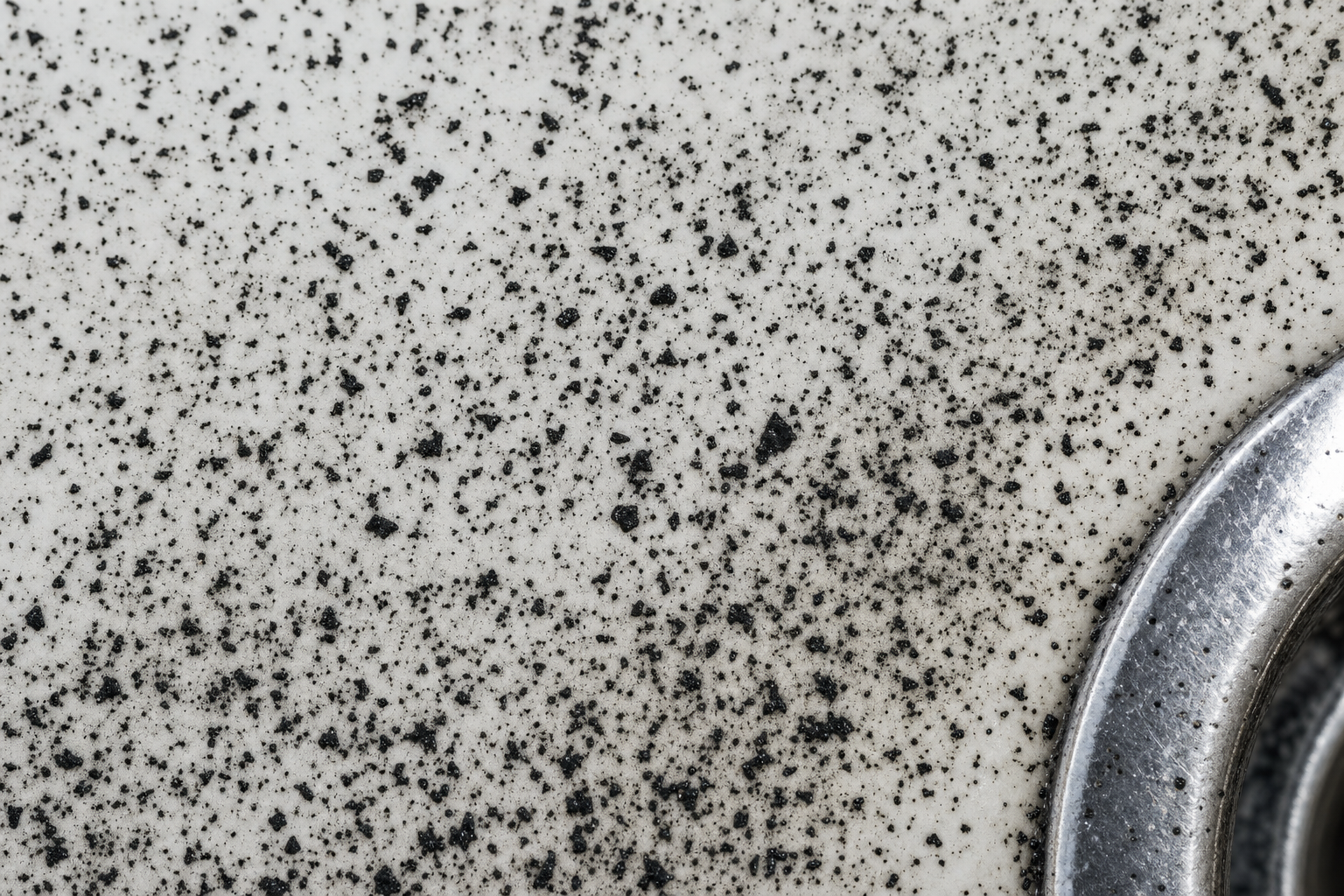
Manganese announces itself in black: a dark ring in the toilet, black specks in the aerator, gray residue the sediment cartridge never catches. The trap is that iron stains too, just in orange, and the two usually share a well. Stain color narrows it down, and the certified lab test settles it, including the level: staining starts at 0.05 mg/L, the health guidance is 0.3 mg/L, and neither is visible to the eye.
Grayish-black or dark brown stains in toilets, tubs, and fixtures
Dissolved manganese oxidizes when it meets air and bleach, and it settles as a dense black-to-dark-brown stain at the water line and around drains. The EPA flags it at just 0.05 mg/L because that is all it takes to stain. Orange-red rust stains are iron instead; the two often share a well, and one system removes both.
→YESManganese filter fixes this
Black specks or black sediment in the water
Gritty black specks in aerators, washing machine filters, and the bottom of a glass are oxidized manganese particles that formed inside your plumbing or water heater. A 5-micron sediment cartridge will not stop the dissolved manganese that keeps making them; it needs to be oxidized and filtered in one engineered step.
→YESOxidize + filter fixes this
Slimy gray-black film on aerators or inside the toilet tank
A greasy, slimy black film is the signature of manganese or iron bacteria feeding on the dissolved metals. Filtration alone does not kill a bacterial colony; those wells get shock chlorinated first, then the filter keeps the food source out. Gritty residue without slime is plain oxidized manganese and goes straight to a filter.
→TESTSlimy = bacteria, gritty = manganese
Not sure if your stains are iron or manganese?
Read the color. Rusty orange-red staining is iron (EPA flags it at 0.3 ppm). Grayish-black to dark brown staining is manganese (flagged at 0.05 ppm, fifteen times less). Iron is far more common and the two usually arrive together, which is why every system on this page removes both at once. The lab test reads the exact levels.
Lab-confirmed manganese and just want it handled? The 2.5 cu ft flagship at $2,495 is the proven pick for most homes with 3 or more bathrooms. Smaller home or a 5 GPM pump? The 1.5 is $2,095. No drain and under 2 ppm? The Pioneer starts at $1,695. Heaviest staining or stubborn odor? The ozone-boosted AIO is $2,695. Keep scrolling for sizing.
Size by bathrooms and well pump output, not by manganese level: every backwashing tank here carries the same 15 ppm manganese and 30 ppm iron rating, so the tank size sets your flow, and your pump must cover the backwash. A 2-3 person home with a 5 GPM pump fits the 1.5 cu ft tank (10 GPM service). 3-5 people with a 7-8 GPM pump fit the 2.0 (13-14 GPM service). Homes with 3 to 5 bathrooms and a 10 GPM pump take the 2.5 flagship (17 GPM service). No drain, no power, or manganese at 2 ppm or less? The Pioneer cartridge skips the backwash entirely.
Rusty orange-red stains are iron; the EPA flags it at 0.3 ppm. Grayish-black to dark brown stains are manganese, flagged at just 0.05 ppm because a fifteenth of the concentration stains just as hard. A gray-brown residue that a 5-micron sediment cartridge cannot catch is dissolved manganese, not dirt. The two metals usually share a well (iron is far more common), and every backwashing system on this page removes both at once, so the diagnosis changes your sizing, not your system type. The $199 certified lab test reads the exact numbers.
Why manganese needs catalytic media (the pH story)
Manganese is harder to oxidize than iron at normal well pH, which is why old-school media struggle: Clack's Birm datasheet calls for pH 8.0 to 9.0 for manganese, and greensand wants a similar pH plus potassium permanganate chemical regeneration. Katalox Light carries more than 10 percent manganese dioxide on its surface, a catalyst that accelerates the oxidation the air pocket starts, so the same tank is rated for up to 15 ppm manganese across pH 5.8 to 10.5. One honest note from the manufacturer: their full-rate manganese sizing assumes pH around 8.5, so on acidic wells (below the 5.6 operating floor) an acid neutralizer goes upstream first.
Backwash GPM: your well pump sets the tank size
Each tank cleans itself by backwashing the oxidized manganese to a drain, and the backwash needs a minimum sustained flow from your well pump: 5 GPM for the 1.5 cu ft tank, 7 to 8 GPM for the 2.0, and 10 GPM for the 2.5. Pick the largest tank your pump can backwash, then check it covers your bathrooms. If your well cannot sustain 5 GPM, or you have no drain at all, the no-backwash Pioneer cartridge system (manganese up to 2 ppm) is built for exactly that house.
A manganese filter is an oxidation system, not a strainer. Dissolved manganese passes through ordinary cartridges, so the valve holds a pocket of compressed air at the top of the tank and every drop of well water falls through it, starting the oxidation that turns dissolved manganese into a filterable particle. The Katalox Light bed below finishes the job: its manganese dioxide surface catalyzes the reaction (the reason it works at normal well pH where Birm and greensand cannot) and traps the oxidized metals down to 3 microns. On a schedule, the valve backwashes the captured manganese to the drain and pulls in a fresh air pocket. No chemicals, no salt, nothing to refill.
01
Well water falls through a compressed air pocket
The AIO valve holds a pocket of compressed air at the top of the tank. Every drop of well water sprays down through it, and the oxygen starts converting dissolved manganese (and iron) into solid, filterable particles. That oxidation step is what no sediment cartridge can do, because dissolved manganese passes straight through a strainer.
02
Catalytic MnO2 media finishes the reaction and traps the particles
Below the air pocket sits a bed of Katalox Light, a ZEOSORB media carrying more than 10 percent manganese dioxide made by Watch Water of Germany. The MnO2 surface catalyzes the oxidation the air started, which is why this tank removes up to 15 ppm manganese across pH 5.8 to 10.5, where Birm needs pH 8.0 to 9.0. The bed filters down to 3 microns.
03
The tank backwashes itself clean and redraws fresh air
On a programmable schedule, the valve reverses flow, lifts the media bed, and rinses the trapped manganese and iron to the drain, then pulls in a fresh air pocket. No chemicals, no salt, no cartridges to change. Your maintenance: nothing day to day, with a media rebed roughly every 8 to 10 years.
Installation
We ship it. Your plumber installs it.
Every utility room is different, so we recommend hiring a licensed plumber. If your plumber has installed a water softener, this is a familiar job: inlet, outlet, drain line, and a wall outlet, with no brine tank to fuss with. Aidan is a phone call away if your plumber has questions.
2-4 hrs
Typical install time for a licensed plumber: inlet, outlet, drain line for the backwash, and a standard outlet.
120V
Standard wall outlet. The digital valve runs on a low-voltage adapter and rebuilds its air pocket automatically at each backwash.
100%
Phone support included. Aidan walks your plumber through anything unusual about your specific setup.
What to have ready
1" plumbing with shut-offsInlet and outlet at the main line after the pressure tank, with valves to isolate the system. A stainless bypass ships with every AIO system.
Drain line for the backwashThe tank rinses trapped manganese and iron to a drain during backwash. A floor drain, utility sink, or standpipe within reach works. No drain at all? That is what the Pioneer cartridge system is for.
Well pump that covers the backwashBackwash needs sustained flow from the well pump: 5 GPM for the 1.5 cu ft tank, 7 to 8 GPM for the 2.0, 10 GPM for the 2.5. Check your pump before picking the tank.
Standard 120V outletThe digital valve uses a low-voltage wall adapter. Keep the system above freezing; total installed height runs about 62 inches.
The right spot in the treatment trainSediment filter first if you have grit, then this filter, then the softener if your water is also hard, then carbon polish, then UV. The manganese filter always goes BEFORE the softener so the metals never reach the resin.
What your plumber will do
Position the system after the pressure tank and any sediment filter, and before the water softener if you have one. The metals come out before the resin ever sees them.
Level the tank in its final spot; it ships with the Katalox Light media already loaded in the Vortech tank.
Attach the bypass valve to the control head so the system can be isolated without shutting the house down.
Plumb 1" inlet (IN) and outlet (OUT). CPVC with solvent cement or PEX with SharkBite fittings both work.
Run the drain line to a floor drain, utility sink, or standpipe with an air gap; the backwash carries the trapped manganese out through it.
Plug in the wall adapter and set the time of day on the digital valve.
Open the water valve slowly, 1/4 turn at a time. A sudden rush can channel the media bed, and an even bed is what gives the air pocket full contact with the water.
Program the backwash schedule (typically every 2 to 3 days on a stained-fixture well). The quick-start card covers it, and Aidan programs it with you by phone if you prefer.
Run a manual backwash and air-draw cycle, checking for leaks at each valve position. The air pocket rebuilds itself automatically from then on.
Show your plumber exactly what's going in. The system builder generates a plumbing schematic for your specific setup. Send it to your plumber before install day.
Katalox Light vs Birm, greensand, and softener-only for manganese
Manganese is the contaminant that exposes weak media. It oxidizes slower than iron at normal well pH, so the classic filters cheat upward: Birm's own datasheet demands pH 8.0 to 9.0 for manganese, and manganese greensand leans on potassium permanganate, a regeneration chemical you buy, store, and handle for the life of the system. A softener pressed into manganese duty quietly sacrifices its resin.
Katalox Light closes the gap with catalysis: a manganese dioxide surface (over 10 percent MnO2) that accelerates the oxidation the air pocket starts, rated 5.8 to 10.5 pH with 15 ppm manganese capacity, regenerated by nothing but a water backwash. That is the comparison below in one sentence.
Feature
Katalox Light + Air Injection (Ours)
Birm + Air Injection
Manganese Greensand
Water Softener Only
Manganese capacity
Up to 15 ppm
Low (needs pH 8.0-9.0)
Up to ~10 ppm (needs pH 8.0+)
Trace levels only
Works at typical well pH (6.5-7.5)
Yes (rated 5.8-10.5, catalytic MnO2)
No for manganese; pH floor 6.8 for iron
No (wants pH above ~8.0)
Yes, but resin fouls
Iron in the same tank
Yes, up to 30 ppm
Yes, moderate levels
Yes, moderate levels
Ferrous only, low ppm
Hydrogen sulfide (rotten egg)
Yes, up to 10 ppm
No (H2S destroys Birm)
Yes, low levels
No
Regeneration
Water backwash only
Water backwash only
Potassium permanganate (chemical)
Salt + resin cleaner
Chlorine tolerance
Tolerant
Depleted by chlorine
Tolerant
Degrades resin
Media life
8-10 years
4-8 years (shorter off-spec)
4-8 years + chemical handling
Resin dies early on metals
Certifications
NSF/ANSI 61 components
Varies
Varies
Varies
Real customers, real wells
What owners say about these systems on manganese wells
Every review is independently collected and verified by Stamped.io, a third-party review platform. We cannot edit or remove reviews.
★★★★★
Works great for iron an manganese
Mid Atlantic Water was very helpful and always answered my questions quickly. This system saved me thousands over what other companies recommended. This is a better option than the clorination system. I had rust and manganese and slightly acidic water. Our hot water was extremely rust colored. My cold water was better immediately and within 2 days the hot water was clear. The rust stains in the toilet are gone.
VB
Verified Buyer, United States
Verified Buyer
Fleck 2510AIO 1.5 cu ft (Katalox Light) · April 2026
★★★★★
Solved my very high iron issues! Great customer service!
I have well water with over 20 ppm ferrous and 7 ppm of ferric iron, along with manganese and some sulfur. I was rejected by local water companies saying they could not help me with my high iron issues. I purchased two Fleck 2.5 cu. ft. 2510AIO Iron Filter tanks with Katalox-Light media and air injection. Aiden, the owner, was extremely helpful and responsive to my numerous calls and texts to get the tank set up and running. Wow...and now the tanks reduced the iron to literally zero!
AH
Amy H., United States
Verified Buyer
Fleck 2510AIO 2.5 cu ft (Katalox Light) · October 2024
FAQ
Frequently asked questions
Oxidize it, then filter it, in one tank. An air-injection system holds a compressed air pocket at the top of the tank; dissolved manganese oxidizes as the water falls through it, and the catalytic Katalox Light bed below (manganese dioxide coated) accelerates the reaction and traps the particles down to 3 microns, up to 15 ppm. The tank backwashes itself clean. No chemicals, no salt, no cartridges. For low levels (2 ppm or less) with no drain, a passive oxidation cartridge system does the same job without a backwash.
Manganese, at levels as low as 0.05 mg/L. That is the EPA's secondary limit for manganese precisely because a twentieth of a part per million is enough to leave grayish-black to dark brown stains in toilets, tubs, and laundry. Orange-red stains are iron instead (flagged at 0.3 mg/L), and a slimy black film points at manganese or iron bacteria, which need chlorination before any filter. A certified lab test reads the exact level so you treat the right problem.
At staining levels it is mostly a nuisance; above 0.3 mg/L it matters. Manganese is an essential nutrient in food, but health agencies advise keeping drinking water at or under 0.3 mg/L, and lower for infants under one year, who absorb more of it. Because water that stains at 0.05 mg/L can still be well under the health guidance, the only way to know where your well sits is a lab number, not the stain. We read those reports free.
A single air-injection tank with catalytic media removes both. Iron and manganese almost always travel together in well water, and the same oxidation chemistry takes both out: the systems on this page are rated for 30 ppm iron and 15 ppm manganese at once, plus 10 ppm hydrogen sulfide. A water softener is not that filter: it can exchange away trace metals, but heavy iron and manganese foul softener resin and the softener fails over time.
Dissolved manganese is oxidizing inside your plumbing. Water that looks clear at the tap can carry dissolved manganese that oxidizes later in the water heater, the toilet tank, and aerator screens, leaving black specks and gray-brown residue that a 5-micron sediment cartridge cannot prevent, because the manganese passes through it dissolved. The fix is to force the oxidation inside an engineered tank and trap the particles there, which is exactly what an air-injection system does.
Read the color. Rusty orange-red staining is iron, which the EPA flags at 0.3 ppm. Grayish-black to dark brown staining is manganese, flagged at 0.05 ppm, a fifteenth of the concentration, because manganese stains that much harder. A gray-brown residue your 5-micron sediment cartridge never catches is dissolved manganese, not dirt.
In practice it rarely changes the hardware: iron is far more common, the two usually arrive together, and every backwashing system on this page removes up to 30 ppm iron and 15 ppm manganese in the same tank. What the diagnosis does change is the urgency of a lab test, because black staining at 0.05 ppm tells you nothing about whether you are above or below the 0.3 ppm health guidance.
Not for long. A softener's cation resin can exchange away trace dissolved manganese, but on a stained-fixture well the metals coat and foul the resin, capacity drops, and the softener fails years early. Softeners are for hardness; that is the honest answer even when it costs us nothing to say otherwise.
The right order is a dedicated oxidation filter first, softener second. The manganese filter takes the metals out before they ever reach the resin, the softener handles calcium and magnesium, and both last the way they are supposed to. If your well is hard AND stained, you likely need both, and we will tell you straight if you only need one.
Yes, and it is the main reason media choice matters. Manganese is harder to oxidize than iron at typical well pH (6.5 to 7.5). Clack's own Birm datasheet calls for pH 8.0 to 9.0 for manganese removal, and greensand wants similar pH plus potassium permanganate, a chemical you buy and handle forever.
Katalox Light works differently: its surface carries more than 10 percent manganese dioxide, a catalyst that accelerates the oxidation at normal well pH, so the media is rated 5.8 to 10.5 with up to 15 ppm manganese capacity. Full disclosure: the manufacturer's full-rate manganese sizing assumes pH around 8.5, so on genuinely acidic wells (below the 5.6 operating floor) an acid neutralizer goes upstream, and most real-world wells in the 6.5 to 7.5 range remove their manganese without any pH correction. Send us your pH number and we will tell you which case you are.
Slime means biology. A greasy black film on aerators, in the toilet tank, or inside the well casing is the signature of manganese or iron bacteria, organisms that feed on the dissolved metals and build biofilm. A filter alone will not fix that well, because filtration does not kill the colony living upstream of it.
Those wells get shock chlorinated first to knock the colony down, then the filter removes the metals so the bacteria lose their food source. Gritty black specks WITHOUT slime are plain oxidized manganese and go straight to a filter. If you are not sure which you have, text Aidan a photo; it is usually obvious at a glance.
Two numbers matter. The EPA's secondary (aesthetic) standard is 0.05 mg/L: above it, manganese stains fixtures and laundry and tastes bitter and metallic, but the standard exists for nuisance, not health. The health guidance used by EPA and state health departments is 0.3 mg/L for lifetime drinking, with extra caution for infants under one year, who absorb more manganese than adults.
The trap is that you cannot see the difference: water at 0.1 mg/L and water at 1.0 mg/L both stain black. Only a lab number tells you whether you are dealing with a nuisance or a health item, which is why the $199 certified 53-parameter test is the first purchase on a stained well, not the last.
Match two numbers: your bathrooms and your well pump. The 1.5 cu ft tank flows 10 GPM and backwashes on a 5 GPM pump, right for 2-3 people. The 2.0 flows 13-14 GPM on a 7-8 GPM pump for 3-5 people, and its shorter 12x52 tank fits low basement ceilings. The 2.5 flagship flows 17 GPM on a 10 GPM pump and serves homes with 3 to 5 bathrooms. All three carry the same 15 ppm manganese and 30 ppm iron rating, so the size sets your flow, not your removal.
Two special cases: if you have no drain, no outlet, or a weak pump, the Pioneer cartridge system handles manganese up to 2 ppm with zero backwash. And for the heaviest combined manganese, iron, and sulfur loads or stubborn odor, the ozone-boosted 2.5 adds an ozone generator to the air-injection cycle for extra oxidation headroom.
Day to day: nothing. The system backwashes itself on a schedule, there is no salt, no chemicals, and no cartridges on the AIO systems. The Katalox Light bed lasts roughly 8 to 10 years in normal service (6 to 8 on the ozone unit's heavier duty cycle), and a rebed runs about $400 to $600 in media while the tank and valve stay.
Compare that to the alternatives: greensand needs potassium permanganate purchased and handled continuously, and a softener pressed into manganese duty consumes salt while its resin quietly dies. The Pioneer cartridge swaps with a snap ring, no tools, when its capacity is spent.
Paste your well test below. Aidan replies with the right system (1.5, 2.0, 2.5, the ozone-boosted AIO, or the no-backwash Pioneer), whether a softener or acid neutralizer belongs in the train, and install notes for your layout. Same-day during business hours, next morning otherwise.
✓
Your message is queued for Aidan
Your email client just opened with the message ready to send. Hit send and Aidan will reply same day during business hours.
Aidan
Co-owner. Real person. Not a bot. 7 Days/Week, 8AM-5PM EST