Your Cart

Aidan Questions? Call Aidan 800-460-5810

Your cart is empty

This page is a complete buying guide for whole-house water softeners for hard well and city water. It covers: which softener to buy by water hardness (grains per gallon) and household size; the four salt-based sizes (32,000 / 48,000 / 64,000 / 80,000 grain Fleck 5600SXT and 2510SXT metered softeners) plus a Fleck 9100SXT twin-tank for 24/7 soft water, Nelsen Connected Bluetooth smart softeners, a salt-free Filtersorb conditioner, and a Fleck 2900NXT commercial softener; a brand comparison against SpringWell, SoftPro Elite, US Water Systems, and Culligan; how ion exchange softening works; the honest difference between salt-based softening (removes calcium and magnesium) and salt-free conditioning (prevents scale but does not soften, and stops keeping up above about 15 to 25 grains per gallon); how to size by gpg times household; well-water caveats (test first; iron and sulfur must be treated before the softener; use 10% crosslink resin; add a sediment prefilter ahead of the unit and use iron-fighter salt pellets); a salt-based softener removes well over 95% of hardness, taking water to near zero grains per gallon; DIY installation steps; symptom diagnosis for spots, scale, soap scum, and the slick soft-water feel; verified customer reviews; and expert sizing help. All systems use genuine Fleck (Pentair) metered demand valves and premium 10% crosslink resin (12 to 15 year life) and ship free to all 50 US states. Prices range from $1,495 to $8,900. NSF/ANSI 61 certified components. Mid Atlantic Water has specialized in well and city water treatment since 1997, and co-owner Aidan personally carries 32 years of water treatment experience.

Whole-house hard water treatment
★★★★★ 5.0 from 5 verified reviews

Water Softeners

Whole-house water softeners that remove the calcium and magnesium making your water hard by exchanging them for sodium on resin beads (ion exchange), the only method that actually eliminates scale, spots, and buildup. The right system comes down to two numbers: your water hardness in grains per gallon and your household's daily water use. Genuine Fleck 5600SXT metered demand valves and premium 10% crosslink resin (12 to 15 year life) in four sizes from 32,000 to 80,000 grain, plus twin-tank, smart, salt-free, and commercial options. NSF/ANSI 61 certified, from $1,495 with free shipping to all 50 states, and free expert sizing for well or city water.

32,000 to 80,000 grain capacity
Genuine Fleck valves (5600SXT / 2510SXT)
10% crosslink resin (12 to 15 yr life)
Metered demand regen, not a timer
NSF/ANSI 61 certified components
5 yr valve / 10 yr tank warranty
30-day money-back returns
Free shipping to all 50 states
Free expert sizing with Aidan
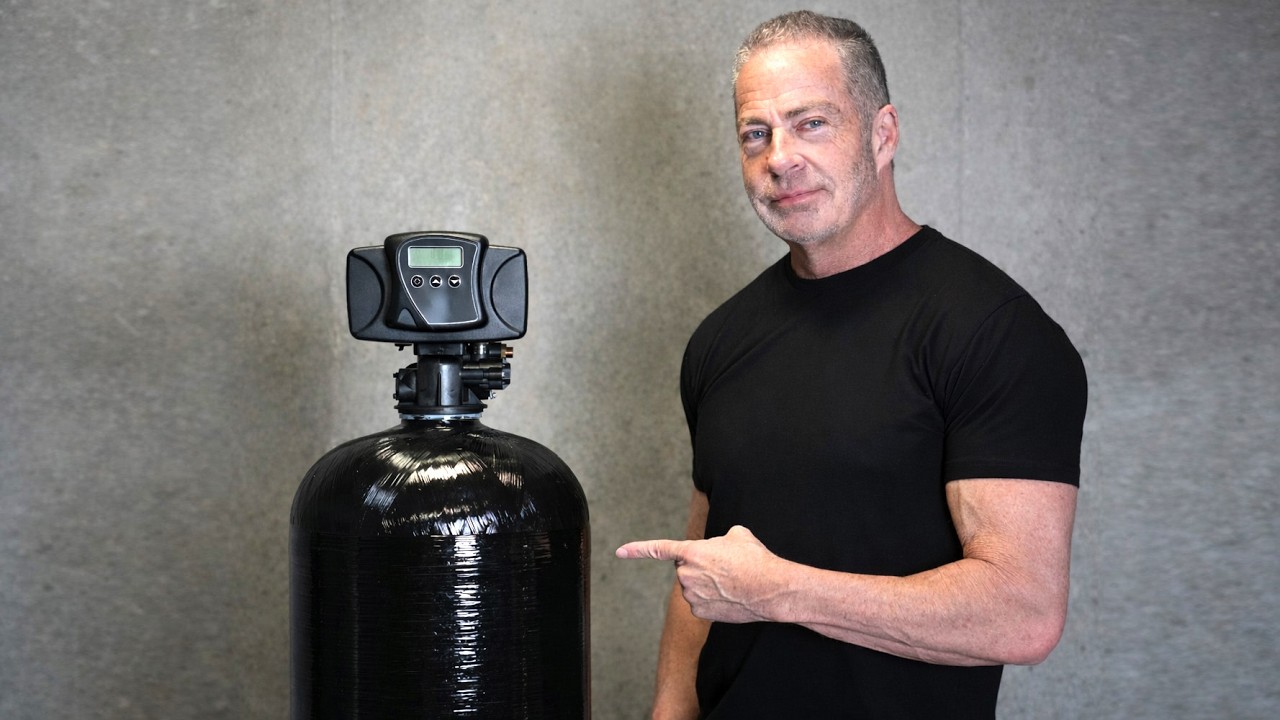
Complete Guide to Water Softeners (32 Years of Experience)
Watch the 12-minute complete guide

Aidan personally carries 32 years of water treatment experience, and Mid Atlantic Water has been shipping whole-house softeners nationwide since 1997. When a softener disappoints in the field, it's almost always because someone undersized it for the hardness, put it on well water with untreated iron (which fouls the resin), or bought a salt-free conditioner expecting it to soften. Get those three things right and a softener simply works for 12 to 15 years on our 10% crosslink resin.

Salt-Based Water Softeners (Fleck 5600SXT & 2510SXT)

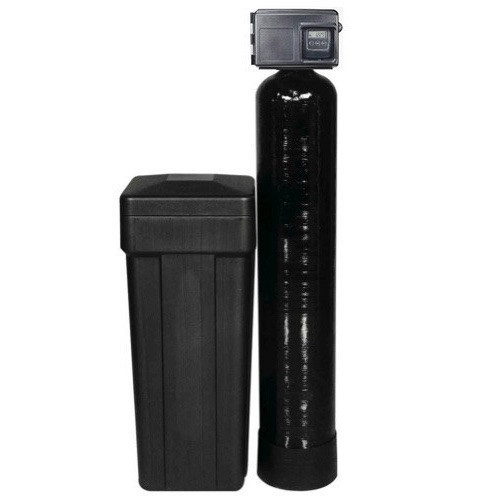
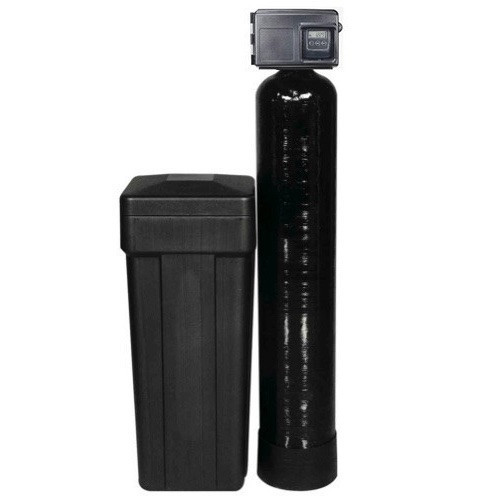
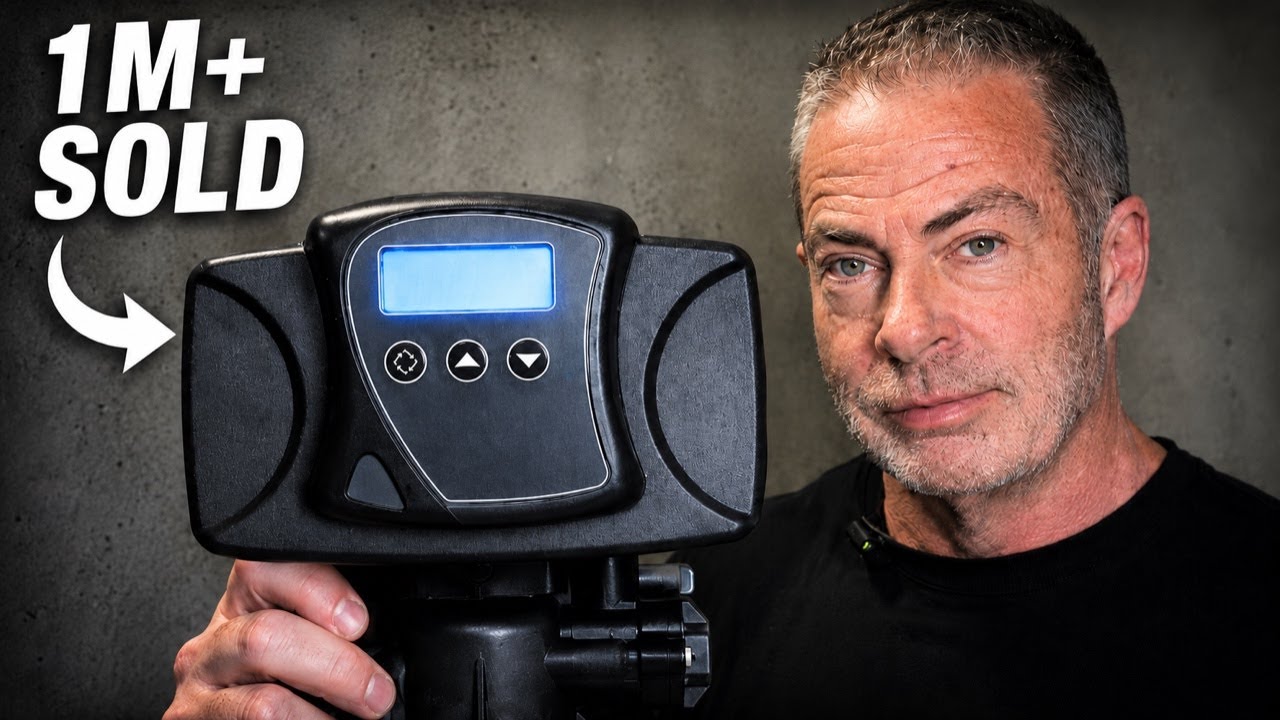
Our best-selling whole-house softeners. Genuine Fleck 5600SXT (and higher-flow 2510SXT) digital metered valves that regenerate only when soft-water capacity is actually used, never on a fixed timer, paired with premium 10% crosslink resin that lasts roughly 12 to 15 years instead of the 8 to 10 years typical of standard 8% resin. Four 5600SXT sizes (32,000 / 48,000 / 64,000 / 80,000 grain) picked by your hardness and household, plus a higher-flow 2510SXT option for big or high-demand homes. NSF/ANSI 61 certified. For city water or well water with low clear-water iron (under about 1 ppm); above that, add an iron filter upstream.

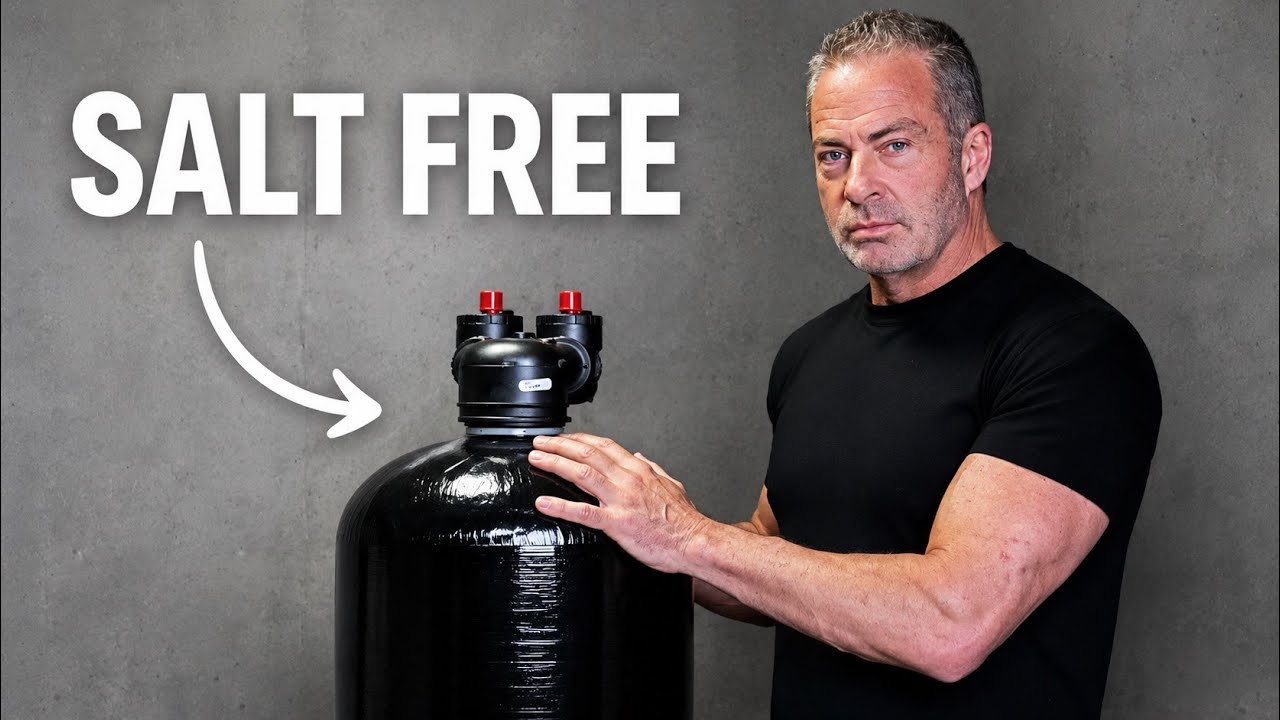
Salt-Free Water Conditioners (Scale Prevention)

Honest framing: a salt-free conditioner does NOT remove hardness or give you the soft-water feel. It uses Template Assisted Crystallization (Filtersorb SP3) to convert dissolved calcium and magnesium into stable crystals that won't stick to plumbing, so new scale stops forming. No salt, no drain, no electricity, no wastewater. Right for low-to-moderate hardness, sodium-restricted households, or installs with no drain.

Commercial & High-Flow Softeners

Fleck 2900NXT commercial softeners with 2-inch connections and service flow up to 106 GPM, for single- or multi-tank systems on tanks up to 36 inches. Lead-free brass valve body, NSF certified, high-capacity resin. For light commercial sites, large estates, and high-demand applications a residential valve can't keep up with.

Specialty Salt-Regenerated Filters (Nitrate, Tannin, Sulfate)

These are not softeners, but they run on the same salt-regenerated valve platform. Selective anion or tannin resin removes a specific contaminant: nitrate (often from agricultural wells), tannins (yellow-brown water from organics), or sulfate. Fleck 5600SXT or 2510SXT metered valves, Vortech tanks, made in the USA. Pair with a softener when you also have hardness.

Free expert sizing

Text me your water test. I’ll send you a product link.

I read every water test personally and text back a recommendation. Same day. No chatbot, no upsell pressure, no charge.

  1. Send your test

    Photo, PDF, or just type the numbers, whatever’s easiest. Don’t have a test yet? Describe what you’re seeing.

  2. Aidan reads it personally

    Real co-owner. Not a chatbot, not a script, not a sales rep on quota. He’s sized thousands of systems.

  3. Get a direct link to what you need

    Aidan texts you the exact product page that fits your water. Buy it, bookmark it, or take the answer elsewhere. No pressure either way.

We never send spam. We never sell your number. Aidan answers personally, 7 days a week, 8a–5p ET.

Water Softener Comparison

Mid Atlantic Water vs. SpringWell, SoftPro, US Water & Culligan

Honest head-to-head: how our Fleck 5600SXT 48,000 grain softener compares to the systems most hard-water shoppers are also looking at. Specs are pulled from each company's published product pages (cited). What separates the MAW system: a genuine Fleck metered valve (no proprietary vendor lock-in, serviceable by any plumber), premium 10% crosslink resin as standard equipment (12 to 15 year life, not the 8 to 10 years of standard 8% resin), the full 32k/48k/64k/80k size ladder so you never have to over-buy, NSF/ANSI 61 published on the listing, a flat published price with free shipping, and free pre-purchase sizing with a named specialist. SpringWell and SoftPro also use 10% resin, but both run a proprietary valve; US Water sells the same Fleck hardware, so there the honest edge is resin grade and conservative sizing; Culligan is dealer-install with no published price.

Mid Atlantic Water Fleck 5600SXT 48,000 grain whole-house water softener with 10% crosslink resin and an 18x33 brine tank SpringWell SS series salt-based water softenerSoftPro Elite upflow salt-based water softenerUS Water Systems Fleck 5600SXT metered water softenerCulligan High Efficiency proprietary-valve water softener
  MAW Fleck 5600SXT (10% resin)SpringWell SSSoftPro EliteUS Water (Fleck 5600SXT)Culligan HE
Grain capacity range 32k / 48k / 64k / 80k single + 64k/80k twin tank32k / 48k / 80k (skips 64k)32k / 40k / 48k / 64k26k / 35k / 53k / 70k (new-resin rating)Efficiency-rated, varies by salt dose
Resin type + crosslink % 10% crosslink standard (Deluxe line)10% (per reviews; not stated on page)10% crosslink (stated)Standard resin, crosslink % not statedProprietary Cullex, % not published
Tank type Vortech distributor (gravel-free)Standard mineral tankStandard resin tankStandard mineral tankProprietary Quadra-Hull tank
Control valve Genuine Fleck 5600SXT / 2510SXT / 9100SXT (Pentair)Proprietary (not Fleck)Proprietary upflow (not Fleck)Genuine Fleck 5600SXTProprietary Soft-Minder + Aqua-Sensor
Metered (demand) regeneration Yes (regens by water used, not a timer)Yes (metered)Yes (demand-initiated)Yes (metered)Yes (demand-initiated)
Iron tolerance Up to 1 ppm; iron filter required above thatNo iron rating published; warns iron oxidizes mediaFine-mesh option ~3 ppm; resin warranty void on wellNot specified (recommend iron pre-filter)Not specified (dealer adds iron treatment)
Salt efficiency Metered demand regen; only regens when neededMetered downflow; no NSF efficiency ratingUpflow, marketed up to 75% less saltStandard Fleck regenProportional brining, NSF/ANSI 44 efficiency rated
NSF certification (published) NSF/ANSI 61 certified componentsNo system NSF cert on pageIAPMO materials cert (NSF 44/61 materials)No system NSF claim on pageWQA certified to NSF/ANSI 44, 372, CSA B483.1
Self-install friendly Yes (ships pre-loaded, bypass installed, 2-4 hrs)Yes (DIY, install PDF)Yes (instructions + video)Yes (ships built)No (dealer install only)
Free pre-purchase phone sizing Yes, free sizing with Aidan, 7 days/wkUS-based phone/chat supportLive support teamTechnical phone supportTied to in-home dealer sales visit
Warranty (valve / tank) 5 yr valve / 10 yr tank (no asterisk)"Lifetime" (defects)Limited lifetime; resin 0 yr on well water5 yr valve / 10 yr tankComponent-by-component; whole unit only 1 yr; dealer service required
Price (~48k whole-house) $1,695 (2510SXT) / $1,895 (5600SXT 10% resin)~$1,899 (SS4 48k)$2,469 list (street ~$1,400 via reseller)$799 sale / $1,498 list (53k)Not published (dealer quote, ~$1,500 to $3,500+ installed)
Where it's made USA (Fleck valve + Enpress Vortech tank, assembled in PA)Assembled in USA (per site)Not specifiedNot specified (genuine Fleck valve)Not specified (US brand since 1936)
Company / how you buy Family company since 1997, online, ships all 50 states, flat published priceDTC online brandQuality Water Treatment, onlineOnline retailerFounded 1936, 900+ dealers, in-home sales

You'll also find softeners at Home Depot, Lowe's, and on Amazon (Rheem, Whirlpool, GE, Aquasure). Those can be a fine fit on simple city water, but they're usually standard 8% resin on a proprietary or lighter-duty valve, with sizing left entirely to you. Going that route trades the genuine Fleck valve, 10% crosslink resin, conservative published sizing, and free phone sizing for a lower upfront number. On well water especially, sizing and pre-treatment matter more than the sticker price. Competitor specs above are sourced from each vendor's own published product pages (springwellwater.com, softprowatersystems.com, uswatersystems.com, culligan.com) as of June 2026; prices and specs change, so verify before relying on them.

A note on grain-capacity numbers: some sellers quote the maximum grains a brand-new resin bed can remove at the highest salt dose. We rate our sizes conservatively by household and hardness so you don't get hard-water breakthrough before regeneration. When sizes look different brand to brand, ask what salt dose the number assumes, or just call us and we'll size it on your actual gpg.

Step 1: Find Your Problem

What are the signs of hard water?

The tell-tale signs of hard water are: white spots on dishes and glassware; chalky scale on showerheads, faucets, and inside the water heater; soap that won't lather and leaves a sticky film; and dry skin and dull hair. If you see any of these, a water softener is the fix. But rust-orange stains, a metallic taste, or a rotten-egg smell are not hard water. Those point to iron, manganese, or sulfur, which each need their own filter ahead of the softener.

Water spots and cloudy film on drinking glasses from hard water

White spots on dishes and glassware

Cloudy spots and film on glasses, dishes, and shower doors that come back no matter how you rinse. That's dissolved calcium and magnesium drying on the surface.

YES A softener fixes this
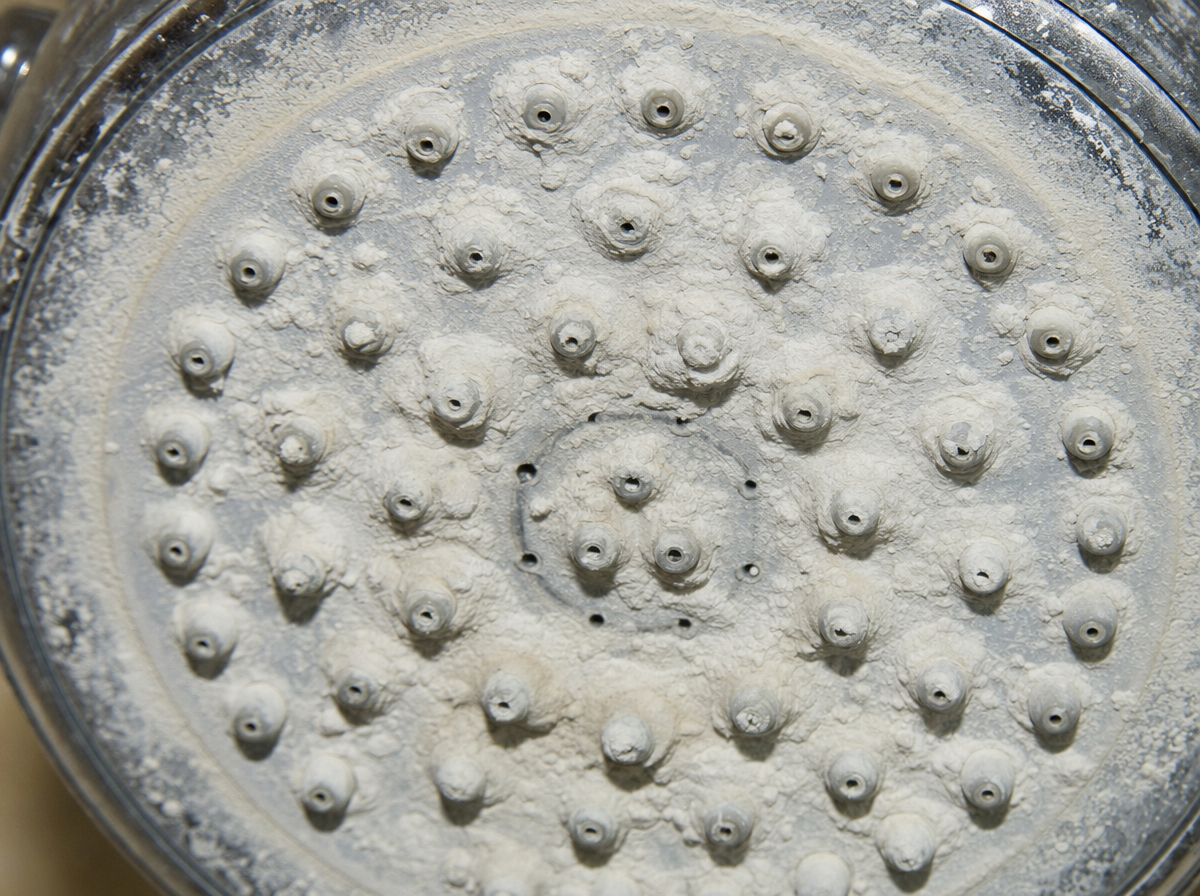
Showerhead clogged with white calcium limescale buildup from hard water

Chalky white scale on fixtures and in the water heater

Crusty white buildup on showerheads, faucets, and inside the kettle, plus scale that shortens your water heater's life. Hardness minerals precipitating out and cementing onto surfaces.

YES A softener fixes this
Soap scum residue on a bathtub from hard water

Soap won't lather and leaves sticky scum

Shampoo and soap struggle to foam, you go through more of it, and you're left with a sticky film on skin, tubs, and tile. Hardness minerals bind with soap instead of letting it rinse.

YES A softener fixes this
Dry skin on hands, a common complaint on hard water

Dry, itchy skin and dull, flat hair

Skin feels tight after a shower and hair looks dull. Soap that won't fully rinse leaves a residue. Many people notice the difference within days of softening.

YES A softener fixes this
Soft water rinsing cleanly in a shower

Slippery, slick feeling after you install one

Brand-new softener owners often think something is wrong because the water feels slick instead of "squeaky clean." In a real customer's words: the squeaky feeling was actually soap and minerals that wouldn't rinse off your skin.

NORMAL This means it's working
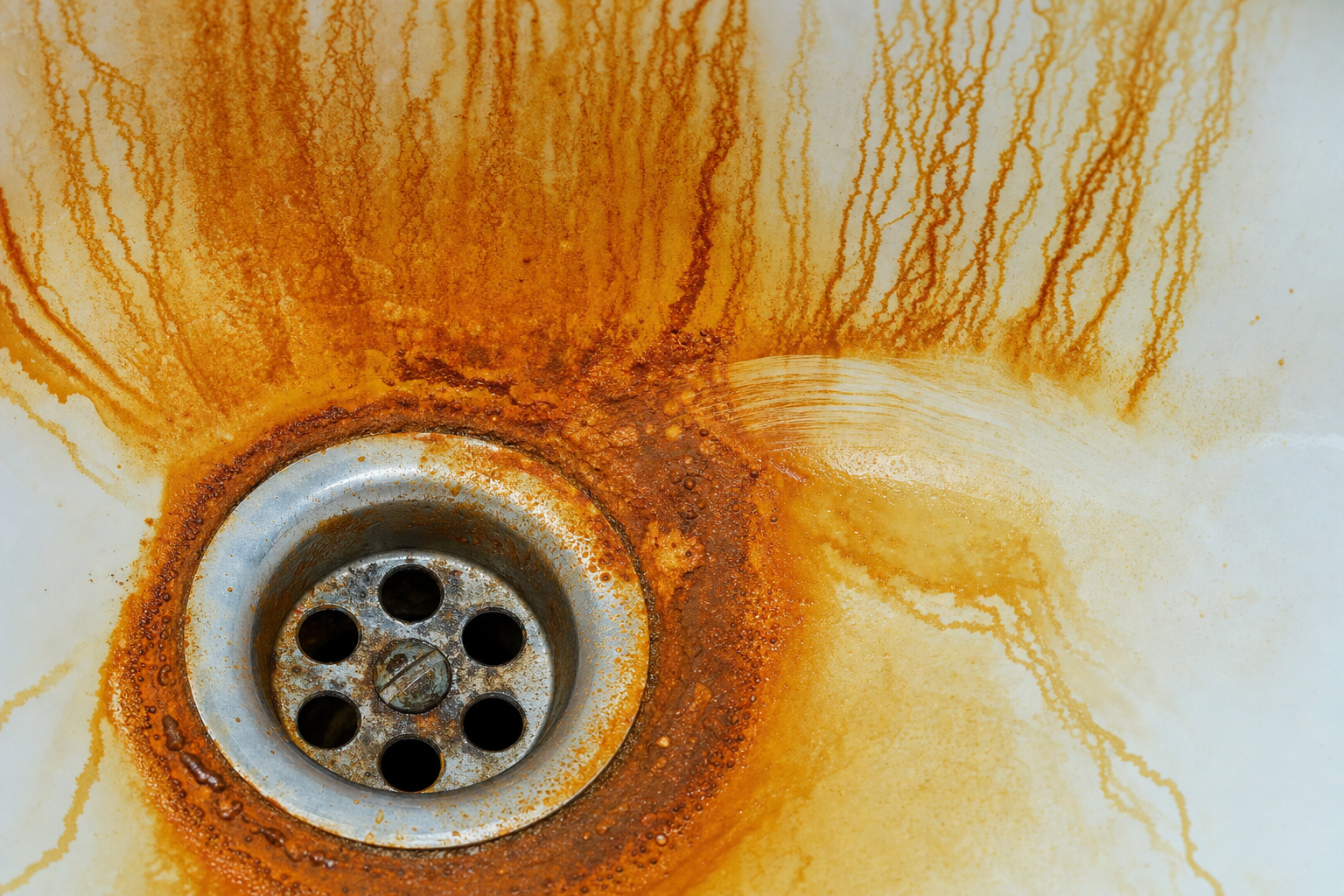
Orange rust staining in a sink and toilet from iron in well water

Rust-orange stains, metallic taste, or rotten-egg smell

Reddish-orange staining in sinks and toilets, a metallic taste, or a sulfur smell. This is iron, manganese, or hydrogen sulfide, NOT hardness. The single most common mistake we hear is blaming "hard water" for staining and smell.

NO Needs iron or sulfur filtration first, not a softener
Scale buildup inside a water heater shortening its life on hard water

Appliances and water heater wearing out early

Water heater, dishwasher, and washing machine failing sooner than they should, and the heater taking longer (and costing more) to heat. Hardness scale coats the heating elements and narrows the pipes feeding your appliances.

YES A softener fixes this
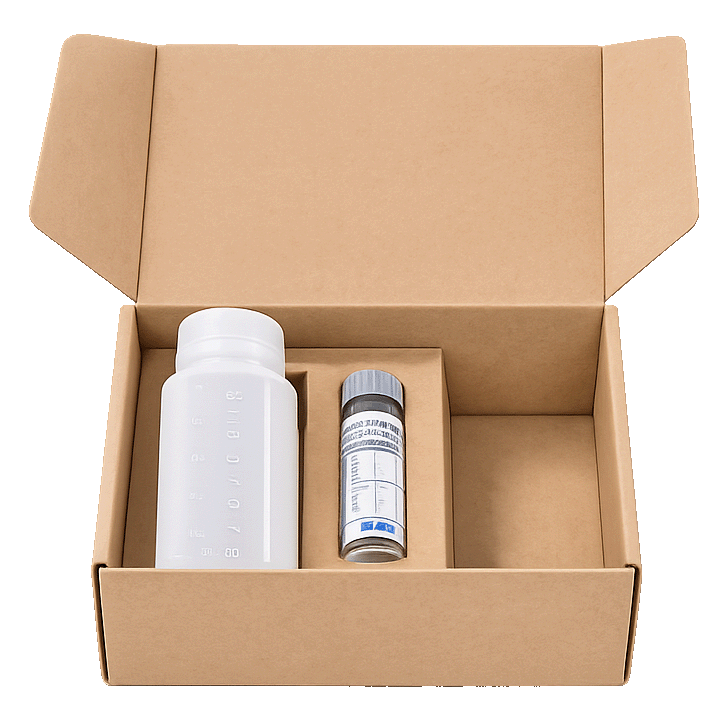
Mid Atlantic Water well water test kit box

We always recommend testing your water first

We size by your hardness in grains per gallon (and, for wells, your iron, manganese, and pH). A 53-contaminant certified mail-in lab test reads them all at once, so you buy the right grain capacity the first time. We size your system free. $199, ships free.

TEST IT $199 - Free sizing
Step 2: Match Your System

Match your problem to the right system

Most softener calls we take fit one of these patterns. Find what your water test (and your household) is doing, and you'll see which system to start with. On well water especially, the order of treatment matters as much as the softener itself.

Just hard water on city supply, nothing else? A single Fleck 5600SXT softener sized to your hardness is all you need. Keep scrolling for the sizing chart.

Not sure? Call Aidan at 800-460-5810 →
Single tank vs twin tank

Do you need a single-tank or twin-tank softener?

Short answer: a single-tank softener is right for the large majority of homes. You only need a twin-tank if your household genuinely can't tolerate a short window of hard water while the softener regenerates, large families, irregular or around-the-clock water use, or a light commercial site. Both use genuine Fleck metered valves and 10% crosslink resin.

Most common choice
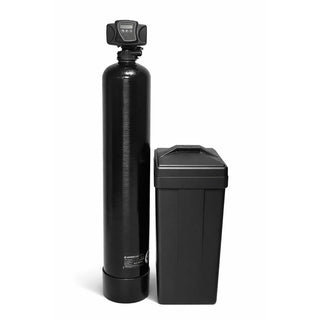
Single-tank Fleck 5600SXT water softener with one resin tank and an 18x33 brine tank

Single tank

Fleck 5600SXT or 2510SXT metered valve

Best for: the typical home. Regeneration runs in the early morning (about 2am) when nobody is using water, so you never notice it.

One resin tank serves the house. When capacity is nearly used up, the metered valve regenerates overnight. There is a brief window during regeneration where untreated water bypasses to the house, which is why it runs while you're asleep. Browse the single-tank Fleck softeners.

  • Lower cost, simpler install, one tank
  • Metered regen overnight, you never notice it
  • Right for the large majority of households
  • Sizes from 32k to 80k grain

Aidan's rule: for a normal home that sleeps at night, a properly sized single tank gives you soft water 24/7 in practice. No reason to pay for two tanks.

For 24/7 soft water
Fleck 9100SXT twin-tank water softener with two resin tanks and a shared brine tank for 24/7 soft water

Twin tank

Fleck 9100SXT twin-alternating valve

Best for: large families, night-shift or work-from-home households, vacation rentals, B&Bs, and small commercial sites that cannot tolerate any off-window.

Two resin tanks alternate automatically: while one serves the house, the second stands by or regenerates, so soft water flows 24 hours a day with zero interruption. It also handles up to 2 ppm iron. Browse the twin-tank softeners.

  • Soft water 24/7, zero off-window
  • Ideal for high or irregular demand
  • Costs more (two tanks)
  • More than most single-family homes need

Aidan's rule: only reach for a twin tank if a regeneration gap would actually be a problem for your household or business.

Not sure which way to go? Text Aidan your household size and water use and he'll tell you whether a single tank covers you.

Step 3: Pick a size

What size water softener do I need?

Size on two numbers: your hardness in grains per gallon (gpg) and the number of people in the home. The math is hardness x daily water use (about 75 gallons per person per day), with headroom so you don't get hard-water breakthrough before regeneration. The 48,000 grain (3 to 5 people, 5 to 30 gpg) is our most common starting recommendation. Step up to 64,000 grain for harder water or larger homes, and 80,000 grain for very hard water (25 to 80 gpg) or 6+ people. Bathrooms are a loose guide, not the deciding factor. Slightly oversizing improves salt efficiency because the metered valve regenerates less often. All four sizes use the same Fleck 5600SXT metered valve and 10% crosslink resin; your plumber does the install.

  32,000 grain 48,000 grain
MOST POPULAR
64,000 grain 80,000 grain
Fleck 5600SXT 32,000 Grain Electronic Demand Deluxe Water Softener Fleck 5600SXT 64,000 Grain Electronic Demand Deluxe Water Softener Fleck 5600SXT 80,000 Grain Electronic Demand Deluxe Water Softener
Tank size9"x48" + 18x33 brine12"x52" + 18x33 brine13"x54" + 18x33 brine
Household2-5 people4-7 people6-10 people
Bathrooms1-3 (not the deciding factor)4-6 (not the deciding factor)5+ (not the deciding factor)
Hardness handled5 to 30 gpg15 to 50 gpg25 to 80 gpg
Grain capacity32,000 grain (1.0 cu ft resin)64,000 grain (2.0 cu ft resin)80,000 grain (2.5 cu ft resin)
Flow rate requirement2.5 GPM4.0 GPM5.0 GPM
Max flow before pressure drop5 GPM14 GPM18 GPM
Backwash requiredMetered demandMetered demandMetered demand
PriceFrom $1,495From $2,195From $2,495
Shop now Shop now Shop now
Grains per gallon (gpg)

The standard unit for water hardness. Anything above about 7 gpg (120 mg/L as calcium carbonate) is considered hard. If your water test reports hardness in ppm or mg/L, divide by 17.1 to convert to grains per gallon. Your gpg is the single most important number for sizing a softener.

Grain capacity

How much total hardness a softener can remove between regenerations, measured in grains. A bigger grain capacity (or harder water) means the system regenerates less often and runs more salt-efficiently. We pick your size from your hardness times your household's daily water use (roughly 75 gallons per person per day), with headroom so you don't get hard-water breakthrough.

Metered (demand) regeneration

Our Fleck valves regenerate based on the water you actually use, not on a fixed timer. That saves salt and water versus a timer softener that regenerates whether you needed it or not. A weekend away costs you nothing; a house full of guests triggers a regen when capacity is genuinely used up.

Flow rate requirement vs max flow

Flow rate requirement is the continuous service flow (in gallons per minute) each size is built to deliver while fully softening. Most homes only peak above that for a minute or two (a shower plus a dishwasher), so the listed requirement is what matters for steady use. Max flow before pressure drop is the short-burst ceiling: push past it and you feel a pressure drop, not a softening failure. Size on your hardness and number of people first, then use these flow numbers as a sanity check.

Fleck 5600SXT 32,000 Grain Electronic Demand Deluxe Water Softener

32,000 grain

From $1,495
Household
2-5 people
Bathrooms
1-3 (not the deciding factor)
Hardness handled
5 to 30 gpg
Grain capacity
32,000 grain (1.0 cu ft resin)
Tank size
9"x48" + 18x33 brine
Flow rate requirement
2.5 GPM
Max flow before pressure drop
5 GPM
Backwash required
Metered demand
Shop 32,000 grain
Fleck 5600SXT 64,000 Grain Electronic Demand Deluxe Water Softener

64,000 grain

From $2,195
Household
4-7 people
Bathrooms
4-6 (not the deciding factor)
Hardness handled
15 to 50 gpg
Grain capacity
64,000 grain (2.0 cu ft resin)
Tank size
12"x52" + 18x33 brine
Flow rate requirement
4.0 GPM
Max flow before pressure drop
14 GPM
Backwash required
Metered demand
Shop 64,000 grain
Fleck 5600SXT 80,000 Grain Electronic Demand Deluxe Water Softener

80,000 grain

From $2,495
Household
6-10 people
Bathrooms
5+ (not the deciding factor)
Hardness handled
25 to 80 gpg
Grain capacity
80,000 grain (2.5 cu ft resin)
Tank size
13"x54" + 18x33 brine
Flow rate requirement
5.0 GPM
Max flow before pressure drop
18 GPM
Backwash required
Metered demand
Shop 80,000 grain
Under the hood

How ion exchange water softening works

A water softener works by chemistry, called ion exchange. Hard water flows through a tank packed with resin beads coated in sodium. As the water passes through, the calcium and magnesium ions that make water hard are pulled onto the beads and swapped for sodium, so the water leaving the tank is soft (essentially zero grains per gallon). When the resin is nearly full of hardness, the Fleck 5600SXT valve runs a demand-initiated (metered) regeneration: it draws salt brine from the brine tank to rinse the trapped minerals to drain and recharge the resin. Because it regenerates by the water you actually use, not on a fixed timer, it saves salt and water versus a timer softener.

01
Diagram of hard water flowing through ion-exchange resin beads in a water softener tank

Hard water flows through a bed of resin beads

Your hard water enters a tank packed with millions of tiny ion-exchange resin beads. As it passes through, the calcium and magnesium ions that make water hard are attracted to the beads and swapped for sodium ions, the same chemistry every true softener uses.

02
Diagram of soft water leaving a softener tank and flowing to home plumbing fixtures

Soft water flows out to every fixture

Water leaves the tank at essentially zero grains per gallon and feeds every hot and cold line in the house. No more scale, no more spots, soap lathers, and skin and hair feel smooth. The minerals stay trapped on the resin.

03
Diagram of a water softener regenerating with salt brine and flushing hardness minerals to drain

The valve regenerates with brine, only when needed

When the resin's capacity is nearly used up, the Fleck 5600SXT metered valve runs a demand-initiated regeneration: it draws salt brine from the brine (salt) tank to rinse the trapped calcium and magnesium to drain and recharge the resin with fresh sodium. Because it regenerates by water used, not on a timer, it only runs when you've actually used the capacity, saving salt and water.

Installation

We ship it. Your plumber installs it.

Every basement is different, so we recommend a licensed plumber, but a softener is a common DIY install for anyone comfortable with basic plumbing. A single tank sits inline on the cold water main next to a salt (brine) tank, with a drain line for regeneration and a standard outlet for the metered valve. We ship it pre-loaded with resin and the bypass installed. Aidan programs your hardness into the valve over the phone if you want.

2-4 hrs

Typical install time for a single-tank softener. Straightforward residential plumbing, a drain line for regeneration, and a standard outlet. No concrete work, no specialty tools.

1"

Plumbing connections on the inlet, outlet, and bypass. Easily adapted to 3/4" with standard bushings. CPVC, PEX with SharkBite, or copper all work. A bypass valve ships pre-installed.

Free

Valve programming by phone. Aidan sets the Fleck valve's regeneration to your exact hardness and household, and walks your plumber through anything unusual about your setup.

Watch a full water softener walkthrough

Watch a full water softener walkthrough

What to have ready

  • 1" plumbing with shut-offsInlet and outlet on the cold water main, with valves upstream and downstream to isolate the system for service.
  • Floor drain or waste pipeWithin ~20 ft for the regeneration drain line (a washing-machine standpipe or utility-sink drain works), with an air gap. Salt-based softeners flush hardness to drain during regeneration.
  • 120V outletWithin reach of the control valve for the Fleck transformer (12V at the valve). The Nelsen Connected valve runs on 12V DC with a 9V battery backup.
  • Floor space for the brine tankThe softener tank sits next to an 18x33 brine (salt) tank. Plan for both, plus clearance to lift a bag of salt into the brine tank.

What your plumber will do

  1. Shut off your well pump or main water supply and open a faucet to bleed pressure from the line.
  2. Position the softener tank after the pressure tank (and after any sediment, iron, or neutralizer stages), on the cold water main, next to where the brine tank will sit.
  3. Attach the included 1" bypass valve to the Fleck (or Nelsen) control valve head.
  4. Plumb the 1" inlet (IN) and outlet (OUT). CPVC, PEX with SharkBite, or copper all work. Keep the IN and OUT oriented per the valve markings.
  5. Run the regeneration drain line from the valve drain port to a floor drain or standpipe, maintaining an air gap. Secure it so it can't whip during backwash.
  6. Connect the brine tank overflow and the brine line between the salt tank and the valve.
  7. Plug the transformer into a 120V outlet (Fleck) or connect the 12V supply (Nelsen).
  8. Open the water valve slowly, 1/4 turn at a time. A sudden rush can shift the resin bed. Let the tank fill and flush until the water runs clear before programming the valve.
  9. Add salt to the brine tank, set the time of day, program your hardness (gpg) into the metered valve, and run a manual regeneration to settle the resin bed and purge air.

Not sure of your install order? If your well stacks iron, sediment, or low pH on top of hardness, the sequence matters. Text Aidan your water test and he'll lay out the exact train for your home.

Open the system builder
Media comparison

Salt-based softener vs salt-free conditioner: which one actually softens?

This is the question that trips up most shoppers. A salt-based softener actually removes hardness; a salt-free conditioner only prevents scale and leaves the water technically hard. Here's the honest head-to-head:

QuestionSalt-based softenerSalt-free conditioner (TAC)
SystemFleck 5600SXT salt-based water softener with resin tank and brine tankSalt-free Filtersorb SP3 water conditioner tank, no salt or brine tank
Does it remove hardness?Yes. Calcium and magnesium are removed by ion exchange (hardness drops to ~0 gpg)No. It conditions the minerals so they won't stick; your water stays technically hard
Soft-water feel (soap lathers, slick skin)YesNo (no change to the soft-water feel)
Prevents new scaleYesYes (crystallizes minerals so they don't bond to pipes and heaters)
Removes existing spots / scale buildupYes, over timeExisting scale gradually flakes away; no spot-free dishes
Hardness ceilingHandles very hard water (up to 80+ gpg with the right size)Struggles above about 15 to 25 gpg
Salt, drain, electricityNeeds salt, a drain line, and a 120V outletNo salt, no drain, no electricity, no wastewater
Adds sodium to the waterA small amount (use potassium chloride if sodium-restricted)None. Minerals stay in your water
Typical cost (this page)$1,495 to $2,495 single tank (twin $2,695)$2,895 (high-capacity Filtersorb SP3 conditioner)
Best forAnyone who wants truly soft water and the hardness number goneLow-to-moderate hardness, sodium-restricted homes, or installs with no drain
What we recommendSalt-based for true softening (most homes)Salt-free only when salt, a drain, or sodium is a genuine constraint
Real customers, real hard water

What people say after installing a softener

Verified by Stamped.io

Every review is independently collected and verified by Stamped.io, a third-party review platform. We cannot edit or remove reviews.

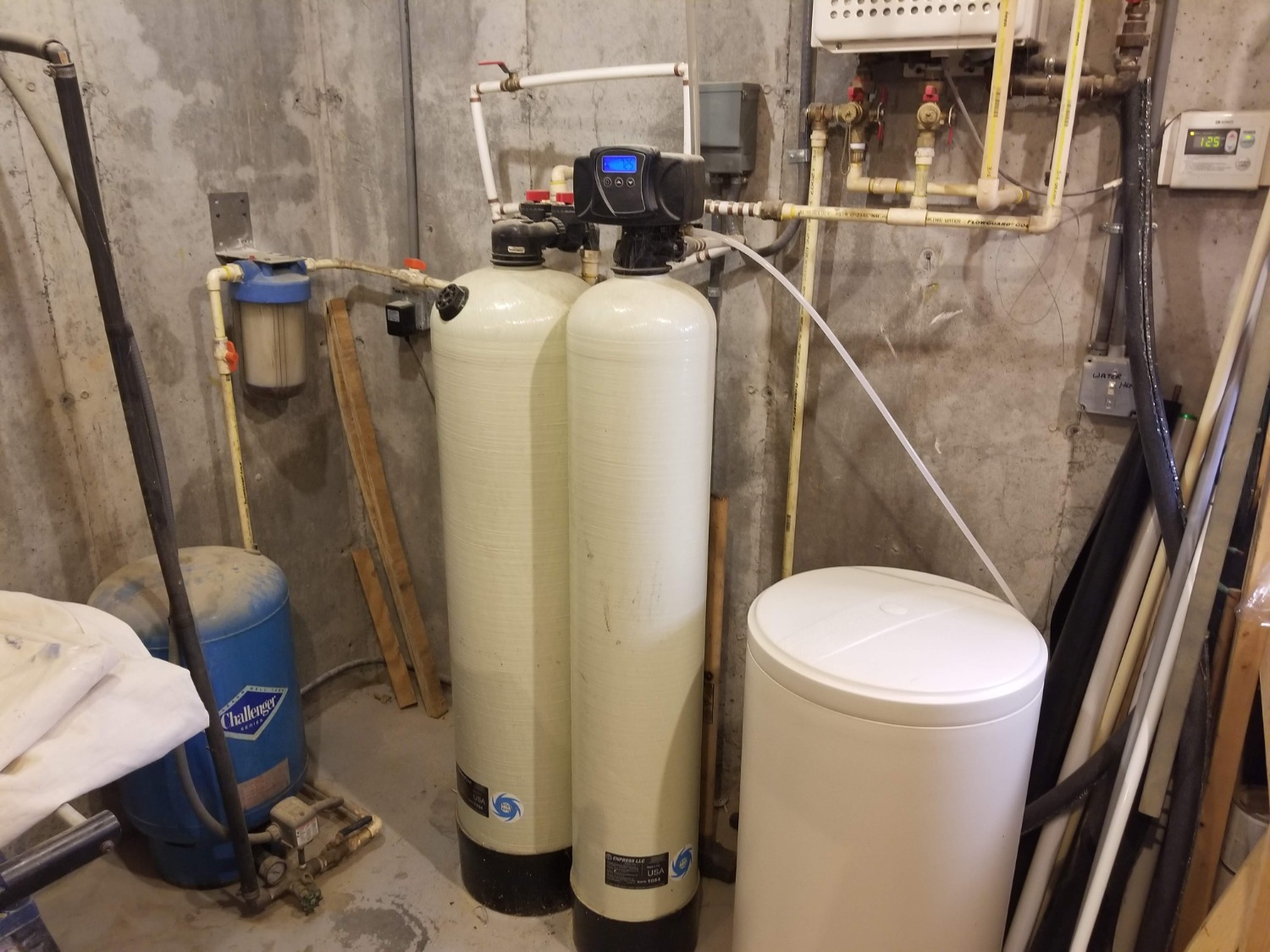
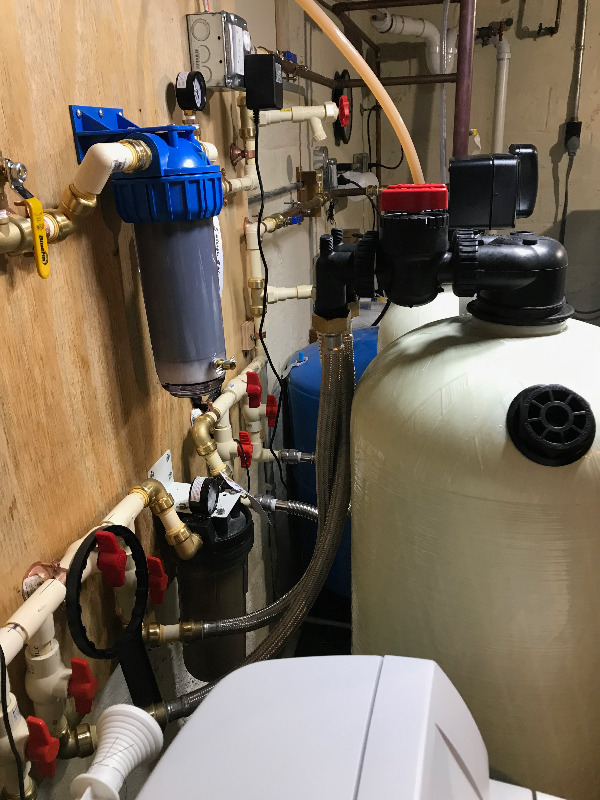
Customer install photo by Paul Richards
★★★★★
The slick feeling is actually a better feeling
I bought these about 4 years ago and I've been very pleased with them. I got the acid neutralizer because we saw green streaks in our tubs. I haven't seen any new green streaks since. The water softener requires a little more maintenance. We put a bag of salt in the salt tank every couple weeks. After installing the water softener, I no longer have that 'squeaky clean' feeling after taking a shower. Instead I always feel a little slick. It's actually a better feeling because the 'squeaky clean' feeling is actually dirt that's in your water. The water softener will also preserve a lot of our appliances because it eliminates minerals in the water that wear appliances down over time. I'm very satisfied with this purchase and I would highly recommend it.
Paul Richards , United States
Verified Buyer
Fleck 5600SXT 48,000 Grain Water Softener & Acid Neutralizer · March 2020
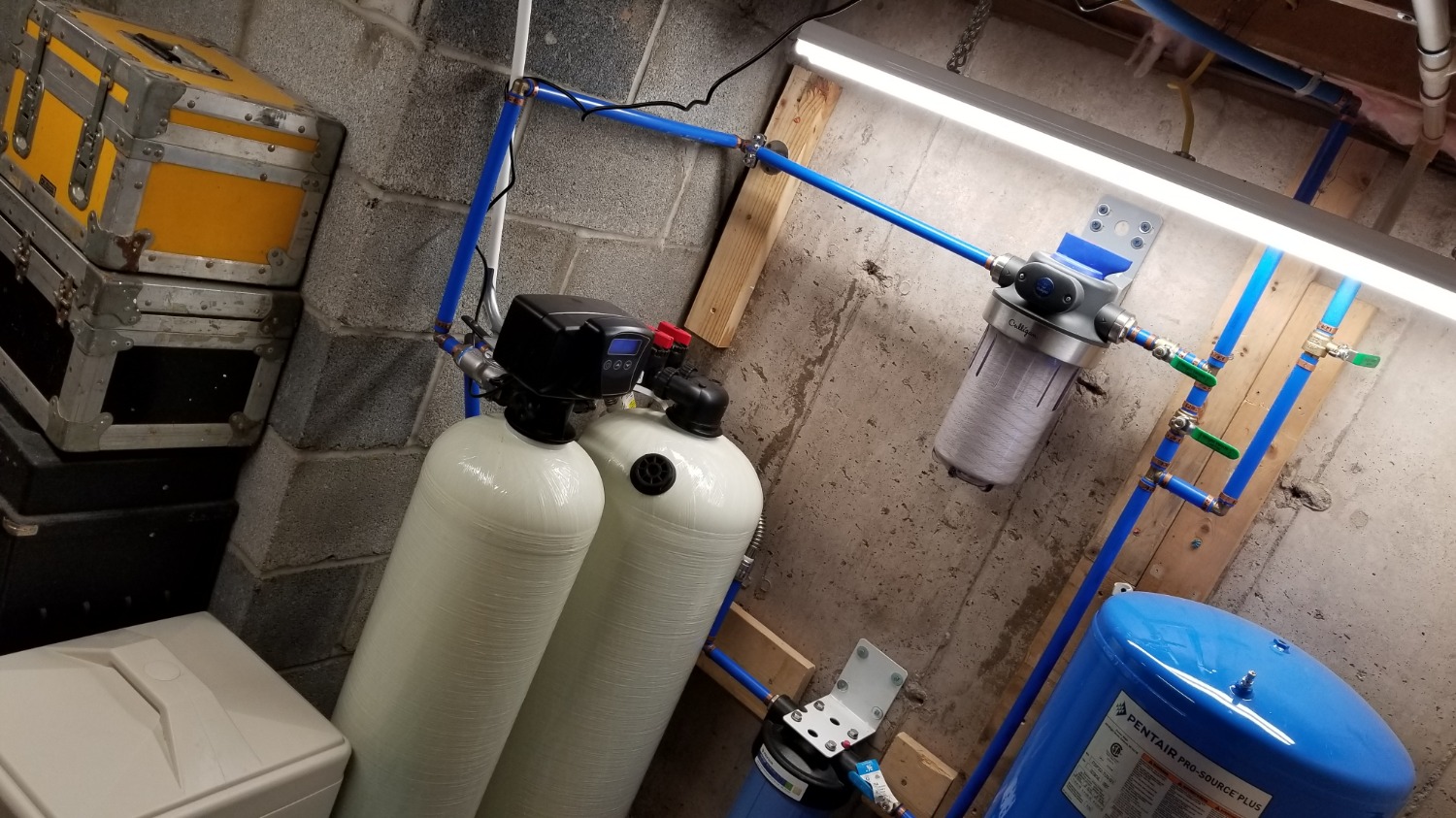
Customer install photo by Dale H.
★★★★★
Iron, neutralizer, and softener train dialed in
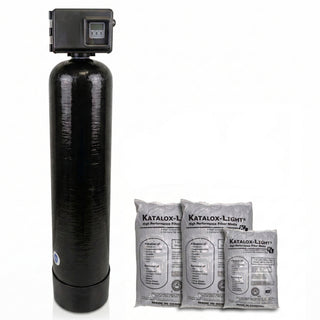
Easy, bullet-proof installation. The whole train was installed in order: a backwashing iron filter using Katalox Light media, then the acid neutralizer, then a 40,000 grain water softener. It raised my pH from 6.8 to a perfect 7.6, and the softener took care of the hardness behind it. Tech support via text message was fast and courteous. I definitely recommend this setup.
Dale H. , United States
Verified Buyer
Iron Filter, Acid Neutralizer & 40,000 Grain Water Softener Train · April 2022
Customer install photo by Nicholas Glade
★★★★★
Complete kit, self-installed, great support
The Fleck 5600SXT 48,000 Grain Water Softener and neutralizer combo I purchased from Mid-Atlantic was a complete kit that I self installed and am very happy with the unit. The product support was great and the price was great as well. It's worth it to buy from a company you can rely on.
Nicholas Glade , United States
Verified Buyer
Fleck 5600SXT 48,000 Grain Water Softener (combo) · March 2020
FAQ

Frequently asked questions

The main trade-offs are salt, a drain line, the water used during regeneration, and a small amount of sodium added to the water. A salt-based softener needs salt added every few weeks (roughly a 40 lb bag a month for a typical home), a drain for the regeneration cycle (which sends some brine and rinse water to drain), and an outlet for the valve. It also adds a small amount of sodium as it swaps out hardness (you can use potassium chloride instead if you're sodium-sensitive, or add a reverse-osmosis unit at the kitchen tap for drinking water). For most homes the benefits (no scale, soap that lathers, longer-lived appliances) far outweigh the maintenance.

If your water is hard (above about 7 grains per gallon) and you see scale, spots, or soap that won't lather, yes. Hardness scale shortens the life of water heaters, dishwashers, and washing machines, and leaves buildup on every fixture. A softener stops new scale, cuts soap and detergent use, and protects the plumbing and appliances you've already paid for. Below about 3 gpg your water is already soft and a softener isn't necessary; 3 to 7 gpg is a judgment call.

Our whole-house softeners run $1,495 to $2,495 for a complete single-tank system, shipped free. A 32,000 grain system is $1,495, the most popular 48,000 grain (Fleck 5600SXT, 10% crosslink resin) is $1,895, 64,000 grain is $2,195, and 80,000 grain is $2,495. A twin-tank for 24/7 soft water is $2,695. Dealer-installed brands like Culligan often run $1,500 to $3,500+ installed and don't publish a price; we publish a flat price, ship to all 50 states, and most customers self-install or hire their own plumber. Running cost is just salt (about $5 to $10/month) and resin that lasts 12 to 15 years on our 10% crosslink line.

For most 3 to 5 person homes, a 48,000 grain softener is the right size. Sizing is two numbers: your hardness in grains per gallon (gpg) times your daily water use (about 75 gallons per person per day). Worked example: a family of four at 15 gpg uses about 4 x 75 x 15 = 4,500 grains a day, so a 48,000 grain tank regenerates roughly every week to ten days with comfortable headroom. Step up to 64,000 grain for harder water (15 to 50 gpg) or 4 to 7 people, and 80,000 grain for very hard water (25 to 80 gpg) or 6+ people. For 2 to 3 people on moderate hardness, 32,000 grain is plenty. Slightly oversizing actually improves salt efficiency because the valve regenerates less often. Send us your gpg and we'll confirm the size for free.

Only a small amount. A softener is not an iron filter. Our softeners tolerate up to about 1 ppm of dissolved (clear-water) iron as a bonus. Above that, iron permanently fouls the resin and shortens its life, and reddish-orange staining means you have more iron than a softener should handle. The right fix is a dedicated iron filter installed UPSTREAM of the softener (order: sediment filter, then iron filter, then softener). If you're seeing rust stains, start with our iron filters and we'll size both together.

No. A softener does not treat hydrogen sulfide (the rotten-egg smell). Sulfur odor needs an air-injection (AIO) iron and sulfur filter or a dedicated sulfur filter, installed ahead of the softener. A softener only removes hardness. If your water smells like rotten eggs, that's a separate problem from hard water, and we have filters built for it.

A salt-based softener with 10% crosslink resin, after you test the water and treat any iron, sulfur, or low pH first. Well water frequently stacks iron, manganese, sediment, low pH, and sulfur on top of hardness, and each needs its own stage in the right order (sediment, then iron/sulfur, then neutralizer, then softener last). The softener itself should use durable 10% crosslink resin (12 to 15 year life) rather than standard 8% resin, especially on well water. A twin-tank is worth it for larger wells that can't tolerate any soft-water gap. Always start with a water test so the train is sized correctly.

Yes. Magnesium and calcium are the two minerals that make water hard, and a softener removes both. Ion exchange swaps the calcium and magnesium ions onto the resin beads in exchange for sodium, which is what takes your hardness to essentially zero grains per gallon. The minerals are flushed to drain during regeneration when the resin is recharged with brine.

Reliability comes down to three things, not a brand badge: a genuine metered (demand) valve, the resin grade, and correct sizing. We build on genuine Fleck valves (5600SXT, 2510SXT, 9100SXT) made by Pentair, the most widely serviced residential softener valves in the country, so any plumber can get parts. Pair that with premium 10% crosslink resin (12 to 15 year life vs 8 to 10 for standard 8%) and a size matched to your hardness, and the system simply lasts. Proprietary-valve brands lock you into one vendor for service; a Fleck valve does not. The most common reliability failures we see are undersized systems and untreated iron fouling the resin, both avoidable with a water test and the right setup.

Only a salt-based softener actually softens water. Salt-free conditions it. A salt-based ion-exchange softener removes calcium and magnesium, so your hardness drops to near zero and you get the soft-water feel, no scale, soap that lathers, spot-free dishes. A salt-free conditioner (Template Assisted Crystallization) does not remove hardness; it converts the minerals into crystals that won't stick to plumbing, which prevents new scale but leaves the water technically hard and gives you no soft-water feel. Salt-free also tends to stop keeping up above about 15 to 25 grains per gallon. It's the right call for low-to-moderate hardness, sodium-restricted households, or installs with no drain. For true softening, we recommend salt-based, and we'll tell you honestly which one fits your water.

No. The salt only regenerates the resin; it's rinsed to drain and does not end up in your drinking water. What a softener does add is a small amount of sodium (not salt) in proportion to how hard your water was, because sodium is what gets swapped for the hardness minerals. On very hard water that amount is still small. If you're on a sodium-restricted diet, use potassium chloride pellets instead of salt, or add a reverse-osmosis unit at the kitchen sink for drinking and cooking water.

Personalized recommendation

Want Aidan to size it for you?

Paste your water test below. Aidan replies with the right grain capacity for your hardness and household, tells you whether you need an iron filter or neutralizer ahead of the softener, gives install notes for your layout, and a discount when it's a combo. Replies usually come the same day during business hours.

Or text Aidan a photo

Goes straight to Aidan's inbox. No newsletter, no list. Just a real reply.

Aidan

Aidan

Co-owner. Real person. Not a bot.
7 Days/Week, 8AM-5PM EST

Contact Us
443-277-2204

We're here to help.

Aidan
Talk to Aidan
Real person. No bots.
Call