

Best Water Softener Systems for 2026 (Expert Tested & Reviewed)
Water Softener Buyer's Guide
Best Water Softener Systems for 2026 (Expert Tested & Reviewed)
Buying a water softener is confusing. Every brand claims to be the best, and most "review" sites have never installed one. After 32 years in water treatment and thousands of installations, I can tell you which systems actually hold up and which ones you'll regret buying. This guide covers every water softener we sell, who each one is best for, and how to size the right system for your home.
This is the hub for our complete water softener resource library. Explore the topics below for deep dives on specific subjects:
The Short Version
If you just want to know which water softener to buy, here it is:
- Best overall for most homes: Fleck 5600SXT 48,000 Grain ($1,895) with 10% crosslink resin. Handles 3 to 4 bathrooms, electronic demand regeneration, and proven Fleck valve reliability.
- Best budget option: Fleck 5600SXT 32,000 Grain ($1,495). Same valve, smaller tank. Ideal for 1 to 2 bathroom homes or apartments.
- Best for large homes (5+ bathrooms): Fleck 5600SXT 64,000 Grain ($2,195). More resin means longer cycles between regeneration.
- Best for 24/7 soft water: Fleck 9100SXT Twin Tank ($2,495). Two tanks alternate so you never run out, even during regeneration.
- Best smart softener: Nelsen Connected 48,000 Grain ($1,495). Bluetooth monitoring and app-based control from your phone.
- Have iron in your water? A softener alone is not the right solution. Read: Iron Filter vs Water Softener.
Browse all models: Residential Water Softeners | Need a softener paired with other treatment? See Acid Neutralizer + Softener Packages or Iron Filter + Softener Packages.
Which Water Softener Is Right for Your Home?
Answer 3 quick questions and we'll recommend the best system for your situation.
Sizing a water softener correctly starts with knowing your hardness level, iron content, and pH. Without a water test, you could end up with a system that's too small (runs out of soft water) or too large (wastes salt) — see our guide to testing your well water. Once you have a system, you will need to keep it fed with the right salt — our water softener salt guide covers types, costs, and monthly usage.
A basic water test costs $50 to $150 from a local lab. Test for hardness (GPG), iron (ppm), pH, and manganese. Then send your results to Aidan for a free, no-pressure recommendation.
What This Article Covers
- Our Top Pick: Fleck 5600SXT 48,000 Grain
- Complete Water Softener Comparison Table
- Understanding Water Hardness
- Single-Tank vs Dual-Tank Softeners
- Salt-Based vs Salt-Free: The Honest Truth
- How to Size a Water Softener for Your Home
- What to Look For in a Water Softener
- Where the Softener Fits in Your Treatment System
- 10-Year Cost of Ownership
- Real Customer Results
- Frequently Asked Questions
Our Top Pick: Fleck 5600SXT 48,000 Grain Water Softener
Fleck 5600SXT 48,000 Grain with 10% Crosslink Resin
Price: $1,895 (free shipping)
- Valve: Fleck 5600SXT digital demand (electronic metered, regenerates only when needed)
- Resin: 10% crosslink ion exchange resin (more durable than standard 8% resin, resists chlorine and iron fouling)
- Tank: 13x54 Vortech tank with 18x33 brine (salt) tank
- Capacity: 48,000 grains between regenerations
- Best for: 3 to 4 bathroom homes with hardness up to 25 GPG
- Bypass: Stainless steel bypass valve pre-installed
- Resin pre-loaded: Yes (saves 30+ minutes during install)
This is the system Aidan recommends to most homeowners who call in. The 5600SXT valve has been the industry standard for over 20 years because it works. For a complete deep dive on this valve — including installation, programming, and troubleshooting — read our Fleck 5600SXT owner's guide. Digital demand means the softener counts your actual water usage and only regenerates when the resin is exhausted. That saves salt, saves water, and extends resin life compared to timer-based systems. Wondering how Fleck compares to the other top brand? See our Clack vs Fleck comparison, or read the full Clack water softener review.
The 10% crosslink resin is a meaningful upgrade over standard resin. It holds up better against chlorine (if you have city water) and resists iron fouling (if you have trace iron under 2 ppm). On a 48,000 grain system with typical household usage, you're looking at regeneration roughly once every 7 to 10 days.
Complete Water Softener Comparison Table
Every residential water softener we sell, compared side by side. All systems include free shipping, pre-loaded resin, and a pre-installed bypass valve.
| System | Grain Capacity | Valve | Resin Type | Best For | Price |
|---|---|---|---|---|---|
| Fleck 5600SXT 32k | 32,000 | Fleck 5600SXT | Standard 8% | 1-2 bathrooms, condos | $1,495 |
| Nelsen Connected 48k | 48,000 | Nelsen (Bluetooth) | Standard | Tech-savvy homeowners | $1,495 |
| Fleck 2510SXT 48k | 48,000 | Fleck 2510SXT | Standard 8% | Higher flow rate needs | $1,695 |
| Nelsen Connected 64k | 64,000 | Nelsen (Bluetooth) | Standard | Larger homes, smart control | $1,695 |
| Fleck 5600SXT 48k ★ | 48,000 | Fleck 5600SXT | 10% Crosslink | 3-4 bathrooms (best overall) | $1,895 |
| Nelsen Connected 80k | 80,000 | Nelsen (Bluetooth) | Standard | Large homes, smart control | $1,895 |
| Fleck 5600SXT 64k | 64,000 | Fleck 5600SXT | 10% Crosslink | 4-5 bathrooms, very hard water | $2,195 |
| Fleck 9100SXT Twin 48k | 48,000 x2 | Fleck 9100SXT | Standard 8% | 5+ bathrooms, 24/7 soft water | $2,495 |
| Fleck 2510SXT 64k | 64,000 | Fleck 2510SXT | Standard 8% | High flow rate, large homes | $2,495 |
| Fleck 9100SXT Twin 64k | 64,000 x2 | Fleck 9100SXT | Standard 8% | Large homes needing 24/7 soft water | $2,695 |
★ = Our most recommended system for typical households. The Fleck 2510SXT valve offers higher flow rates than the 5600SXT and is better suited for homes with high simultaneous water demand (multiple showers running at once). For most residential applications, the 5600SXT provides more than enough flow.
Understanding Water Hardness
Water hardness is measured in grains per gallon (GPG). The harder your water, the more capacity your softener needs and the more salt it will use during regeneration. Here's what different hardness levels actually mean for your home:
0-3 GPG
3-7 GPG
7-10 GPG
10-15 GPG
15+ GPG
- 0 to 3 GPG (soft): No softener needed. Your water is already soft.
- 3 to 7 GPG (slightly hard): You may notice minor spotting on dishes and fixtures. A softener helps but isn't critical.
- 7 to 10 GPG (moderately hard): Noticeable scale buildup on faucets, reduced soap lathering, and film on shower doors. A softener is recommended.
- 10 to 15 GPG (hard): Significant scale in pipes and water heaters. Appliance lifespan is being reduced. A softener is strongly recommended.
- 15+ GPG (very hard): Heavy scale accumulation everywhere. Water heater efficiency drops noticeably. Soap barely lathers. A softener is essential, and you may need a larger system.
If You Also Have Acidic Water
If your pH is below 7.0, acidic water will corrode your plumbing regardless of hardness. You need an acid neutralizer installed before the softener. The neutralizer raises pH using calcite (crushed limestone), but this also increases hardness by 4 to 6 GPG. Factor that added hardness into your softener sizing. See our Complete Guide to Acid Neutralizers for details.
Single-Tank vs Dual-Tank Softeners
This is one of the most common questions we get: should you buy a single-tank or twin-tank (dual-tank) water softener?
Single-Tank (Fleck 5600SXT, 2510SXT, Nelsen Connected)
A single-tank softener has one resin tank and one brine tank. When the resin is exhausted, the system regenerates (typically at 2 AM when water usage is low). During regeneration (about 90 minutes), the water bypasses the softener, so you're running on untreated water.
- Pros: Lower cost, simpler installation, smaller footprint
- Cons: No soft water during regeneration
- Reality check: Regeneration happens in the middle of the night. Unless you regularly shower at 2 AM, you'll never notice. For 90% of homes, a single-tank is all you need.
Dual-Tank / Twin-Tank (Fleck 9100SXT)
A twin-tank softener has two resin tanks sharing one brine tank. When one tank is exhausted, the valve automatically switches to the other tank while the first regenerates. You always have soft water, 24 hours a day.
- Pros: Uninterrupted soft water, ideal for high-demand homes
- Cons: Higher cost, larger footprint, more complex installation
- Best for: 5+ bathroom homes, families with high water usage, businesses, or anyone who needs guaranteed soft water at all hours
Aidan's Take
If you have a family of 2 to 4 in a home with 3 to 4 bathrooms, a single-tank Fleck 5600SXT is the right call. Save the extra $600+ for something else. If you have a large home with 5+ bathrooms, a guest house, or a commercial application where you cannot afford any downtime, the 9100SXT twin-tank ($2,495) is worth every dollar.
Salt-Based vs Salt-Free: The Honest Truth
This is the most misleading topic in the water treatment industry. "Salt-free water softeners" is a marketing term, not a technical one. Here's the reality.
Salt-Based Water Softeners (Ion Exchange)
A salt-based softener uses ion exchange resin to swap calcium and magnesium ions (which cause hardness) for sodium ions. The hardness minerals are physically removed from the water. During regeneration, the resin is flushed with a salt brine solution that strips off the collected hardness and sends it down the drain. The result: truly soft water with zero hardness minerals.
To understand the full science behind this process, read: How a Salt-Based Water Softener Actually Works (Ion Exchange).
Salt-Free "Softeners" (Template Assisted Crystallization)
A salt-free system does not remove hardness from the water. It converts dissolved calcium into microscopic crystals that are less likely to stick to pipes and fixtures. Your water still tests as hard. You still get spots on dishes. Soap still doesn't lather as well. The scale reduction on plumbing is real, but the water itself is not soft.
We sell the Clack 2.5 Cubic Foot Salt-Free Conditioner ($2,895) for customers who specifically want zero salt and zero drain water. But we're upfront: it's not the same as a softener, and it costs more.
| Feature | Salt-Based Softener | Salt-Free Conditioner |
|---|---|---|
| Removes hardness from water? | Yes | No |
| Reduces scale buildup in pipes? | Yes (eliminates it) | Yes (reduces significantly) |
| Soap lathers properly? | Yes | Somewhat |
| Spots on dishes/fixtures? | None | Still present |
| Requires salt? | Yes (40-80 lbs/month) | No |
| Requires drain connection? | Yes | No |
| Electricity needed? | Yes (for the valve) | No |
| Maintenance | Add salt as needed | None |
| Starting price (MAW) | $1,495 | $2,895 |
Real Customer Experience with Salt-Free
One of our customers, Timothy G., switched from a salt-based softener to a salt-free conditioner and left this honest review: "The water is not as soft as the water was when we had our salt water softener." That matches what we've seen across the board. If you want truly soft water, salt-based is the only option that delivers it.
How to Size a Water Softener for Your Home
Buying a softener that's too small means it regenerates constantly, wasting salt and water. Buying one that's too big wastes money upfront. Here's how to get it right.
The Formula
Multiply these three numbers together:
- Number of people in the home (or use bathroom count as a proxy)
- Daily water usage per person: approximately 75 gallons
- Water hardness in GPG
This gives you your daily grain demand. Then multiply by 7 (days between regeneration) to get the minimum grain capacity you need.
Example: A family of 4 with 12 GPG hardness:
4 people x 75 gallons x 12 GPG = 3,600 grains per day
3,600 x 7 days = 25,200 grains minimum
A 32,000 grain system would technically work, but a 48,000 grain system gives you comfortable headroom and regenerates less often. That's why the 48k is our default recommendation for 3 to 4 bathroom homes.
| Household Size | Hardness Level | Recommended System | Price |
|---|---|---|---|
| 1-2 people / 1-2 bathrooms | Up to 15 GPG | Fleck 5600SXT 32k | $1,495 |
| 1-2 people / 1-2 bathrooms | 15+ GPG | Fleck 5600SXT 48k | $1,895 |
| 3-4 people / 3-4 bathrooms | Up to 15 GPG | Fleck 5600SXT 48k | $1,895 |
| 3-4 people / 3-4 bathrooms | 15+ GPG | Fleck 5600SXT 64k | $2,195 |
| 5+ people / 5+ bathrooms | Any | Fleck 9100SXT Twin 48k | $2,495 |
| 5+ people, very hard water | 15+ GPG | Fleck 9100SXT Twin 64k | $2,695 |
When in doubt, go one size up. A bigger softener regenerates less frequently, which saves salt, reduces water waste, and extends resin life. As Aidan tells customers on the phone: "Bigger is better when it comes to softeners. There's no downside to more capacity."
What to Look For in a Water Softener
Not all water softeners are built the same. Here are the four things that separate a quality system from a box-store unit you'll replace in 5 years.
1. Valve Type: Electronic Demand vs Timer
The control valve is the brain of the softener. It determines when the system regenerates.
- Electronic demand (metered): Counts your actual water usage and only regenerates when the resin is exhausted. This is what every MAW softener uses (Fleck 5600SXT, 2510SXT, 9100SXT, Nelsen Connected). It saves 30 to 50% on salt compared to timer-based systems.
- Timer-based: Regenerates on a fixed schedule (e.g., every 3 days) regardless of how much water you've used. Wastes salt if you used less water than expected. Runs out of soft water if you used more. Found mostly on budget box-store units.
The Fleck 5600SXT has been the most widely used residential softener valve in the industry for over 20 years. Replacement parts are available everywhere, and any water treatment professional knows how to service it.
2. Resin Quality: Standard 8% vs 10% Crosslink
The resin beads do the actual softening work through ion exchange. Quality matters.
- Standard 8% crosslink: Works well for most applications. Expected lifespan of 10 to 15 years with proper maintenance.
- 10% crosslink: Denser bead structure that resists chlorine degradation and iron fouling better than standard resin. Costs more upfront but lasts longer, especially if you have city water (chlorine) or trace iron. Our 48k and 64k 5600SXT models come with 10% crosslink.
If your water has any chlorine (city/municipal water) or even trace amounts of iron, the 10% crosslink is worth the upgrade. Resin replacement costs $295 per cubic foot, so extending its lifespan by even a few years pays for itself.
3. Bypass Valve
A bypass valve lets you route water around the softener for maintenance, repairs, or outdoor watering. Every MAW softener comes with a stainless steel bypass valve pre-installed. Many competitors charge extra for this or ship a plastic one.
4. Warranty and Support
Big-box store softeners come with a manufacturer warranty and a 1-800 number that routes to a call center. When you buy from MAW, you get Aidan on the phone. Same person who sold you the system, who has 32 years of field experience, who can walk you through programming, troubleshoot a valve issue, or help your plumber with the installation.
That's the difference between a retailer and a water treatment company.
Where the Softener Fits in Your Treatment System
A water softener is rarely the only piece of equipment in a well water system. Understanding the correct installation order matters because each system protects the one after it.
Correct Installation Order (Well Water):
Why this order matters:
- The sediment filter goes first to trap sand and particles before they reach any valve.
- The iron filter removes iron before it can foul the softener resin. If you have iron above 2 ppm, you need this. Read: Iron Filter vs Water Softener.
- The acid neutralizer raises pH before the softener. Low pH water corrodes the softener valve over time.
- The softener removes the hardness, including any hardness added by the neutralizer.
- A carbon filter after the softener improves taste and removes any remaining organics or chlorine.
If you need multiple systems, we offer package deals that save significantly over buying individually. See: Acid Neutralizer + Softener Packages | Iron Filter + Softener Packages | Carbon Filter + Softener Packages.
10-Year Cost of Ownership
The purchase price is only part of the story. Here's what each type of softener actually costs over 10 years, including salt, maintenance, and replacement parts.
| System Type | Upfront Cost | Annual Salt/Maintenance | 10-Year Total |
|---|---|---|---|
| MAW Fleck 5600SXT 48k (10% crosslink) | $1,895 | $75 to $150/yr (salt only) | $2,645 to $3,395 |
| MAW Fleck 5600SXT 32k | $1,495 | $100 to $175/yr (regenerates more often) | $2,495 to $3,245 |
| MAW 9100SXT Twin Tank 48k | $2,495 | $100 to $175/yr | $3,495 to $4,245 |
| Salt-Free Conditioner | $2,895 | $0 | $2,895 (but water is not truly soft) |
| Big-box store softener | $500 to $1,200 | $150 to $250/yr + replacement at year 5-7 | $3,000 to $5,200 |
| Dealer-installed softener (Kinetico, Culligan, etc.) | $3,000 to $6,000 | $75 to $200/yr + service calls | $3,750 to $8,000 |
The math is straightforward. A MAW Fleck 5600SXT costs less upfront than dealer-installed systems and lasts longer than big-box units. The 10% crosslink resin extends the lifespan beyond standard resin, and the electronic demand valve uses 30 to 50% less salt than timer-based systems. Over 10 years, it's the most economical option that delivers professional-grade results.
Salt cost varies by region, but expect to use 40 to 80 pounds per month depending on your hardness level and household size. Pellet salt from Walmart, Lowe's, or Home Depot typically runs $6 to $8 per 40-pound bag.
Real Customer Results
Here's what actual MAW customers have to say about their water softener systems:
"The Fleck 5600SXT 48,000 Grain Water Softener and neutralizer combo I purchased from Mid-Atlantic was a complete kit that I self installed and am very happy with the unit. The product support was great and the price was great as well. It's worth it to buy from a company you can rely on."
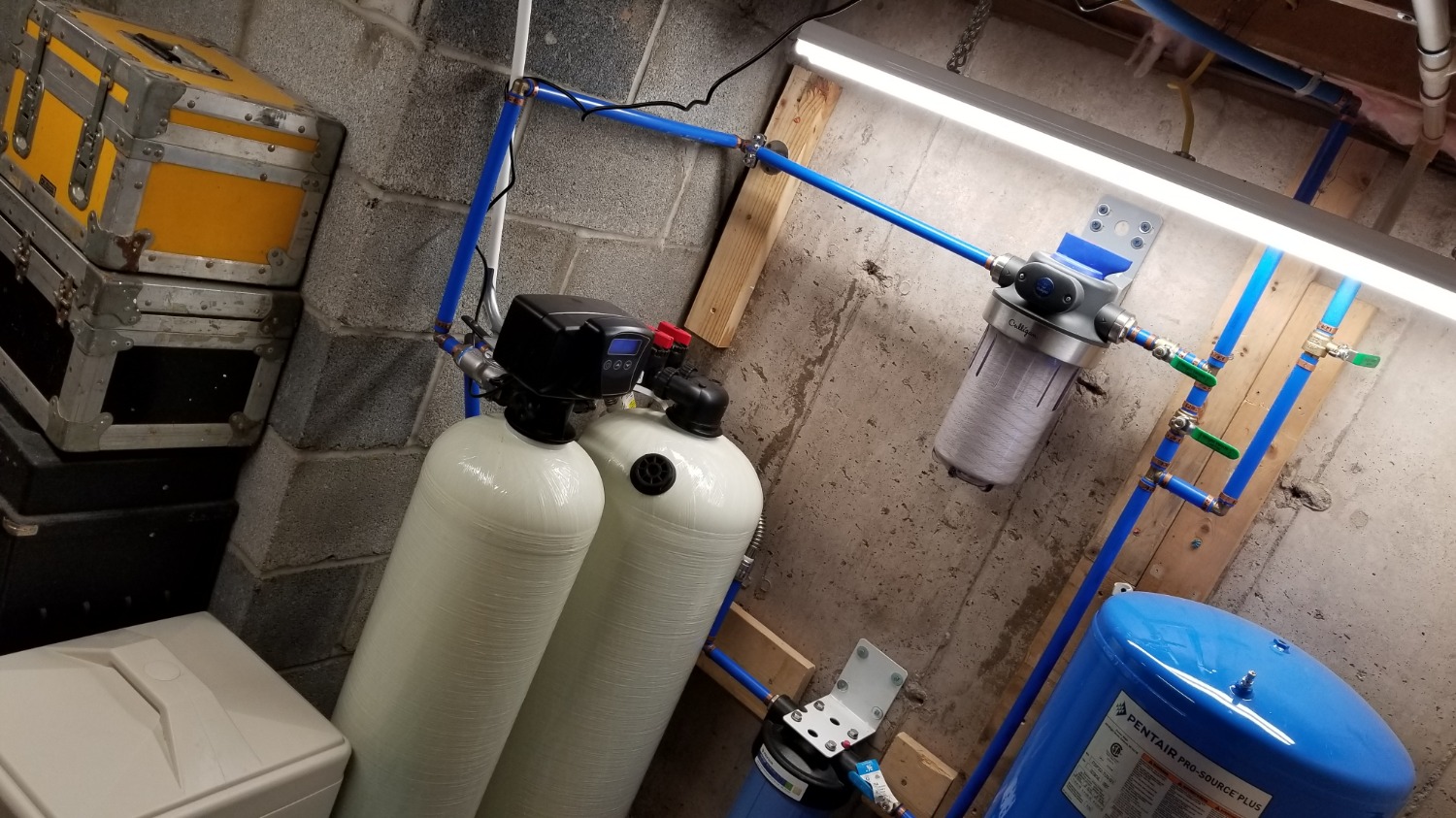
"The product is well made and comes with everything needed to install. I had to purchase two one inch threaded PVC adapters to connect to my lines. Installed very quickly. I watched a video to quickly go through the settings. I own two of these at different locations."
David Mason, Verified Buyer ★★★★★"All system components were shipped on a wooden pallet. The resin was already placed in the softener tank, and the bypass valve was already installed on the control valve. This eliminates two install steps."
Verified Buyer ★★★★★A pattern you'll notice across these reviews: most customers install the system themselves. The resin comes pre-loaded, the bypass valve is pre-installed, and the plumbing connections are straightforward. If you get stuck, Aidan is available by phone or text to walk you through it.
Frequently Asked Questions
What is the best water softener brand?
Fleck (manufactured by Pentair) has been the most widely used residential water softener valve in North America for over 20 years. The Fleck 5600SXT is the industry standard for a reason: it's reliable, parts are universally available, and every water treatment professional knows how to service it. We also carry the Nelsen Connected series for homeowners who want Bluetooth monitoring. Both are commercial-grade systems sold directly to homeowners, which is what makes our pricing possible.
How much does a good water softener cost?
A quality residential water softener with an electronic demand valve costs between $1,495 and $2,695 depending on size and configuration. Our most popular system, the Fleck 5600SXT 48,000 Grain, is $1,895 with free shipping and includes 10% crosslink resin. Dealer-installed systems from companies like Kinetico or Culligan run $3,000 to $6,000+ for comparable equipment because you're paying for the salesperson, the installation crew, and the dealer markup.
Can I install a water softener myself?
Yes. Most of our customers do. The system arrives with resin pre-loaded in the tank and the bypass valve already installed. You need basic plumbing skills (connecting 1-inch pipe fittings), a power outlet, and a drain for the regeneration water. Typical install time is 1 to 2 hours. If your plumber has questions during the install, Aidan is available by phone at 800-460-5810 to walk through it.
How often does a water softener regenerate?
With an electronic demand valve (like the Fleck 5600SXT), the system regenerates only when the resin capacity is used up. For a typical family of 4 with a 48,000 grain system, that's roughly once every 7 to 10 days. Regeneration happens automatically at 2 AM and takes about 90 minutes. You don't need to do anything.
How much salt does a water softener use?
Expect to use 40 to 80 pounds of salt per month, depending on your water hardness and household size. At $6 to $8 per 40-pound bag from Walmart or Home Depot, that's roughly $6 to $16 per month. Electronic demand systems use significantly less salt than timer-based systems because they only regenerate when necessary. Use pellet salt (not rock salt) for the cleanest operation.
Does a water softener remove iron?
A water softener can handle very small amounts of dissolved (ferrous) iron, typically under 2 ppm. Above that, iron fouls the resin and shortens the softener's lifespan. For iron above 2 ppm, you need a dedicated iron filter installed before the softener. For a detailed breakdown, read: Can a Water Softener Remove Iron?
Is a salt-free softener worth it?
A salt-free system does not soften your water. It conditions it by converting dissolved hardness minerals into crystals that are less likely to form scale. You still have hard water, you still get spots on dishes, and soap still doesn't lather as well. The scale prevention is real, but it's not the same as softening. If you want truly soft water, you need a salt-based system. We sell both and we're honest about the difference.
Do I need an acid neutralizer with my water softener?
If your water pH is below 7.0, yes. Acidic water corrodes copper pipes, causes pinhole leaks, and damages the softener valve over time. An acid neutralizer raises pH using calcite media before the water reaches the softener. The neutralizer also increases hardness by 4 to 6 GPG, so factor that into your softener sizing. Read the full guide: Acid Neutralizer and Water Softener.
What states have banned water softeners?
No state has banned water softeners outright. Some California communities have restricted or banned the discharge of softener brine into municipal sewer systems due to concerns about salt concentrations in wastewater treatment. If you live in a restricted area, a salt-free conditioner is your alternative, or you can install a system that discharges to a dedicated drain rather than the sewer. Check with your local municipality.
How long does a water softener last?
A quality water softener with a Fleck valve should last 15 to 20+ years. The valve itself is the longest-lasting component. The resin typically needs replacement every 10 to 15 years (8% crosslink) or 12 to 18 years (10% crosslink), depending on water chemistry and usage. Replacement resin costs $295 per cubic foot. The brine tank lasts indefinitely with basic care.
Keep Reading
About the Author: Aidan has been in the water treatment industry for 32 years, including 28 years of hands-on installations and service. Mid Atlantic Water is a wholesale distributor that ships commercial-grade water treatment systems directly to homeowners, cutting out the dealer markup and commissioned salespeople — see our best whole house water filter guide. Every recommendation in this article is based on field results from thousands of installations, not theory or affiliate commissions.
Need help choosing a softener? Call or text Aidan at 800-460-5810 · Email support@midatlanticwater.net