This page is a complete buying guide for tannin water filters for well water. It covers: diagnosing yellow or tea-colored water with the overnight clear-glass test (color that settles is iron, color that stays dissolved is tannins) and a $99 certified lab tannin test; whole-house salt-regenerated anion exchange systems running tannin-selective acrylic resin, WQA Gold Seal certified to NSF/ANSI-61 (6 GPM, 1.5 cu ft, $2,195 for 1-2 bathroom homes; Fleck 5600SXT 1.5 cu ft Vortech, $2,695, most popular; 10 GPM, 2.5 cu ft, $2,895 for 3+ bathrooms); a complete tannin plus hardness treatment package ($5,995); replacement Purolite A850 tannin resin ($895 per cu ft); a brand comparison against SpringWell, US Water Systems, and Crystal Quest; why tannins are an aesthetic EPA secondary standard issue rather than a health hazard; treatment order (softener upstream because hardness fouls anion resin, acid neutralizer downstream because anion exchange drops pH by roughly 1 point); why carbon cartridges and sediment filters cannot remove tannins; frequent regeneration to prevent organic fouling; installation steps; and free expert sizing by phone. All systems ship free to all 50 US states. Mid Atlantic Water has specialized in water treatment since 1997.
By Aidan· 32-year water expert, Mid Atlantic Water ·
Tannins come out of well water one proven way: salt-regenerated anion exchange, the same working principle as a water softener but with the opposite resin. Our systems run tannin-selective acrylic gel resin (WQA Gold Seal certified to NSF/ANSI-61) that releases the captured organics every brine cycle instead of fouling the way styrene-based beds do, and they clear the yellow at every tap, shower, and washing machine.
Treatment starts with a diagnosis: yellow water is iron at least as often as it is tannins, and they need different filters. The overnight glass test narrows it down, the $99 certified lab test settles it, and Aidan reads your result free, including telling you when a tannin system is the wrong purchase.
Tannin-selective acrylic resin
WQA Gold Seal certified media
Whole-house: every tap cleared
Regenerates with softener salt
Free shipping to the lower 48 states
30-day return policy
After 32 years of expert experience, with over 10,000 customers served since we started Mid Atlantic Water in 1997, the tannin call we make most often is the one that loses us a sale: yellow water is iron more often than it is tannins. The overnight glass test and a $99 lab number decide it. When it is tannins, salt-regenerated acrylic anion resin clears every tap, and we tell you up front about the two side effects nobody else mentions: hard water fouls the resin (softener goes upstream) and the exchange drops pH by about a point (acid neutralizer goes downstream).
0 products match your filters.
No products match those filters. Try adjusting your water conditions or .
Whole House Tannin Removal Systems
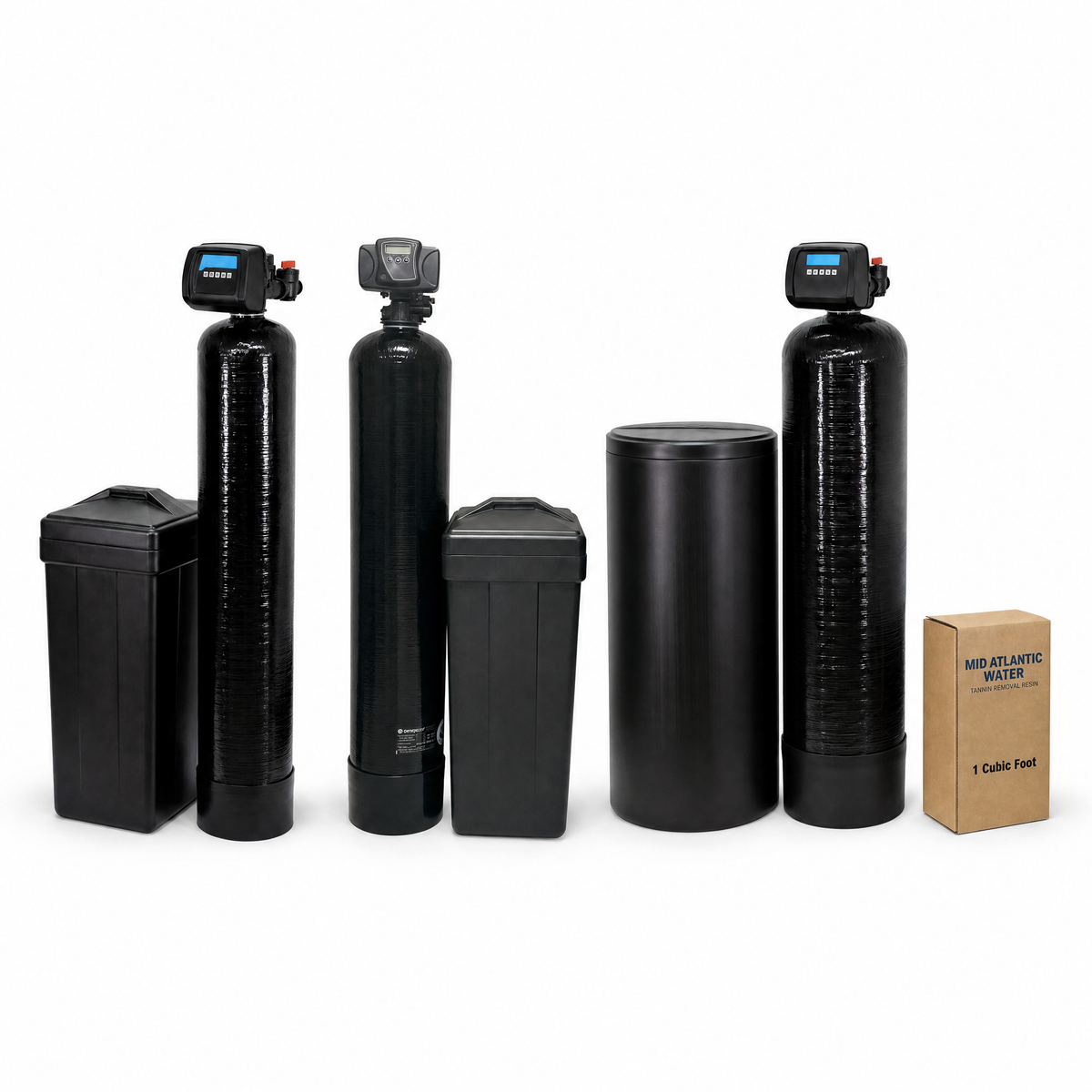
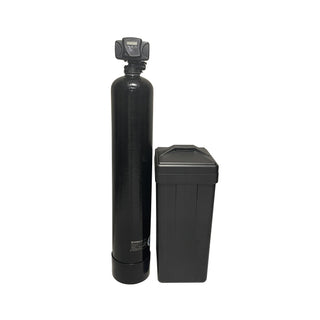
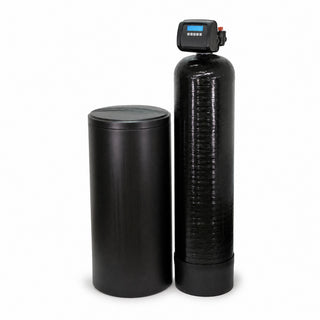
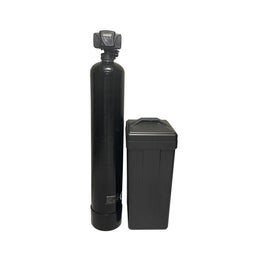
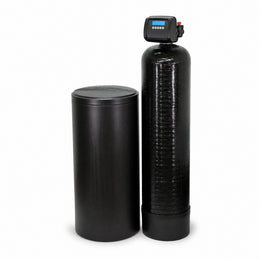
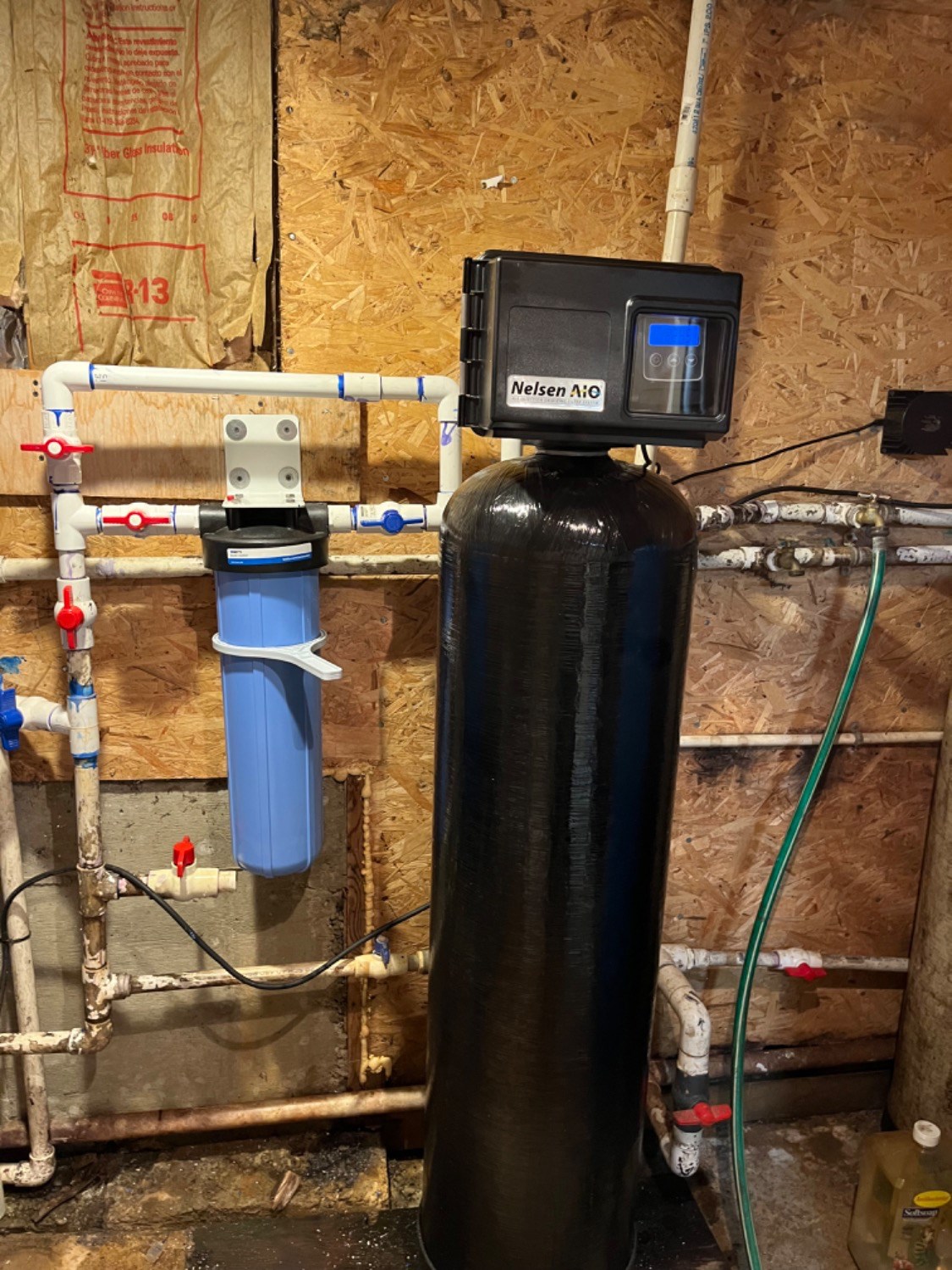
Tank systems that clear yellow, tea-colored water at every tap, shower, and appliance. Each runs tannin-selective acrylic anion exchange resin (WQA Gold Seal certified to NSF/ANSI-61) on a metered demand valve that regenerates with ordinary water softener salt. Sized by tannin-duty service flow: 6 GPM for 1-2 bath homes, 10 GPM for larger homes with 3 or more bathrooms.
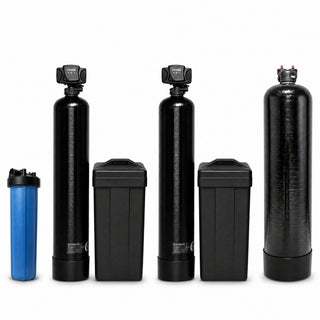
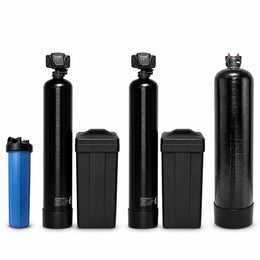
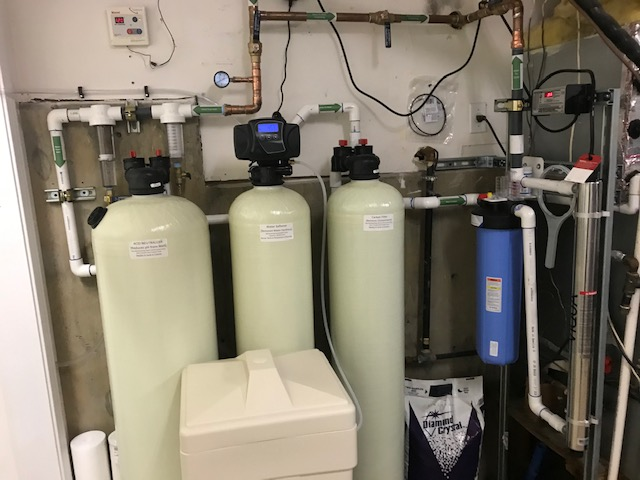
The full treatment train for wells fighting tannins AND hardness: sediment prefilter, water softener upstream (hardness fouls anion resin), then the dedicated tannin unit. One order, one matched stack, plumbed in the order the chemistry requires.
Rebed an existing tannin filter with Purolite A850 acrylic gel anion resin in 1 cu ft boxes (WQA certified to NSF/ANSI-61). Tannin resin regenerates with softener salt for years; when capacity finally fades after roughly 5 to 8 years, rebedding restores like-new removal without replacing the tank or valve.
Yellow water is not always tannins: iron and manganese tint water too, and they need a completely different filter. The certified lab test reports your actual tannin-lignin level so you buy the right system once.
Photo, PDF, or just type the numbers, whatever’s easiest. Don’t have a test yet? Describe what you’re seeing.
2
Aidan reads it personally
Real co-owner. Not a chatbot, not a script, not a sales rep on quota. He’s sized thousands of systems.
3
Get a direct link to what you need
Aidan texts you the exact product page that fits your water. Buy it, bookmark it, or take the answer elsewhere. No pressure either way.
We never send spam. We never sell your number. Aidan answers personally, 7 days a week, 8a–5p ET.
Tannin Filter Comparison
Mid Atlantic vs. SpringWell, US Water Systems & Crystal Quest
Honest head-to-head: how our tannin systems compare to the whole-house filters most shoppers also look at. Framing is taken from each company's own published product pages (June 2026); where a spec is not published we say so instead of guessing.
MAW Tannin Filter
SpringWell STR
US Water Matrixx
Crystal Quest
Tannin-selective resin, named
ResinTech SBACR-HP acrylic gel (WQA Gold Seal)
Resin not named
Anion resin, brand not named
Resin not named
Acrylic resin chemistry (releases organics at regen)
Yes: acrylic gel, resists organic fouling
Not specified
Not specified
Not specified
Dedicated tannin tank
Yes (softening stays separate, upstream)
No: combo softener + tannin in one tank
Yes
Yes
Pretreatment honesty, before you buy
Yes: softener upstream, AN downstream, told up front
Iron, H2S & oil exclusions in warranty fine print
Recommends softener pretreatment
Not specified
Tells you about the ~1 point pH drop
Yes, with the acid neutralizer fix
Not mentioned
Mentions pH/alkalinity effects
Not mentioned
Metered demand regeneration standard
Yes, on every system
Yes (Bluetooth app valve)
Yes (smartphone integration)
Yes (microprocessor valve)
Sized from your lab result, free
Yes, phone or email with Aidan
No
Test-first guidance on collection page
No
Phone consult included
Yes, with Aidan, 7 days a week
Limited
Limited
Limited
Price range
$2,195 - $2,895
$2,758.50
$2,195 - $3,195
From $1,791
The detail that matters most is the resin chemistry. Styrene-based anion resin captures tannins but won't fully release them during regeneration, so the bed fouls over time and quits (a fishy odor is the classic symptom of fouled resin). Acrylic gel resin like the ResinTech SBACR-HP we ship releases what it captures every salt regeneration, which is why it keeps working for years. Combo softener-plus-tannin tanks ask one media bed to do two jobs; we keep softening separate and upstream where the chemistry wants it. Pentair's tannin system (rated to 3 ppm) is also a real option but is sold dealer-install only with no published price; everything here ships to your door with the price on the page.
We tell you the two side effects before you buy, not in warranty fine print: hard water fouls anion resin, so a softener goes upstream on hard wells, and anion exchange drops pH by roughly a point, so many installs want an acid neutralizer downstream. Send us your well test and we map the whole train, including telling you when yellow water is actually iron and a tannin system is the wrong purchase.
Step 1: Find Your Problem
What are the signs of Yellow, tea-colored well water from tannins (natural organic matter)?
Tannins announce themselves: water tinted yellow to weak-tea brown from every tap, yellowed laundry, an earthy or bitter edge. The trap is that iron and manganese cause yellow-brown water too, and they need a completely different filter. The overnight glass test and the stain color narrow it down; the certified lab test settles it. If your well sits near marsh, peat, or low-lying woods, tannins move to the top of the suspect list.
Water is uniformly yellow to tea-colored from every tap
Tannins are dissolved organics from decaying vegetation, so they tint the water evenly, hot and cold, every tap, and the color never settles out. It can come with an earthy or bitter taste and a musty odor. Aesthetic problem, not a health hazard, but it stains everything it touches.
→YESTannin filter fixes this
The overnight glass test: does the color settle?
Fill a clear glass and let it sit overnight. Color that settles into a layer at the bottom is ferric iron or particulates, which needs an iron filter, not this page. Color that stays uniformly dissolved is tannins. Iron and tannins often share a well, and iron gets treated first.
→TESTSettles = iron, stays = tannins
Your well is shallow, coastal, or near marshy low-lying ground
Tannins ride into groundwater where it moves through peaty soil, marshland, and decaying vegetation, which is why they concentrate in Florida, the upper Midwest, and coastal lowlands, and show up more in shallow wells and surface-influenced supplies than deep drilled wells.
→TESTLab test confirms the level
Yellowed laundry, stained fixtures and sinks
Tannin water leaves a tea-colored cast on white laundry and a yellow-brown film on tubs, toilets, and fixtures. Rusty orange-red staining points at iron instead (the EPA flags iron at 0.3 ppm for exactly this), and black-brown staining points at manganese. The stain color is diagnostic.
Lab-confirmed tannins and just want it handled? The Fleck 5600SXT at $2,695 is the proven pick for most homes. Smaller 1-2 bath home? The 6 GPM is $2,195. Bigger home? The 10 GPM is $2,895. Fighting hardness too? The complete package is $5,995. Keep scrolling for sizing.
Size by bathrooms and contact time, not pipe size. Tannin duty is contact-time limited, so the same tank that flows 12 GPM as a softener is rated 6 GPM for tannins. A 1-2 bathroom home (1-3 people) fits the 6 GPM system with 1.5 cu ft of resin in a 10" x 54" tank. Homes with 3 or more bathrooms (4+ people) need the 10 GPM system with 2.5 cu ft in a 13" x 54" tank so simultaneous showers and laundry keep full contact time. Both regenerate with softener salt. For very large homes, two systems run in parallel; that's a phone call.
Fill a clear glass from the tap and let it sit overnight. If the color settles into a layer at the bottom, you are looking at ferric iron or particulates and you need an iron filter. If the water stays uniformly tea-tinted, the color is dissolved organics: tannins. Wells often have both, and iron gets treated first; a lab report showing 1.5 ppm iron with 1 ppm tannin is an iron problem, not a tannin problem. The $99 certified tannin test removes the guesswork.
Acrylic vs styrene tannin resin
Both are salt-regenerated strong base anion resins, but they age very differently. Styrenic resin grabs tannins and won't fully let go at regeneration, so organics accumulate in the bead, the bed fouls, and removal fades (a fishy odor is the classic fouled-resin symptom). Acrylic gel resin, the chemistry in our systems (ResinTech SBACR-HP, WQA Gold Seal) and our refill media (Purolite A850), releases captured organics every brine cycle. That is the difference between a system that works for years and one that quits in a season.
Contact time, flow rating, and frequent regeneration
Tannin removal is contact-time limited: the same 10x54 tank that flows 12 GPM as a softener is rated 6 GPM on tannin duty, because organics need longer on the resin to transfer. Size by bathrooms, never by pipe size. The metered valve should also regenerate frequently (every few days, not weekly) so natural organic matter never gets time to migrate deep into the resin matrix where brine can't strip it. Two units can run in parallel for higher flow.
A whole-house tannin filter is an ion exchange system, the same working principle as a water softener but with the opposite resin and a different target. Water passes through a bed of tannin-selective acrylic anion resin; the resin grabs the negatively charged tannin molecules and releases harmless chloride in exchange. When the metered valve regenerates the bed with softener salt brine, the acrylic resin releases the captured organics to the drain and recharges, which is exactly what styrene-based resin fails to do. Frequent regeneration keeps natural organic matter from fouling the bed.
01
Tea-colored water passes through the acrylic resin bed
Well water enters the metered valve and flows down through 1.5 to 2.5 cu ft of tannin-selective acrylic gel anion resin (WQA Gold Seal certified to NSF/ANSI-61). Tannin duty is contact-time limited, which is why a 10x54 tank rates 6 GPM here instead of the 12 GPM it would flow as a softener.
02
Resin swaps chloride for the tannin molecules, and holds them
Tannins carry a slight negative charge. Each resin bead releases a harmless chloride ion and captures a tannin molecule in its place, by ion exchange and adsorption together. The color leaves the water at the bead surface, so every tap downstream runs clear.
03
Salt brine regenerates the bed and flushes the organics to drain
The valve regenerates the resin with sodium chloride brine, the same salt a water softener uses, and the acrylic chemistry releases the captured organics to the drain instead of holding them the way styrenic resin does. Frequent regeneration (every few days) keeps the bed from fouling. Your maintenance: keep salt in the brine tank.
Installation
We ship it. Your plumber installs it.
Every utility room is different, so we recommend hiring a licensed plumber. If your plumber has installed a water softener, this is the same job: inlet, outlet, drain line, brine line, and a wall outlet. Aidan is a phone call away if your plumber has questions.
2-4 hrs
Typical install time for a licensed plumber. It plumbs in like a water softener: inlet, outlet, drain line, and a standard outlet.
120V
Standard wall outlet. The metered valve runs on a low-voltage wall adapter, plus a drain line for regeneration.
100%
Phone support included. Aidan walks your plumber through anything unusual about your specific setup.
What to have ready
1" plumbing with shut-offsInlet and outlet at the main line, with valves upstream and downstream to isolate the system. A bypass valve ships with every system.
Drain line for regenerationLike a softener, the system rinses captured organics to a drain during regeneration. A floor drain, utility sink, or standpipe within reach works.
Standard 120V outletThe metered demand valve uses a low-voltage wall adapter. Keep the system above freezing and between 20 and 125 psi (40-110 F).
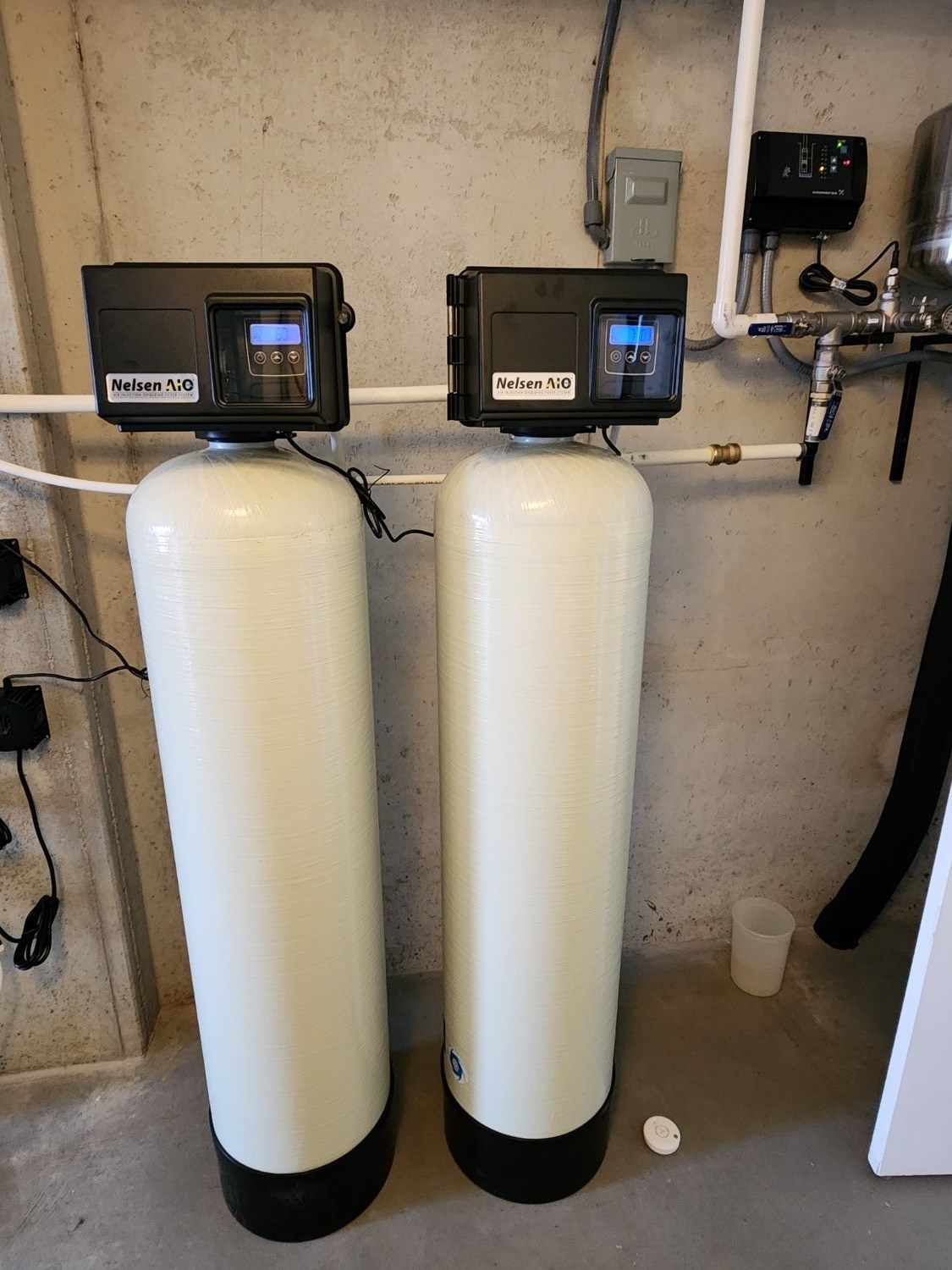
Floor space for tank + brine tankPlan on about 27"W x 18"D x 61"H for the resin tank and brine tank together. The brine tank needs lid clearance for salt refills.
Softened feed water on hard wellsHardness fouls anion resin and shortens its life, so hard water gets softened upstream of the tannin unit. If your well is hard, the softener goes first; it also boosts tannin absorption.
What your plumber will do
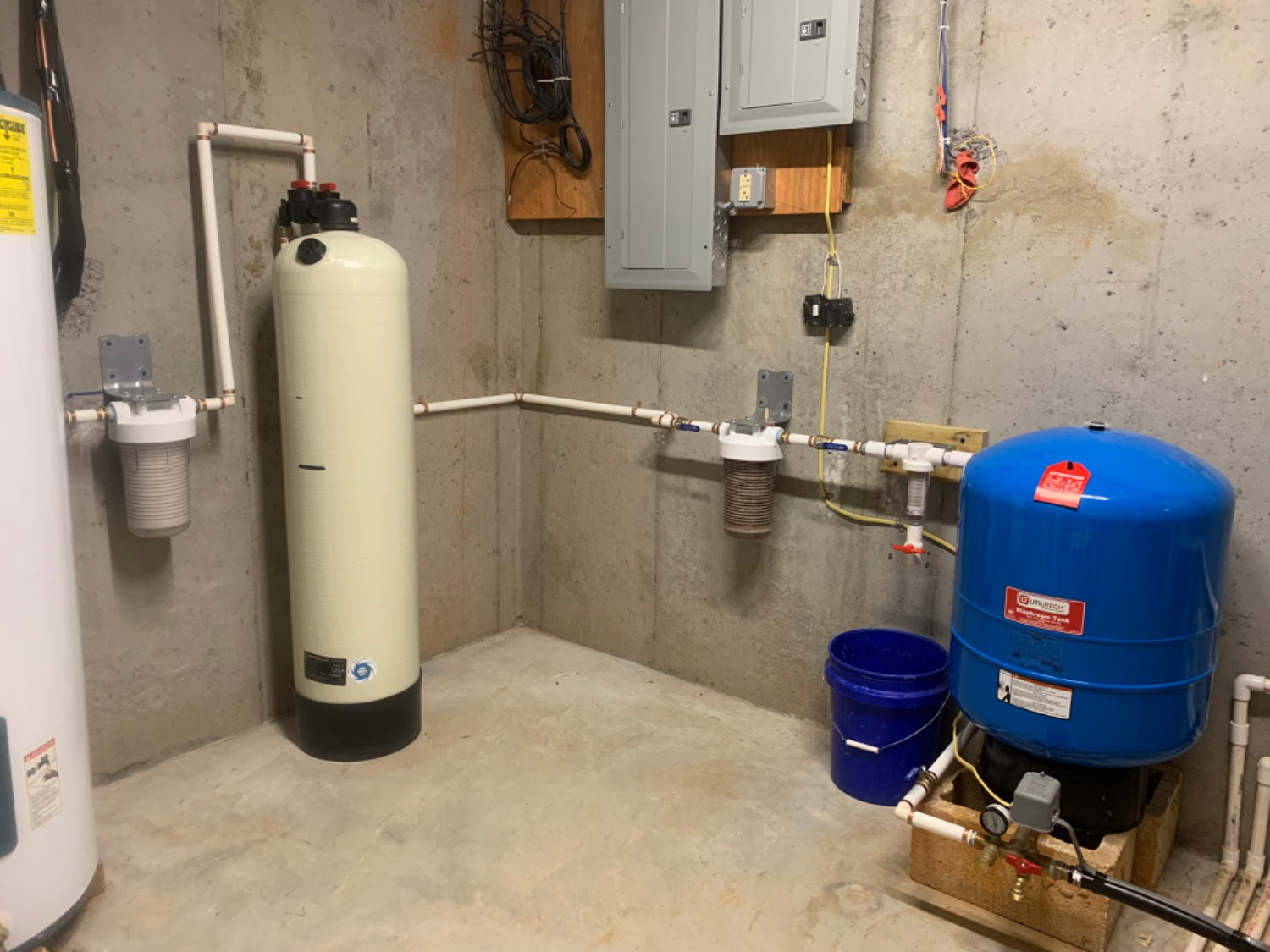
Position the system after the pressure tank, sediment filter, any iron filter, and the softener if you have one. The tannin unit is the last exchange stage before the house (an acid neutralizer, if needed, goes after it).
Level the resin tank and set the brine tank beside it within hose reach.
Attach the bypass valve to the control head so the system can be isolated without shutting the house down.
Plumb 1" inlet (IN) and outlet (OUT). CPVC with solvent cement or PEX with SharkBite fittings both work.
Run the drain line to a floor drain, utility sink, or standpipe with an air gap.
Connect the brine line between the brine tank and the valve, and plug in the wall adapter.
Open the water valve slowly, 1/4 turn at a time. A sudden rush can channel the resin bed and cut contact time, and contact time is what pulls the tannins out.
Program the metered valve with a frequent regeneration schedule (every 2-3 days at heavier tannin loads). The quick-start card covers it, and Aidan programs it with you by phone if you prefer.
Fill the brine tank with ordinary water softener salt and run a manual regeneration, checking for leaks at each cycle position.
Show your plumber exactly what's going in. The system builder generates a plumbing schematic for your specific setup. Send it to your plumber before install day.
One technology actually clears tannins for the whole house, and the common alternatives either fail outright or only cover one tap. Sediment filters pass dissolved organics straight through. Carbon cartridges adsorb a little tannin and exhaust in months. Water softeners run the opposite resin and remove hardness, not organics. Under-sink RO works at the kitchen tap but leaves yellow water in every shower and washing machine.
That leaves salt-regenerated anion exchange as the standard whole-house fix, with the softener as its upstream teammate on hard wells and an acid neutralizer downstream when the pH drop needs correcting.
Feature
Tannin-Selective Anion Exchange (Ours)
Carbon Filter
Under-Sink RO
Water Softener
Sediment Filter
Tannin removal
Clears tannins at every tap
Partial, exhausts in months
At one tap only
None (wrong resin)
None (dissolved, not particles)
Coverage
Whole house
Whole house (wrong tool)
Kitchen tap only
Whole house (hardness only)
Whole house (particles only)
Media renews itself
Yes: salt regeneration flushes organics to drain
No: replace cartridges
No: membrane fouls on organics
Yes (for hardness)
No
Media
Acrylic gel anion resin, WQA Gold Seal
Activated carbon
RO membrane
Cation resin
Spun poly / pleated
Role in the tannin train
The fix
Polish only
Optional drinking-water polish
Upstream pretreatment on hard wells
Upstream grit protection
Maintenance
Keep salt in the brine tank
Cartridges every 3-12 months
Cartridges yearly
Salt
Cartridges
Price
$2,195 - $2,895
Varies (wrong tool)
From $595 (one tap)
From $1,995 (different job)
$50 - $300 (different job)
Real customers, real wells
What owners say about the Fleck 5600SXT platform our tannin filter runs on
Reviews are collected by Stamped.io, a third-party review service that emails customers after their order. Stamped does not let us edit a review’s words or star rating.
★★★★★
Best Quality valve
Fleck the best you can buy, nothing better
JM
John M., United States
Verified Buyer
Fleck 5600SXT Digital Valve (same valve as our tannin filter) · April 2021
★★★★★
Fleck 5600SXT 48,000 Grain Water Softener
The Fleck 5600SXT 48,000 Grain Water Softener and neutralizer combo I purchased from Mid-Atlantec was a complete kit that I self installed and am very happy with the unit. The product support was great and the price was great as well. It's worth it to buy from a company you can rely on.
NG
Nicholas G., United States
Verified Buyer
Fleck 5600SXT Water Softener (same valve platform) · March 2020
★★★★★
Fleck 5600 SXT 48,000 Grain Water Softener
All system components were shipped on a wooden pallet. The resin was already placed in the tank, and the bypass valve was already installed on the control valve. This eliminates two install steps. You can install the system yourself, or you can hire a plumber. The system is working, providing treated water to the entire house. This system is the second system I have purchased from MidAtlanticWater.
VB
Verified Buyer, United States
Verified Buyer
Fleck 5600SXT Water Softener (same valve platform) · July 2024
FAQ
Frequently asked questions
Salt-regenerated anion exchange is the proven whole-house fix. A tannin filter looks and works like a water softener, but runs tannin-selective acrylic anion resin that captures the dissolved organics and releases them to the drain at each brine regeneration. Standard sediment and basic carbon filters will not remove tannins. Confirm tannins first with a lab test (iron tints water yellow too), soften hard water upstream, and expect roughly a 1-point pH drop that an acid neutralizer downstream corrects.
Yes. Tannins are an aesthetic problem, not a health hazard. They are natural organic compounds from decaying vegetation, and the EPA addresses them only through its non-enforceable secondary guideline for color (15 color units). The real costs are stained laundry and fixtures, an earthy or bitter taste, and water that looks like weak tea. One caveat: get the water tested anyway, because the same shallow, surface-influenced wells that pick up tannins deserve a full panel.
At one tap, yes, but it's the wrong tool for the whole house. An under-sink RO membrane rejects tannins at the kitchen tap, yet the yellow water still reaches every shower, toilet, and washing machine, and dissolved organics foul RO membranes over time. Whole-house RO runs $5,000 to $10,000. For tea-colored water at every tap, whole-house anion exchange is the standard fix, with RO as an optional drinking-water polish after it.
Uniform yellow-to-tea color that never settles out. Tannin water is evenly tinted from every tap, hot and cold, often with an earthy or musty taste, and it yellows white laundry. The overnight glass test separates it from iron: color that settles to the bottom is iron or sediment; color that stays dissolved is tannins. Rusty orange stains point at iron (EPA flags it at 0.3 ppm) and black-brown stains at manganese. A certified lab test settles it for $99.
The resin lasts years because it regenerates with salt. Acrylic tannin resin releases captured organics every brine cycle, so a properly regenerated bed typically serves 5 to 8 years before capacity fades; frequent regeneration (every few days) is what protects it from organic fouling. When the bed does wear out, 1 cu ft boxes of replacement resin ($895) rebed the tank without replacing the tank or valve. Ongoing cost is softener salt.
Run the overnight clear-glass test. Fill a glass from the tap and let it sit overnight: color that settles into a layer at the bottom is ferric iron or particulates, color that stays uniformly dissolved is tannins. Stain color helps too: rusty orange-red points at iron (the EPA flags iron at 0.3 ppm for exactly that staining), black-brown points at manganese, and a soft tea-yellow cast on laundry and fixtures points at tannins.
Plenty of wells have both, and the order matters: iron gets treated first. We have read lab reports showing 1.5 ppm iron alongside 1 ppm tannin and told the customer to buy an iron filter, not a tannin system, because at those numbers iron is the problem. The $99 certified tannin test settles the question before you spend system money.
No. A softener's cation resin removes calcium and magnesium; tannins are negatively charged organics that need the opposite resin, a strong base anion exchanger. A tannin filter is the anion-side mirror of a softener: same valve, same brine tank, same salt, opposite chemistry.
The two are best friends in the same treatment train, though. Hardness fouls anion resin and cuts tannin absorption, so on hard wells the softener goes upstream of the tannin unit. That order is non-negotiable in our installs, and it's why the complete package ships both stages matched and plumbed in the right sequence.
Yes, expect roughly a 1-point drop. Anion exchange removes alkaline ions along with the tannins, so a well that comes in at a neutral 7.0 can leave the tannin unit closer to 6.0, which is acidic enough to corrode copper pipe over time. This is real field data from our own customers, not theory.
The fix is an acid neutralizer downstream of the tannin filter, which brings the water back up to neutral. You can also raise pH upstream, but then you'd need to overshoot to 8.0-8.5 to land at 7 after the tannin stage, so downstream is the cleaner install. Send us your pH number and we'll tell you whether your well needs one at all.
Tannins are dissolved organics, not particles, so a sediment filter passes them straight through no matter how fine the micron rating. Activated carbon does adsorb some tannin, but its capacity for large organic molecules is small: a carbon cartridge on tannin duty exhausts in months and the color comes back.
Salt-regenerated anion exchange is the standard fix because the resin bed renews itself: every brine cycle flushes the captured organics to the drain and restores capacity. That's also why we ship acrylic resin specifically; styrene-based beds hold onto the organics at regeneration, foul over a season or two, and develop the classic fishy odor of fouled resin.
More often than a softener. Natural organic matter that sits on the resin too long migrates deep into the bead matrix where brine can't strip it, so tannin systems regenerate every 2 to 3 days at meaningful tannin loads rather than weekly. The metered valve handles the schedule; we set it with you at startup.
It uses ordinary water softener salt from the hardware store, roughly 10 lbs per cubic foot of resin per regeneration. Expect more salt than a softener of the same size because of the frequency: that's the operating cost of keeping the bed clean, and it's a lot cheaper than replacing fouled resin. If a regenerated bed ever smells fishy, a baking soda and salt solution restores it.
Count bathrooms. A 1-2 bathroom home (1-3 people) fits the 6 GPM system with 1.5 cu ft of resin in a 10" x 54" tank ($2,195), or the Fleck 5600SXT on the same bed size ($2,695). A home with 3 or more bathrooms (4+ people) needs the 10 GPM system with 2.5 cu ft in a 13" x 54" tank ($2,895) so simultaneous showers and laundry still get full contact time.
Undersizing is the expensive mistake with tannins specifically, because removal is contact-time limited: push 10 GPM through a 6 GPM bed and the organics simply don't transfer, so color leaks through at peak demand. Very large homes run two units in parallel, which the manufacturer supports; call us and we'll spec it.
A properly regenerated acrylic bed typically serves 5 to 8 years. The variables are tannin load, regeneration frequency, and what else is in the water: iron, hardness, and oils all shorten resin life, which is exactly why pretreatment order matters and why we ask for a full water test before sizing.
When capacity finally fades, you rebed the media only: replacement tannin resin is $895 per 1 cu ft box (Purolite A850 acrylic gel, WQA certified to NSF/ANSI-61), and the tank, valve, and brine tank all stay. It fits our 6 GPM (1.5 cu ft) and 10 GPM (2.5 cu ft) systems, the Fleck 5600SXT, or any standard whole-house tannin tank.
Paste your well test below. Aidan replies with the right system (6 GPM, 10 GPM, the Fleck, or the complete package), whether a softener needs to go upstream or an acid neutralizer downstream, and install notes for your layout. Same-day during business hours, next morning otherwise.
✓
Your message is queued for Aidan
Your email client just opened with the message ready to send. Hit send and Aidan will reply same day during business hours.
Aidan
Co-owner. Real person. Not a bot. 7 Days/Week, 8AM-5PM EST