

How to Remove Iron from Well Water: 5 Methods Compared
Iron Removal for Well Water
How to Remove Iron from Well Water: 5 Methods Compared
There are five common ways to get iron out of well water, but most of them either don't work long-term or cost far more than they should. After 32 years installing water treatment systems, I've watched homeowners waste thousands on the wrong approach. This guide compares every method honestly so you can pick the right one the first time.
Want the full education on iron types, testing, and sizing? Start with our Complete Guide to Iron Filters for Well Water.
The Short Version
Five methods exist for removing iron from well water. Here's the honest breakdown:
- Air injection oxidation (AIO) filter: The best long-term solution for most homes. Chemical-free, handles up to 30 ppm iron, and requires zero annual maintenance. Systems start at $1,795.
- Water softener: Only works for very low iron (under 2 ppm). Iron fouls the resin and shortens its life. Not a real iron removal solution.
- Chlorine or chemical injection: Effective but complex. Requires multiple tanks, ongoing chemical purchases, and regular maintenance.
- Cartridge or sediment filters: Temporary band-aid. Clogs within days to weeks and causes pressure drops throughout the house.
- Shock chlorination: A one-time emergency treatment, not a permanent fix. Iron returns within weeks as the well recharges.
For the specific system we recommend after testing all of these approaches, read: Best Iron Filter for Well Water. For a full cost breakdown, see: Iron Filter Cost (2026 Price Guide).
Which Iron Removal Method Is Right for You?
Answer 3 quick questions and we'll recommend the best approach for your situation.
Choosing the right iron removal method starts with knowing what you're dealing with. Without a water test, you're guessing, and guessing is the most expensive mistake in water treatment — see our guide to testing your well water.
Get your water tested for iron (ppm), pH, manganese, hardness, and sulfur. A local lab test costs $50 to $150 and tells you exactly which method will work. You can also send your results to us for a free recommendation.
What This Article Covers
- Side-by-Side Comparison Table
- Method 1: Air Injection Oxidation Filter (Best Overall)
- Method 2: Water Softener (Limited Use)
- Method 3: Chlorine or Chemical Injection
- Method 4: Cartridge and Sediment Filters
- Method 5: Shock Chlorination (Temporary)
- Which Method Is Right for You?
- 10-Year Cost Comparison
- Real Customer Results
- Frequently Asked Questions
Iron Removal Methods: Side-by-Side Comparison
Before diving into each method, here's how they stack up on the factors that matter most:
| Method | Iron Capacity | Chemicals Required? | Maintenance | Upfront Cost | Verdict |
|---|---|---|---|---|---|
| AIO Iron Filter (Katalox Light) | Up to 30 ppm | None | None (media lasts 6-8 years) | $1,795 - $2,195 | Best overall |
| Water Softener | Under 2 ppm only | Salt (monthly) | Monthly salt refills | $1,695 - $1,895 | Very limited |
| Chlorine Injection | Up to 15+ ppm | Chlorine (ongoing) | Chemical refills + contact tank + carbon filter | $2,500 - $5,000+ | Complex, costly |
| Cartridge Filters | Under 3 ppm (barely) | None | Replace every 1-4 weeks | $50 - $200 | Band-aid only |
| Shock Chlorination | Any (temporary) | Bleach (each treatment) | Must repeat every few months | $20 - $50 per treatment | Emergency only |
Method 1: Air Injection Oxidation Filter (Best Overall)
How it works: An AIO filter uses a Venturi nozzle to draw air into the top of the tank, creating an air pocket. When your well water flows through this air pocket, dissolved iron (ferrous) oxidizes into solid particles (ferric). The water then passes through filtration media that traps and removes those particles. Every few days, the system automatically backwashes to flush the captured iron and regenerate the air pocket.
No chemicals. No moving parts beyond the valve. The air does all the work.
Why This Is the Best Method for Most Homeowners
We've tried every iron removal method over 32 years: Birm, greensand, Pyrolox, chlorine injection, ozone injection, cartridge filters, and softeners. About 15 years ago, we switched exclusively to Katalox Light media in the Fleck 2510AIO system and discontinued everything else. That's how significant the performance difference was.
The numbers tell the story:
- Iron removal capacity: Up to 30 ppm (ferrous, ferric, and iron bacteria)
- Also removes: Up to 10 ppm hydrogen sulfide (rotten egg smell) and 15 ppm manganese (black staining)
- Chemical cost: Zero. Air is the oxidizer.
- Annual maintenance: None. The system backwashes itself automatically.
- Media lifespan: 6 to 8 years (sometimes 8 to 10 in low-usage homes)
- System cost: $1,795 to $2,195 depending on size (includes tank, valve, media, bypass, and free shipping)
Limitations to Know About
- pH matters: Iron oxidation works best at pH 7.0 or higher. If your water is acidic (below 7.0), you may need an acid neutralizer installed before the iron filter. The Katalox media does contain calcium carbonate that helps raise pH, but it's not a substitute for a neutralizer when pH is very low.
- Backwash flow rate: The system needs adequate flow (5 to 7 gpm minimum depending on tank size) during backwash. If your well produces less than 5 gpm, the backwash time needs to be extended.
- Power and drain required: The valve needs a standard outlet, and the backwash water needs a floor drain or pipe to the outside.
Bottom Line
For iron levels from 0.3 ppm to 30 ppm, an AIO filter with Katalox Light is the most effective, most economical, and lowest-maintenance solution available. It's not the cheapest upfront, but over 10 years it costs dramatically less than every alternative when you factor in ongoing expenses. See our full recommendation.
Method 2: Water Softener (Ion Exchange)
How it works: A water softener uses ion exchange resin to swap calcium and magnesium (hardness minerals) for sodium. The resin can also exchange some dissolved iron, which is why some companies promote softeners as an iron removal solution.
The problem: this only works reliably with clear water iron (ferrous) under 2 ppm. Above that, iron starts coating and fouling the resin beads, permanently reducing the softener's capacity and shortening its lifespan from 15+ years to as little as 5.
When a Water Softener Can Work
- Iron is under 2 ppm (confirmed by a water test, not a guess)
- The iron is exclusively ferrous (clear water) type
- You also have hard water and need softening anyway
- You're willing to add "iron out" resin cleaner to the salt tank regularly
When It Won't Work
- Iron above 2 ppm (the resin can't keep up)
- Red water iron (ferric) is present (particles foul the resin immediately)
- Iron bacteria is present (the slime clogs the resin bed)
- Hydrogen sulfide (sulfur smell) is present (softeners don't remove it)
I've seen hundreds of homeowners try to use a water softener as their iron solution. It works for a few months, then the resin fouls, the water starts breaking through, and they end up buying an iron filter anyway. Meanwhile, they've shortened the life of a $1,895 softener.
The correct approach: install an iron filter first, then a softener after it if you also need to treat hardness. For a deeper dive, read: Iron Filter vs Water Softener: Do You Need Both?
Method 3: Chlorine or Chemical Injection
How it works: A chemical feed pump injects chlorine (sodium hypochlorite), hydrogen peroxide, or potassium permanganate into the water line. The chemical oxidizes dissolved iron into solid particles, which are then removed by a sediment filter or media filter downstream. A retention tank provides contact time. If chlorine is used, a carbon filter is also needed to remove the chlorine taste and smell before the water reaches your faucets.
The Full System You'll Need
This is where chemical injection gets expensive and complicated. You're not just buying one piece of equipment. A typical chlorine injection setup requires:
- Chemical feed pump (metering pump that doses chlorine into the water line)
- Solution tank (holds the chlorine solution, needs regular refilling)
- Retention/contact tank (gives the chlorine time to oxidize the iron, usually 20+ minutes of contact time)
- Sediment or media filter (removes the oxidized iron particles)
- Carbon filter (removes residual chlorine so your water doesn't taste and smell like a pool)
That's four to five separate components, each with its own maintenance schedule and failure points. Compare that to an AIO filter: one tank, one valve, no chemicals.
When Chemical Injection Makes Sense
Chemical injection does have a place in specific situations:
- Extreme iron bacteria problems that don't respond to AIO filtration alone
- Water with very low pH (below 5.5) where oxidation filters struggle
- Combined disinfection needs (if you also need to treat coliform bacteria and want chemical disinfection rather than UV)
For most residential well water scenarios, chemical injection is overkill. It works, but the complexity, maintenance, and ongoing cost make it impractical when a simpler solution handles the same iron levels.
Method 4: Cartridge and Sediment Filters
How it works: A cartridge filter housing (usually mounted on a wall) holds a replaceable filter cartridge (typically 5 to 20 microns). Water passes through the cartridge, which traps sediment and some oxidized iron particles.
Why Cartridge Filters Fail at Iron Removal
There is no cheap way to get iron out of your well water permanently. I understand the appeal of a $50 cartridge filter, but here's what actually happens:
- The cartridge traps some ferric (red water) iron for a few days to weeks.
- The cartridge clogs. Water pressure throughout the house drops noticeably.
- You go to the basement, shut off the water, unscrew the housing, pull out a rusty cartridge, install a new one.
- Repeat every one to four weeks depending on your iron level.
The bigger problem: cartridge filters cannot remove ferrous (dissolved/clear water) iron at all. The iron passes right through because it's dissolved in the water, not yet a particle. Since ferrous iron is the most common type in well water, you're not even addressing the primary issue.
When Cartridge Filters Are Appropriate
- As a pre-filter before other equipment (to catch sand, sediment, and large particles before they reach your iron filter or softener)
- As a post-filter for extra polishing after your main treatment system
- For temporary use while waiting for a proper system to arrive
Cartridge filters are a useful tool in the right context. They're not a solution for iron removal on their own.
Method 5: Shock Chlorination
How it works: You pour a high concentration of chlorine bleach (or specialized well sanitizer pellets) directly into the well casing. The chlorine kills iron bacteria and disinfects the well, pipes, and plumbing system. After a contact period of 12 to 24 hours, you flush the chlorinated water through all faucets until the smell dissipates.
What Shock Chlorination Actually Does
Shock chlorination is an emergency treatment that addresses two specific problems:
- Iron bacteria: The chlorine kills the bacteria colonies living in the well and pipes, temporarily eliminating the slimy buildup and associated odor.
- Coliform bacteria: If a well test shows bacterial contamination, shock chlorination is typically the first-line treatment recommended by health departments.
Why It Doesn't Solve Your Iron Problem
Shock chlorination does not remove the dissolved iron in your water. After the treatment:
- The iron concentration remains exactly the same (it's in the aquifer, not something you can bleach away)
- Iron bacteria typically returns within weeks to months as bacteria from the aquifer re-colonizes the well
- Each treatment requires flushing hundreds of gallons of heavily chlorinated water
Think of it like this: shock chlorination is an antibiotic for your well. It treats the infection, but it doesn't cure the underlying condition. If your water has elevated iron, you still need a filtration system to remove it permanently.
For more on iron bacteria specifically, read our guide: Iron Bacteria in Well Water: How to Identify, Treat, and Prevent It.
Which Method Is Right for Your Situation?
After 32 years, here's the decision framework I use with every customer:
| Your Situation | Best Method | Notes |
|---|---|---|
| Iron under 2 ppm, clear water only, hard water too | Water softener (can handle it) | Add resin cleaner. Monitor for fouling. Read more |
| Iron 0.3 to 30 ppm (any type) | AIO iron filter | Best all-around solution. See recommendation |
| Iron + sulfur smell + manganese | AIO iron filter | Handles all three in one tank |
| Severe iron bacteria not responding to AIO | Chlorine injection + AIO filter | Rare. Start with AIO alone first |
| Emergency disinfection (bacteria test failed) | Shock chlorination (then install a filter) | Temporary. Follow up with permanent treatment |
| pH below 5.5 with high iron | Acid neutralizer + AIO filter | Neutralizer raises pH first so the iron filter works correctly |
Test Before You Buy
Every recommendation above assumes you have accurate water test results. If you don't know your iron level, pH, and whether you have iron bacteria, stop and get tested first. A $100 lab test prevents a $2,000 mistake. Contact a local water testing lab, or send your results to us and we'll tell you exactly what you need at no charge.
10-Year Cost Comparison: Which Method Is Cheapest?
The cheapest way to remove iron from well water isn't always the cheapest upfront. Here's what each method actually costs over a 10-year period, assuming a household with moderate iron (5 to 10 ppm):
| Method | Upfront Cost | Annual Maintenance | 10-Year Total |
|---|---|---|---|
| AIO Iron Filter (Katalox Light) | $1,795 - $2,195 | $0 (media replacement at year 7: ~$300) | $2,095 - $2,495 |
| Water Softener (if it could handle it) | $1,695 - $1,895 | $150 - $250/yr (salt + resin cleaner) | $3,195 - $4,395 |
| Chlorine Injection System | $2,500 - $5,000 | $200 - $400/yr (chemicals + carbon media) | $4,500 - $9,000 |
| Cartridge Filters (replacing weekly) | $50 - $200 | $300 - $600/yr (cartridges) | $3,050 - $6,200 |
| Shock Chlorination (quarterly) | $20 - $50 | $80 - $200/yr + still have iron | $820 - $2,050 (iron not removed) |
The AIO filter is the most economical option that actually solves the problem permanently. Shock chlorination is cheaper, but it doesn't remove iron at all. Cartridge filters look cheap until you're buying replacements every week for a decade. And chlorine injection works but costs two to four times more when you add up the chemicals, carbon media replacements, and pump maintenance.
For a full pricing breakdown with every system size, read: Iron Filter Cost for Well Water (2026 Price Guide).
Real Customer Results
Here's what happened when one of our customers switched from struggling with iron to installing an AIO system:

"I have well water with over 20 ppm ferrous and 7 ppm of ferric iron, along with manganese and some sulfur. I was rejected by local water companies saying they could not help me... I purchased two Fleck 2510AIO Iron Filter tanks with Katalox-Light... and now the tanks reduced the iron to literally zero!"
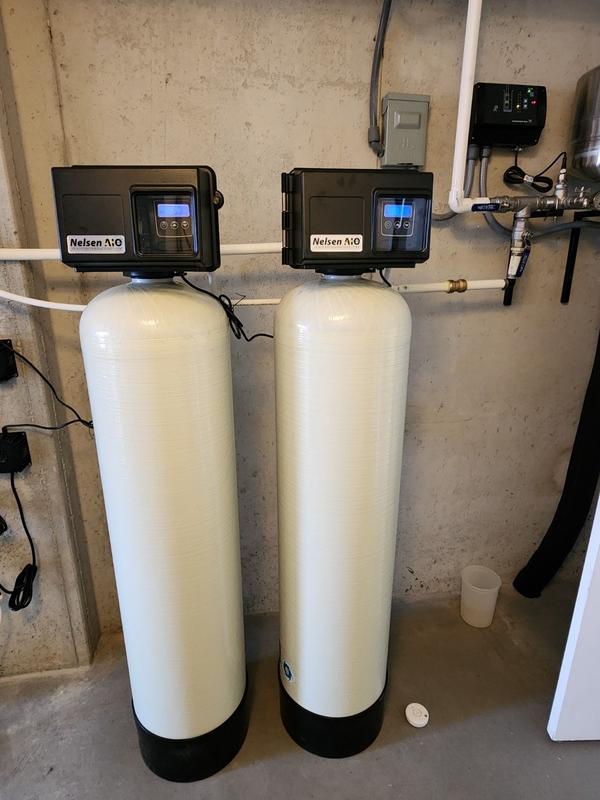
Amy's situation is a perfect example of why method matters. Local water treatment companies told her they couldn't help with 20+ ppm iron. Chemical injection would have meant thousands in ongoing costs. Two AIO filters with Katalox Light solved it permanently.
Frequently Asked Questions
What is the cheapest way to remove iron from well water?
Over the long term, an air injection (AIO) iron filter with Katalox Light media is the cheapest effective solution. The upfront cost is $1,795 to $2,195, but there are zero ongoing chemical costs and no annual maintenance. Over 10 years, the total cost is roughly $2,100 to $2,500. Cartridge filters look cheaper upfront ($50 to $200) but cost $300 to $600 per year in replacements and don't actually remove dissolved iron. A water softener costs $150 to $250 per year in salt alone and only handles iron under 2 ppm.
Can I remove iron from well water naturally (without chemicals)?
Yes. An air injection oxidation filter removes iron using air as the oxidizer, with no chemicals of any kind. The Venturi nozzle draws in atmospheric air, which oxidizes dissolved iron into solid particles. The Katalox Light media then filters out those particles. The system backwashes automatically every few days to flush the captured iron. No chlorine, no permanganate, no hydrogen peroxide.
Does a water softener remove iron?
A water softener can remove very small amounts of clear water (ferrous) iron, typically under 2 ppm. Above that level, iron fouls the ion exchange resin, reducing the softener's capacity and shortening its life. A softener cannot remove red water iron, iron bacteria, or sulfur. For anything beyond trace iron, you need a dedicated iron filter installed before the softener. Read the full breakdown: Can a Water Softener Remove Iron?
Does reverse osmosis remove iron from well water?
Reverse osmosis (RO) can remove iron at the point of use (under your kitchen sink), but it is not practical for whole-house iron treatment — see our best whole house water filter guide. RO membranes foul quickly with iron, the flow rate is too low for whole-house demand, and the waste water ratio makes it expensive to operate at scale. For whole-house iron removal, a backwashing iron filter is the correct approach.
How do I know what type of iron I have?
The quickest home test: fill a clear glass with cold water straight from the tap. If the water is perfectly clear but leaves orange stains after sitting for a few hours, you have ferrous (clear water) iron. If the water comes out with a visible reddish tint immediately, you have ferric (red water) iron. If you see a slimy reddish-orange buildup inside your toilet tank, you likely have iron bacteria. A professional water test will confirm the type and concentration. For a deeper explanation, see our Complete Guide to Iron Filters.
How to remove iron from well water without a water softener?
The best non-softener option is an air injection oxidation (AIO) filter. Unlike a softener, it doesn't use salt, doesn't require monthly refills, and can handle iron levels up to 30 ppm. The system oxidizes dissolved iron using air, filters it through Katalox Light media, and backwashes automatically. It also removes sulfur (rotten egg smell) and manganese (black staining) in the same tank.
Will shocking my well get rid of iron permanently?
No. Shock chlorination kills iron bacteria and disinfects the well, but it does not remove the dissolved iron in your water. The iron concentration stays the same because it comes from the aquifer and surrounding rock. Iron bacteria also returns within weeks to months as bacteria from the groundwater re-colonize the well. Shock chlorination is an emergency treatment, not a permanent solution.
What iron level requires a filter?
The EPA's secondary maximum contaminant level for iron is 0.3 ppm. Above this threshold, you'll start noticing staining on fixtures, metallic taste, and discoloration. At 3+ ppm, iron can cause gastrointestinal discomfort. Any level above 0.3 ppm benefits from filtration, and at 1+ ppm, a dedicated iron filter becomes highly recommended.
About the Author: Aidan has been in the water treatment industry for 32 years, specializing in well water filtration for homeowners across the United States. Mid Atlantic Water is a wholesale distributor that ships commercial-grade water treatment systems directly to homeowners, cutting out the dealer markup and commissioned salespeople. Every recommendation in this article is based on field results, not theory.
Need help choosing a method? Call or text 443-277-2204 · Email support@midatlanticwater.net