

Well Tanks

A properly sized well pressure tank is one of the most important components in your well water system. It stores pressurized water so your well pump doesn't cycle on and off every time you open a faucet — protecting your pump, maintaining consistent pressure, and extending the life of your entire system.
We carry Well-X-Trol steel bladder tanks (the industry standard), WellMate composite fiberglass tanks (corrosion-proof), constant pressure tanks, and retention tanks for chlorine contact time. All tanks ship free to the lower 48 states.
Not sure which tank you need? Read our Complete Guide to Well Water Pressure Tanks or call us at 800-460-5810 and we'll help you pick the right tank for your home.
-
Well Tank - WELL-X-TROL® 202 Pro Series Tank
![Well Tank - WELL-X-TROL® 202 Pro Series Tank]()
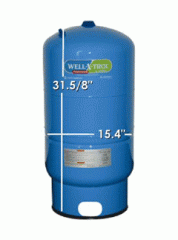
- Regular price
- $1,095.00
- Regular price
-
- Sale price
- $1,095.00
- Unit price
- per
- Availability
- Sold out
-
Well Tank - WELL-X-TROL® 203 Pro Series Tank
![Well Tank - WELL-X-TROL® 203 Pro Series Tank]()
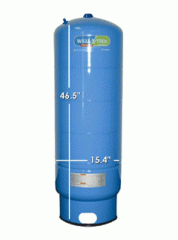
- Regular price
- $1,295.00
- Regular price
-
- Sale price
- $1,295.00
- Unit price
- per
- Availability
- Sold out
-
Well Tank - Well-X-Trol 205 Pro Series Tank
![Well Tank - Well-X-Trol 205 Pro Series Tank]()

- Regular price
- $1,695.00
- Regular price
-
- Sale price
- $1,695.00
- Unit price
- per
- Availability
- Sold out
-
Well Tank - WELL-X-TROL 250 Pro Series Tank
![Well Tank - WELL-X-TROL 250 Pro Series Tank]()

- Regular price
- $1,695.00
- Regular price
-
- Sale price
- $1,695.00
- Unit price
- per
- Availability
- Sold out
-
Well-X-Trol WX1-250 Constant Pressure Well Tank
![Constant Pressure Well Water Systems]()

- Regular price
- $2,195.00
- Regular price
-
- Sale price
- $2,195.00
- Unit price
- per
- Availability
- Sold out
-
WellMate WM-14WB Well Pressure Tank
![WellMate WM-14WB Well Pressure Tank]()

- Regular price
- $1,495.00
- Regular price
-
- Sale price
- $1,495.00
- Unit price
- per
- Availability
- Sold out
-
WellMate WM-12 Well Pressure Tank
![WellMate WM-12 Well Pressure Tank]()

- Regular price
- $1,295.00
- Regular price
-
- Sale price
- $1,295.00
- Unit price
- per
- Availability
- Sold out
-
WellMate WM-6 Well Pressure Tank
![WellMate WM-6 Well Pressure Tank]()

- Regular price
- $1,095.00
- Regular price
-
- Sale price
- $1,095.00
- Unit price
- per
- Availability
- Sold out
-
WellMate WM25-WB
![WellMate WM25-WB]()

- Regular price
- $1,795.08
- Regular price
-
- Sale price
- $1,795.08
- Unit price
- per
- Availability
- Sold out


- Page 1 of 2
- Next page
Types of Well Tanks
There are three main categories of tanks in our lineup, each designed for a different use case:
Bladder Pressure Tanks (Well-X-Trol & WellMate)
Standard well pressure tanks that store water and maintain system pressure. Inside the tank, a flexible bladder separates the water from a pre-charged air cushion. When your pump fills the tank, the air compresses; when you open a faucet, the compressed air pushes water out. This is the tank most homes use.
- Well-X-Trol (steel) — The most trusted name in pressure tanks. Pro Series models use a heavy-duty butyl bladder and welded steel shell. Available from 20 to 119 gallons.
- WellMate (fiberglass composite) — Corrosion-proof, lighter weight, and longer-lasting than steel. The composite shell never rusts, even in humid basements or aggressive water conditions. See why fiberglass beats steel.
Constant Pressure Tanks
The Well-X-Trol WX1-250 is designed for homes with a constant pressure (variable speed) pump system. These systems maintain a steady pressure (typically 50 PSI) regardless of demand. The tank is smaller because the pump adjusts speed in real time rather than cycling on/off. Learn how constant pressure systems work.
Retention Tanks
Clack retention tanks and the WellMate UT120 aren't pressure tanks — they're contact tanks. They hold water for a set period so that chlorine or other disinfectants have enough contact time to kill bacteria before the water enters your home. Required in some treatment setups.
Sizing Your Well Tank
The right tank size depends on your pump's flow rate (GPM) and your pressure switch settings. A tank that's too small causes the pump to short-cycle (turning on and off rapidly), which burns out the pump motor. Here's a general guide based on pump GPM:
- Up to 10 GPM pump: 20-gallon tank (Well-X-Trol 202 or WellMate WM-6)
- 10–15 GPM pump: 32-gallon tank (Well-X-Trol 203 or WellMate WM-12)
- 15–20 GPM pump: 44–47 gallon tank (Well-X-Trol 205 or WellMate WM-14WB)
- 20+ GPM pump: 86-gallon tank or larger (Well-X-Trol 250 or WellMate WM25-WB)
When in doubt, go one size up. A larger tank means fewer pump cycles, less wear, and more consistent water pressure. For a detailed sizing walkthrough, see our pressure tank sizing guide.
FAQs
Q. How does a well pressure tank work?
A. Inside the tank, a rubber bladder holds the water. The space between the bladder and the tank shell is pre-charged with air (typically 2 PSI below your pressure switch's cut-in setting). When your well pump runs, it fills the bladder and compresses the air. When you open a faucet, the compressed air pushes water out of the bladder and through your plumbing — all without the pump needing to run.
The pressure switch monitors system pressure. When it drops to the "cut-in" point (e.g., 30 or 40 PSI), the pump turns on. When pressure reaches the "cut-out" point (e.g., 50 or 60 PSI), the pump shuts off. The tank provides the drawdown volume between these two points. For more detail, read our complete guide to pressure tanks.
Q. What's the difference between a bladder tank and a diaphragm tank?
A. Both separate water from air, but in different ways:
- Bladder tanks (like Well-X-Trol and WellMate) use a replaceable, balloon-like bladder that holds the water. If the bladder fails, it can be replaced on many models without replacing the entire tank.
- Diaphragm tanks use a permanent rubber membrane sealed across the middle of the tank. The diaphragm is not replaceable — if it fails, the entire tank must be replaced.
We recommend bladder tanks for well water systems. They're more reliable, easier to service, and the industry standard for residential wells. See our pressure tank comparison guide for a deeper dive.
Q. Steel tanks or fiberglass tanks — which is better?
A. Both work well, but fiberglass composite tanks (WellMate) have some clear advantages:
- No corrosion — steel tanks can rust on the outside in humid environments. WellMate's composite shell is corrosion-proof.
- Lighter weight — easier to move into position during installation.
- Longer lifespan — the composite shell doesn't degrade the way painted steel can.
Well-X-Trol steel tanks are the time-tested choice and typically cost a bit less. They've been the industry standard for decades and work great in dry, climate-controlled spaces. For a full breakdown, read WellMate Fiberglass vs Steel Pressure Tanks.
Q. What are the signs I need a new pressure tank?
A. Watch for these common symptoms:
- Pump short-cycling — the pump turns on and off rapidly (every few seconds) when water is running
- Fluctuating water pressure — pressure surges or drops during normal use
- Waterlogged tank — the tank feels heavy and full of water when you knock on it (should feel partly hollow)
- No air pressure at the Schrader valve — when the tank is empty and you check the air valve, there's no pressure
- Visible rust or leaking — corrosion holes or water seeping from the tank shell
If your pump is short-cycling, act quickly. Rapid cycling dramatically shortens pump life and can lead to a $1,500+ pump replacement. For a step-by-step diagnosis, see our pressure tank troubleshooting guide.
Q. What does "waterlogged" mean?
A. A waterlogged tank has lost its air charge. The bladder may have ruptured, or air has slowly leaked out through the Schrader valve. Without the air cushion, the tank can't store pressure — so the pump has to run every time you use water, even for a few seconds.
You can test for this by turning off your pump, draining the tank, and checking the air pressure at the Schrader valve with a tire gauge. If it reads zero or very low, the tank is waterlogged. Sometimes re-charging the air fixes it. If the bladder has failed, the tank needs to be replaced. Full diagnosis steps are in our troubleshooting guide.
Q. How long does a well pressure tank last?
A. A quality pressure tank typically lasts 10–15 years, though some last 20+ years with good water conditions. Factors that shorten tank life include:
- Aggressive (low pH) water that attacks the bladder
- High sediment that abrades the bladder
- Incorrect air pre-charge causing the bladder to flex excessively
- Humid environments that rust steel tank shells
If your water is acidic, install an acid neutralizer upstream. If you have sediment, a sediment filter will protect not just the tank but your entire plumbing system.
Q. How do I check and set the air pressure in my tank?
A. Every bladder tank has a Schrader valve (like a tire valve) on top. To check the pre-charge:
- Turn off your well pump at the breaker or disconnect
- Open a faucet to drain the tank completely until water stops flowing
- Check the air pressure at the Schrader valve with a standard tire gauge
- Set it to 2 PSI below your cut-in pressure — for a 30/50 switch, set air to 28 PSI; for a 40/60 switch, set air to 38 PSI
- Use a bicycle pump or small compressor to add air if needed
Check air pressure once a year. An incorrect pre-charge is the most common cause of premature bladder failure. For more on pressure switch settings, read our pressure switch guide.
Q. How hard is it to install a well pressure tank?
A. Most homeowners can replace a pressure tank in 2–4 hours. The basic steps are: shut off the pump, drain the old tank, disconnect the plumbing, remove the old tank, set the new tank in place, connect the plumbing, set the air pre-charge, and turn the pump back on.
You'll need basic plumbing tools — pipe wrenches, Teflon tape, and a tire gauge. The hardest part is usually moving the old tank (steel tanks full of water are heavy). We're available 7 days a week at 800-460-5810 to walk you through the installation.
Q. Why is my well pump short-cycling?
A. Short-cycling (the pump turning on and off every few seconds) is almost always caused by a failed or waterlogged pressure tank. Other possible causes include:
- Incorrect air pre-charge — too high or too low for your pressure switch setting
- A pressure tank that's too small for your pump's GPM
- A failing pressure switch — contacts may be pitted or sticking
- A check valve leak — water draining back into the well between pump cycles
Start by checking your tank's air pressure (see above). If the bladder has failed, replacing the tank solves the problem. For a full diagnostic walkthrough, see pressure tank troubleshooting.
Q. How much does a well pressure tank cost?
A. Our pressure tanks range from $1,095 to $2,295 depending on size and type, with free shipping included. Here's a quick overview:
- 20-gallon tanks: $1,095 (Well-X-Trol 202 or WellMate WM-6)
- 32–35 gallon tanks: $1,295 (Well-X-Trol 203 or WellMate WM-12)
- 44–47 gallon tanks: $1,495–$1,695 (Well-X-Trol 205 or WellMate WM-14WB)
- 86+ gallon tanks: $1,695–$2,295
Compare that to hiring a plumber to supply and install a tank ($1,500–$3,500+ for a comparable tank). For a detailed cost breakdown, see our pressure tank cost guide.
Q. What's the warranty on your well tanks?
A. Warranty coverage depends on the manufacturer:
- Well-X-Trol (Amtrol): 7-year limited warranty on the complete tank (shell and bladder) for residential use
- WellMate (Flexcon): 7-year limited warranty on the complete tank, with the composite shell warranted against corrosion for the life of the tank
Both manufacturers stand behind their products. We're here to help with any warranty claims — call us at 800-460-5810 or email support@midatlanticwater.net.